
Reviewed · KUCHING TOURS
Kuching Bike & Cook
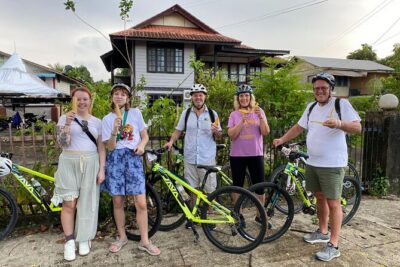
The best part of this Kuching experience is the sharp change of scene. Within minutes of the city center, you leave ordinary urban sightseeing behind and pedal through centuries-old Malay kampongs along the Sarawak River. Then you trade the bicycle for a chopping board and learn how local ingredients become Sarawakian food.
I like the rural-urban contrast, which gives you a clearer sense of everyday Kuching than a standard city walk. I also like the market stop and cooking lesson, since you do not just eat a local dish, you learn how to make Sarawak laksa chicken and other food for yourself. The main caution is that the cooking portion may not always match the hands-on format shown in the tour photographs, so ask what you will personally prepare before booking.
Key points to know before you book
- Ride through old Malay kampongs: The route follows villages along the Sarawak River, including one of Kuching’s oldest Malay settlements.
- A market-to-table morning: You collect some ingredients at a local market before cooking with them.
- More than one dish: The class can include five Sarawakian dishes, depending on the day’s format.
- Guides make a difference: Ayra, Farhah, Aura, Kevin, and Kelvin have all led this experience, with strong praise for friendly guiding and safe cycling.
- Everything is bundled: Bikes, helmets, boat fees, raincoats, snacks, lunch, bottled water, and other food and drinks are included.
- Small-group format: The maximum group size is 15, which is much more manageable than a large coach outing.
Why the river villages make this more than a city bike ride
Kuching is easy to enjoy from its waterfront, old streets, food stalls, and museums. But if you stay in the center, you see only one slice of Sarawakian life. This tour uses a bicycle to take you into the Malay kampongs lining the Sarawak River, where the pace changes quickly.
The morning route reaches a rural area only minutes from central Kuching. That short distance matters. You get a direct comparison between city life and village life instead of treating the outskirts as a separate day trip.
The villages date back centuries, and the Malay communities have long connections with ships and boats. You are not simply cycling past attractive houses for photographs. The setting helps explain why the river has mattered so much to Kuching and why local food, trade, and daily routines developed around it.
The route is especially useful if you want to see places you would probably skip on foot. A bicycle covers more ground without turning the outing into a rushed vehicle tour. You can take in the riverbank, village lanes, and small local details at a human pace.
The ride begins at 8:00 am, a sensible choice in Kuching’s tropical climate. Early morning usually gives you a more comfortable window for cycling, though the weather can still change. Bring clothing that dries reasonably fast and expect the supplied raincoat to be useful. One tour continued successfully through occasional heavy rain because the guide came prepared.
More bike tours in Kuching:
- Half-Day Heritage Bike Tour in Kuching
★ 5.0 · 162 reviews - Half-Day Penang Countryside Cycling Tour
★ 4.5 · 454 reviews - George Town, Penang: Malay Countryside Cycling
★ 4.7 · 287 reviews
What to expect on the bicycle
Your guide provides the bicycle and helmet, then leads the group away from the city. The experience is designed for most people, but you should still be comfortable riding for part of a morning. Children must be accompanied by an adult.
The group limit is 15 people. That is not a private ride, but it keeps the outing reasonably contained and gives the guide a better chance to manage crossings, answer questions, and keep the group together.
Safety depends partly on the guide and partly on your own riding habits. Kevin has been praised for guiding safely through traffic and for answering questions clearly. Ayra has also received strong praise for her English and friendly manner. Guides named Farhah and Aura have led other outings, too. The exact guide is not guaranteed, but the human side of this tour matters because cycling through unfamiliar streets is much easier when instructions are clear.
Do not expect a high-speed sporting ride. The appeal is access and observation, not exercise for its own sake. You are there to see the villages, learn about local life, and reach the food portion without exhausting yourself.
The river setting gives the ride its character. You see a quieter side of Kuching, with the city close enough to remain part of the story but far enough away to feel different. The contrast is one of the strongest reasons to choose this outing over a conventional walking tour.
The market stop turns lunch into a lesson
The market visit is a small but useful part of the morning. Instead of arriving at a cooking school with every ingredient already measured, you collect some of what you will use. That simple step makes the meal feel connected to the place you have just explored.
A local market also gives you a practical look at the ingredients behind Sarawakian cooking. You may recognize some produce, while other items may be less familiar. The value is not just in buying food. You begin to see how local cooking depends on fresh ingredients and how a meal takes shape before anyone turns on the stove.
This is also a good point to ask questions. If you are unsure what an ingredient is, how it is used, or how spicy a dish will be, ask your guide or cooking instructor. You may want to write down names or take photographs, since the class moves from shopping to preparation and details can pass quickly.
The farm-to-table idea here should be understood in a modest, local sense. You are not touring a large farm or taking part in a full agricultural program. You are connecting a market purchase with a meal you prepare later that morning. That is enough to make the cooking feel more grounded than a detached demonstration.
The cooking class: useful, tasty, and worth clarifying
The cooking lesson is meant to teach you how to chop, blend, and stir Sarawakian food, with Sarawak laksa chicken as the central takeaway. You also receive lunch, snacks, bottled water, and other food and drinks, so this is not a class where you leave hungry.
The strongest version of the experience has you cooking several dishes with local cooks, then sitting down to eat what the group has prepared. One especially positive account described five dishes and a meal that differed from the food commonly found in Kuching’s food halls. That difference is important. You get a closer look at home-style preparation rather than only sampling finished restaurant dishes.
The class also gives you a practical souvenir. A photograph is easy to forget, but a recipe you can repeat at home has a longer life. Sarawak laksa chicken offers a clear connection to the region, and learning the basic method can help you understand the flavors you encounter elsewhere in Sarawak.
Still, you should clarify the class format before you pay. One participant found the cooking side disappointing because the actual activity did not match the photographs and description, with less individual cooking than expected. The provider acknowledged that the advertised experience and the session received were not fully aligned and indicated that changes were being made.
That does not mean every class is limited. Other outings included cooking five dishes with local cooks, and the overall cooking session was described as a success. The sensible approach is to ask two direct questions: Will I personally prepare the dishes, and how many people will share each cooking station? Those answers will tell you if this is a true hands-on class or mainly a demonstration followed by lunch.
A few more Kuching trips worth a look
- Night Froggy Adventure at Kubah National Park
★ 5.0 · 71 reviews - Semenggoh Orangutan Centre from Kuching
★ 4.5 · 53 reviews - Bako National Park from Kuching City
★ 4.5 · 35 reviews - Semenggoh Wildlife Centre Tour: Discover Sarawak’s Orangutans
★ 5.0 · 34 reviews
How the guides shape the day
The guide is central to both halves of this tour. A bicycle route through villages needs clear directions, and a cooking class needs someone who can explain unfamiliar ingredients without making you feel awkward about asking basic questions.
Ayra has been singled out for excellent English, a warm personality, and strong guidance during both the cycling and market portions. Farhah has also led a day that combined village riding, local food, and plenty of laughter. Aura handled wet weather well and kept the day moving when rain arrived.
Kevin has been praised for safe riding guidance and for handling a wide range of questions. Kelvin has also led the food and cycling experience, with an emphasis on local products. You cannot select a particular guide from the information provided, but these names show the kind of personal attention the operator aims to provide.
Good guiding is especially valuable for cultural context. The villages, river, market, and ingredients are easier to appreciate when someone explains how they fit into local life. You do not need a lecture. A few well-timed details can turn a pleasant ride into a more meaningful morning.
Price and what the $106.58 includes
At $106.58 per person, this is not the cheapest way to see Kuching. It is also more than a simple bicycle rental or a market visit. The price covers a six to six-and-a-half-hour program with a guide, bike, helmet, boat fees, raincoat, cooking class, lunch, snacks, bottled water, and all food and drinks.
That package makes the price more reasonable if you would otherwise book several separate activities. You get transportation by bicycle and boat, a village visit, a market stop, a meal, and a cooking lesson in one morning-to-afternoon outing. The value is strongest for people who want a structured introduction to Sarawakian food and daily life.
The price is less attractive if your priority is only sightseeing. You could spend less on a short city ride or a casual meal, but you would lose the market connection and the cooking instruction. You are paying for access, organization, equipment, and a guide who brings the pieces together.
The cooking format is the deciding factor. If you receive meaningful time at the work station and learn techniques you can repeat at home, the fee is easier to justify. If the class is mostly watching, the value drops. Confirm this detail before booking, especially if the food lesson is your main reason for choosing the tour.
Hotel pickup and drop-off are not included. You need to make your own way to the Kuching meeting point and return there at the end. Factor that into your morning plans, particularly if you are staying outside the central area.
Weather, comfort, and practical planning
Kuching’s weather can change during the day. Rain has not necessarily stopped the tour, since raincoats are included and guides have handled wet conditions, but you should expect the possibility of a damp ride. Wear comfortable clothes and shoes suitable for both cycling and standing during food preparation.
The tour lasts about six to six-and-a-half hours, beginning at 8:00 am and ending back at the meeting point. It is a full half-day commitment, not a quick morning add-on. Avoid booking a tightly timed afternoon activity unless you have plenty of room for delays.
The operator says most people can participate. The information does not provide a detailed accessibility assessment, so anyone with mobility, balance, or cycling concerns should ask for specific route and equipment details before booking. Children need an accompanying adult.
A mobile ticket is provided, and confirmation normally arrives at booking. If you book within three days of departure, confirmation may take up to 48 hours and remains subject to availability. Cancellation is free up to 24 hours before the start time. Less than 24 hours before departure, refunds and changes are not accepted. If the minimum number is not reached and the operator cancels, you are offered another date or experience, or a full refund.
Who should choose this Kuching experience?
I would choose this tour if you want more than Kuching’s central sights and like the idea of learning through food. It suits independent-minded visitors who still appreciate a guide, families with older children who can cycle, and anyone who wants a gentle introduction to Sarawakian culture without committing to a longer rural excursion.
It is also a good choice for people who often return from a trip wishing they could recreate the food at home. The recipe instruction, market visit, and meal give you something practical to carry forward.
I would hesitate if you dislike cycling, have little tolerance for tropical rain, or want a polished cooking-school format with guaranteed individual work space. I would also avoid booking it on a day when you need to reach another activity immediately afterward.
The 4.8 rating from nine published ratings suggests a strong overall response, but the small sample means you should not treat the number as a guarantee. The consistent strengths are the village route, the guides, the local food, and the chance to see parts of Kuching beyond the usual center. The cooking format is the one point worth checking carefully.
Should you book the Bike & Cook tour?
Book it if you want a personal look at Kuching’s river villages and a food lesson in the same outing. The combination works because the bicycle ride gives context to the cooking: you see the communities and markets before sitting down to prepare local dishes.
Before paying, confirm exactly how hands-on the cooking will be and what you will make that day. If the answer is clear and suits your expectations, the package offers good value for a six-hour experience that includes equipment, meals, boat costs, and rain protection. If you mainly want a bike ride, choose a shorter cycling tour instead.
FAQ
Where does the Kuching Bike & Cook tour start?
The tour starts in Kuching, Sarawak, at 8:00 am. The exact meeting point details are provided with the booking information.
How long does the experience last?
The activity lasts approximately six to six-and-a-half hours and ends back at the meeting point.
Is hotel pickup and drop-off included?
No. Hotel pickup and drop-off are not included, so you need to arrange your own transport to and from the meeting point.
What is included in the price?
The price includes a local English-speaking guide, bicycle, helmet, boat fees, raincoat, cooking class, food and drinks, lunch, snacks, and bottled water.
Is the tour suitable for children?
Children can participate, but they must be accompanied by an adult. The operator says most people can take part.
Can I cancel for a full refund?
Yes. You can cancel at least 24 hours before the experience starts for a full refund. Cancellations or changes made less than 24 hours before the start time are not accepted for a refund.
Just added around Kuching
- 3-in-1 Ultimate Borneo Expedition Adventure★ 4.5 · 8 reviews
- Semenggoh Wildlife Centre: Orangutan Discovery from Kuching★ 4.5 · 8 reviews
- Shared Mangrove & Irrawaddy Dolphin Watching Cruise★ 4.5 · 10 reviews
- Semenggoh Orangutan Center & Sarawak Cultural Village★ 4.5 · 10 reviews
- Sarawak Cultural Village Tour from Kuching★ 5.0 · 12 reviews
- Sarawak Cultural Village Tour from Kuching★ 5.0 · 13 reviews
- Kubah’s Nocturnal Wonders Nighttime Frog Safari★ 5.0 · 13 reviews
- Night Frogs Tour at Kubah National Park★ 5.0 · 17 reviews
Kuching Tours, compared.


Semenggoh Wildlife Centre Tour: Discover Sarawak’s Orangutans
Read our review →

Browse the lists this tour appears in