
Reviewed · KUCHING TOURS
Kuching: Walking Tour with Sampan Boat Ride and Lunch
Kuching reveals itself best at street level, and this tour puts you right among its old mosques, riverside views, market lanes, and colonial buildings. The small sampan boat ride gives the city a welcome change of pace, while the walking route connects Kuching’s Malay, Chinese, and Brooke-era stories.
I like the mix of local lunch and heritage sights, since you are not just looking at buildings from the outside. I also like the guide-led format: Jerry is described as down to earth and fun, while Drika was flexible with questions and interests. The main consideration is the walking. Four hours in Kuching’s heat, with a bridge crossing and several stops, will suit active visitors better than anyone needing a slow or step-free outing.
Key points at a glance
- Traditional sampan crossing: Drift across the Sarawak River and view modern Kuching beside traditional riverside villages.
- Brooke-era Kuching: Learn about the White Rajahs while seeing colonial-era buildings in the historic center.
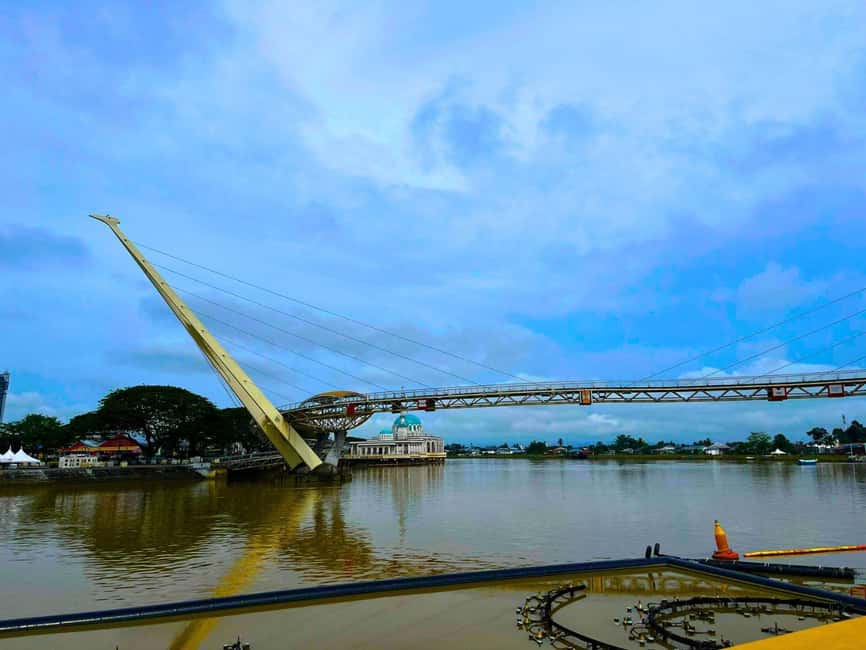
- Darul Hana Bridge: Walk across the hornbill-inspired bridge for river views and photographs.
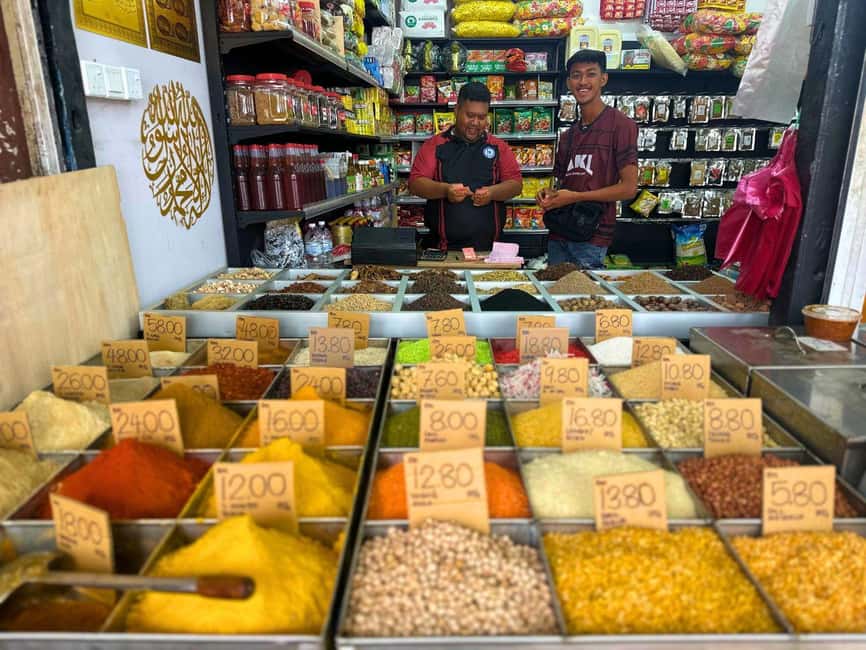
- Gambier Street: See spice sellers, market activity, and one of the city’s most atmospheric old streets.
- Hawker-center lunch: Taste local food in an everyday setting rather than at a formal restaurant.
- Small English-speaking group: The tour is limited to 15 people, with guides able to respond to questions and interests.
Starting beside the Kuching Word Sign
The tour begins at the Kuching Word Sign on Jalan Tunku Abdul Rahman. It is an easy place to recognize and a useful first photo stop, with open views toward the Sarawak River.
This starting point also gives you an immediate sense of Kuching’s setting. The river is not just a scenic backdrop. It has long shaped movement, trade, settlement, and the city’s connection between its older center and the opposite bank.
Your guide meets you here, then sets the tone for the morning or afternoon. The experience is conducted in English, and the group is capped at 15 people. That is small enough to make questions practical without promising the intimacy of a private tour.
You should arrive ready to walk. Comfortable shoes matter more than stylish ones, and water, a hat, and sunscreen are sensible additions. Kuching’s heat can make a short urban walk feel longer, especially when you pause in open areas for photographs.
A few more Kuching trips worth a look
- From Kuala Lumpur: Historical Melaka Day Tour with Lunch
★ 4.4 · 2,297 reviews - From Kuala Lumpur: Cameron Highlands Day Tour with Lunch
★ 4.3 · 1,178 reviews - Langkawi: Kilim Mangrove Boat Tour with Lunch and Pickup
★ 4.8 · 899 reviews
Crossing the Sarawak River by Malay sampan
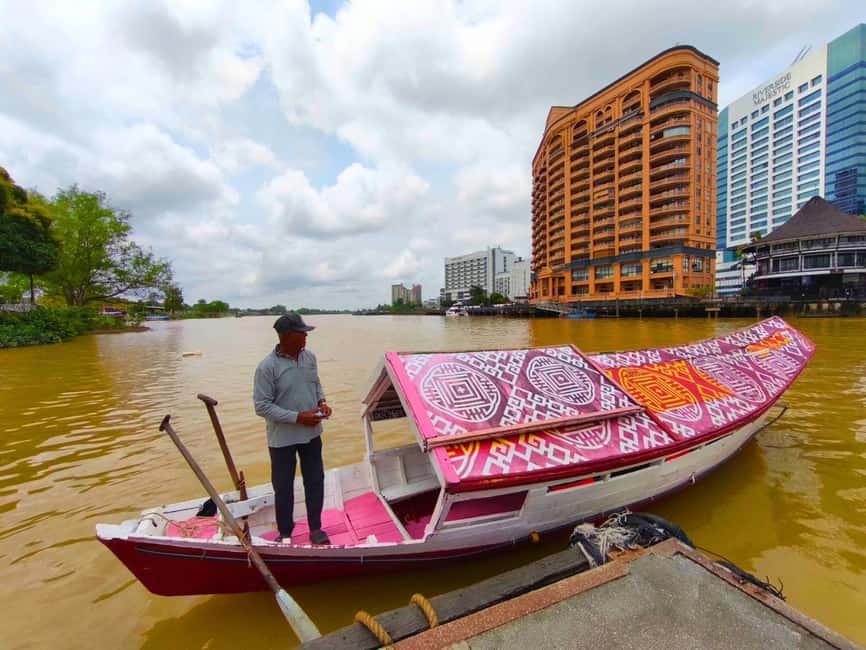
One of the tour’s most appealing features comes early: a ride across the Sarawak River in a traditional Malay sampan. The boat adds something a standard walking tour cannot. Instead of seeing Kuching only from its pavements, you get a brief view back toward the riverfront.
The crossing is listed as part of a 30-minute guided section that combines the boat ride, sightseeing, and explanation. From the water, you can observe the contrast between modern buildings and traditional riverside villages. That contrast helps you read Kuching as a living city, not simply as a collection of preserved facades.
The ride is also a useful pause between walking sections. You can sit back, take pictures, and watch the river scenery pass at an unhurried pace. Do not expect a long cruise or a full river excursion. The sampan is one part of a broader four-hour route, not the entire event.
For photographers, this may be the most rewarding early portion. Bring your camera, but keep it secure while boarding and during the crossing. The river views are likely to be more open than those you get later among the old streets.
Walking through the Brooke-era center
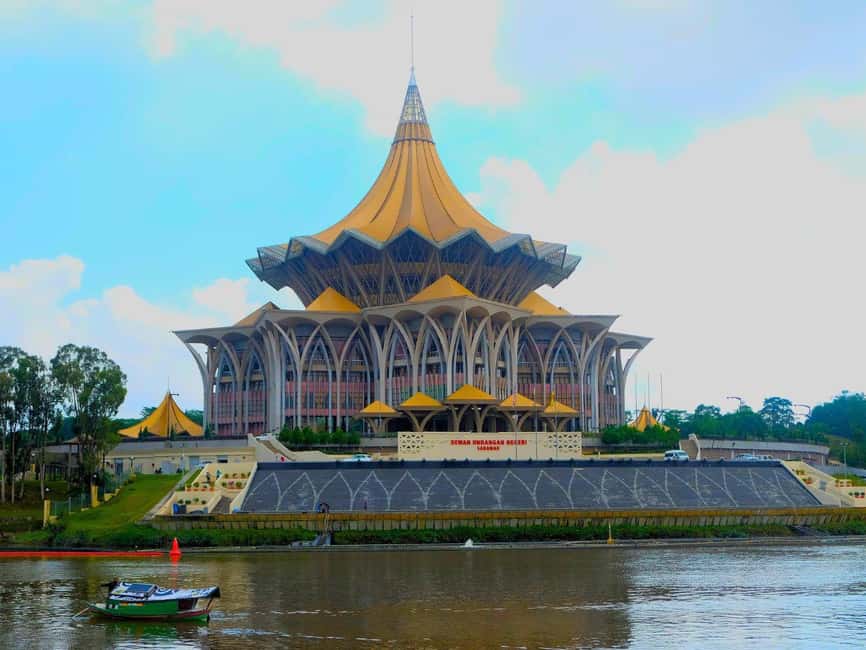
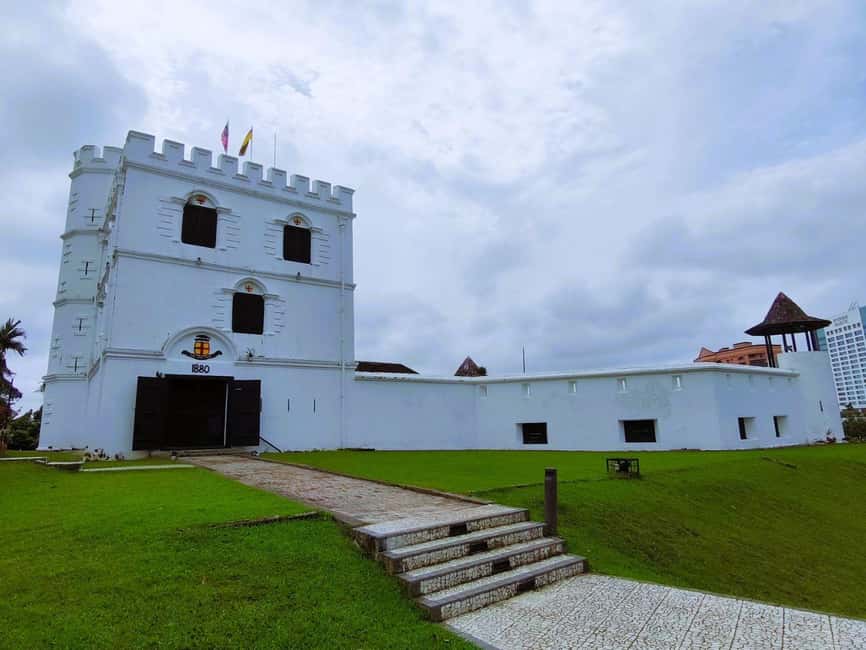
Kuching’s colonial-era buildings tell the story of the Brooke family, the White Rajahs of Sarawak. Your guide explains that period as you walk, giving the architecture a political and cultural setting rather than asking you to admire old walls without context.
This is where a guide adds real value. A building can look attractive on its own, but the story of who governed Sarawak, how Kuching developed, and how different communities lived alongside one another gives the streets greater meaning.
The walking section lasts about 30 minutes before the route moves through a series of shorter sightseeing and photo stops. That structure suits visitors who like variety. You are not held in one place for a long lecture, and the route keeps changing between river views, architecture, religious sites, markets, and heritage streets.
The drawback is that the supplied details do not identify each building by name. If a particular colonial structure catches your eye, ask your guide about it. The experience is strongest when you use the guide’s flexibility, a quality especially associated with Drika, who accommodated questions and personal interests.
Darul Hana Bridge and the India Mosque
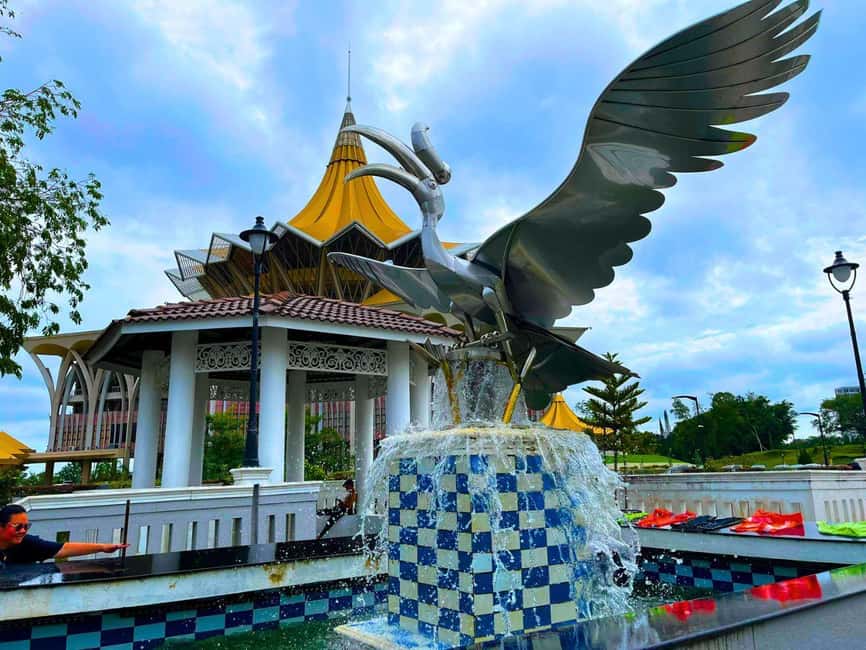
The Darul Hana Bridge is one of the route’s clear visual highlights. Its design draws inspiration from the hornbill, a bird strongly associated with Sarawak, and the bridge gives you a broad position from which to look along the river.
You will cross on foot, so this is another place where good shoes help. The bridge is also a natural photo stop. Take time to look back toward the waterfront rather than rushing straight across. The view helps tie together the areas you have seen by boat and on foot.
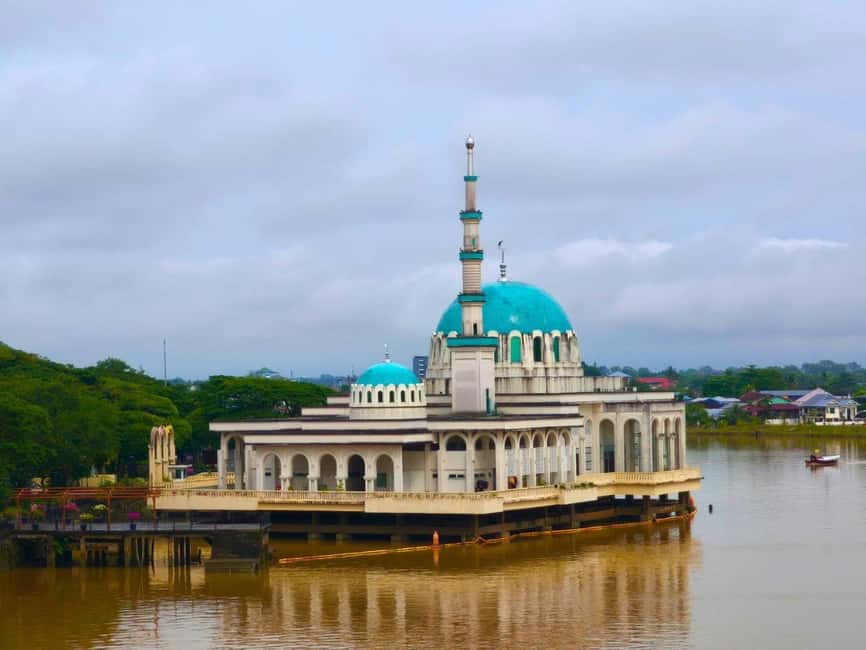
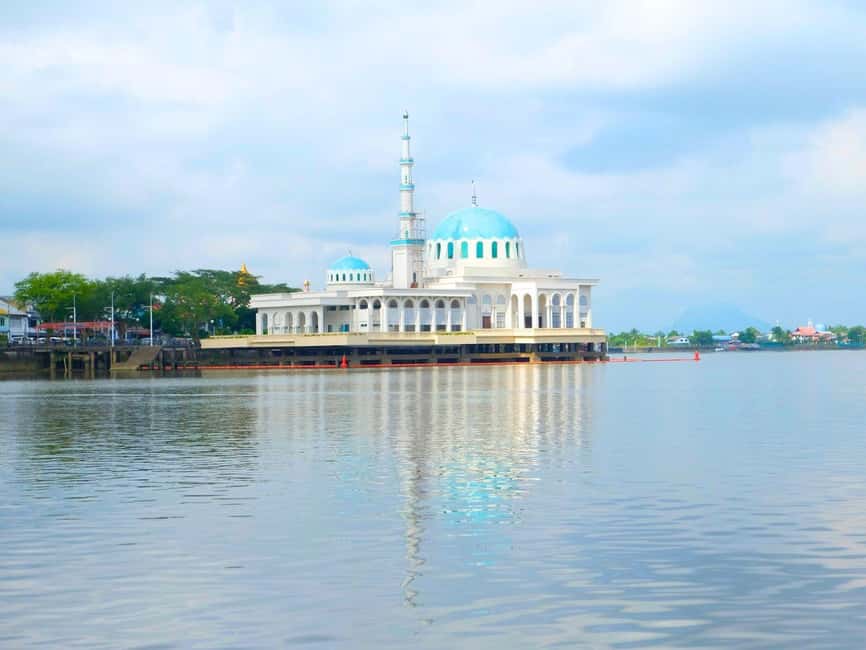
The route also visits the India Mosque, a striking religious building in the city center. This stop adds another layer to Kuching’s story. The tour is not limited to colonial architecture or one community’s past. It also points you toward the city’s Muslim heritage and its long record of cultural contact.
As with any religious site, be considerate of people using the mosque. The information provided does not promise an interior visit, so you should expect to admire and learn about the site from the route rather than assume a guided tour inside.
More walking tours in Kuching:
- Kuala Lumpur Local Street Food Private Walking Tour by Night
★ 4.5 · 224 reviews - 2d1n Mount Kinabalu Via Ferrata – Walk The Torq
★ 5.0 · 90 reviews - Kinabalu Park & Poring Hot Spring & Canopy Walk
★ 4.5 · 80 reviews - 2d1n Kinabalu Park & Poring Canopy Walk & Desa Cow Farm Tour
★ 5.0 · 35 reviews
Gambier Street and the smell of spices
Gambier Street brings you into a more commercial and sensory part of Kuching. It is known for aromatic spices and market life, making it a useful contrast to the formal lines of colonial buildings and the open river views.
This is the kind of stop I value on a city tour. You are not only checking off landmarks. You are seeing how an old street functions, how goods are presented, and how food and trade remain part of the city’s daily rhythm.
The street can also be visually busy, with signs, stalls, and people moving through a compact area. Keep your belongings close and stay aware of the group, particularly if you stop to take photographs. The tour is guided, but you will still get more from the visit if you look around rather than focus only on the next landmark.
Gambier Street is a good place to ask about ingredients, local cooking, and the role of the market in Kuching’s history. Your guide may be able to tailor the conversation to your interests, and the small group makes that easier than a large coach excursion.
Lunch at a Kuching hawker center
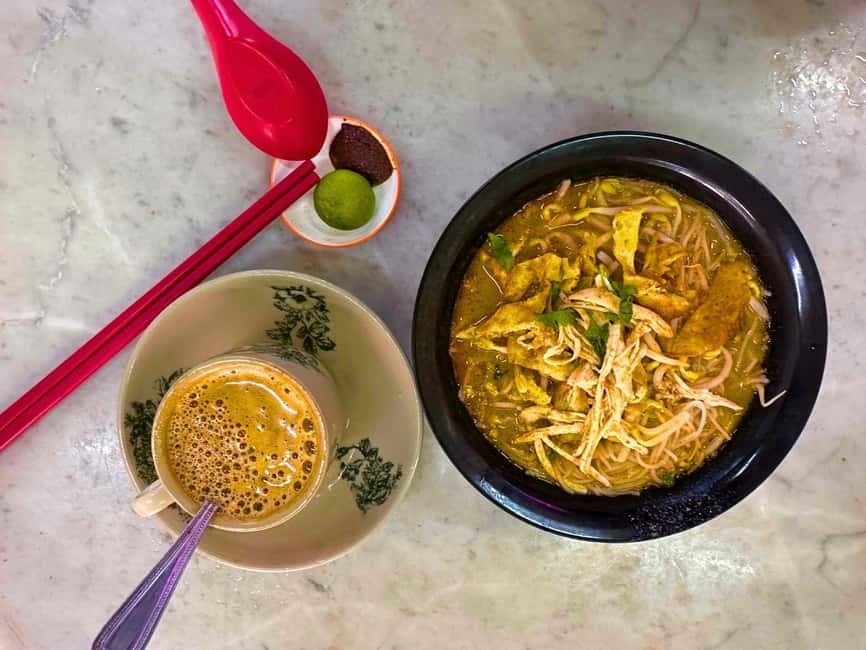
After the sightseeing and walking, the tour includes a one-hour lunch at a nearby hawker center. This is a practical choice. Hawker centers let you eat in an everyday local setting, and the meal gives you a chance to try Kuching flavors without the formality or price of a sit-down restaurant.
Lunch is included in the $26 price, along with the guide and boat ride. That makes the cost attractive for a four-hour city experience, especially since you are paying for several different elements: local transport on the river, a full guided route, and food.
The information does not specify the exact dishes, menu, or whether you can choose from several stalls. If you have food allergies, dietary restrictions, or strong preferences, ask about the lunch arrangements before booking. Do not assume that every hawker-center option will suit you.
The one-hour break also helps the pace. Without it, the route could feel like a continuous march through the center. Instead, you get a proper pause before the final heritage section. Bring water anyway. Lunch is not a replacement for hydration, particularly on a sunny day.
Old Bazaar Street and the last heritage shophouses
After lunch, the tour continues to Old Bazaar Street. This area is home to some of Kuching’s last heritage shophouses, which give the city center a different visual character from its colonial buildings and religious sites.
Shophouses are valuable because they show how business and daily life once fitted into narrow, mixed-use buildings. Their appeal is not only decorative. They help you understand the scale of the older commercial center and the way shops, homes, storage, and street trade could exist in one compact setting.
This part of the walk lasts about 45 minutes and combines sightseeing with a guided explanation. It is a good section for slowing down and looking upward. Details around windows, facades, signs, and street proportions can be easy to miss if you hurry.
The phrase last heritage shophouses is also a reminder that old streets can change. The experience gives you a chance to see surviving examples while they remain part of the city’s daily setting. It is not presented as a museum-only visit. You are walking through a real commercial district.
Finishing at the Chinese Heritage Museum
The tour ends at the Chinese Heritage Museum, a fitting final stop after the river crossing, Brooke-era discussion, mosque visit, market street, and old shophouses. It brings attention to Kuching’s Chinese communities and their part in the city’s shared past.
You finish here rather than return to the starting point. That matters when planning the rest of your day. The meeting point is at the Kuching Word Sign, while the endpoint is the Chinese Heritage Museum in Sarawak, so you should organize your onward plans from the city center rather than expect hotel transport.
The museum gives you time to reflect on the different strands of Kuching that appear throughout the tour. The river, the White Rajahs, the India Mosque, Gambier Street, the hawker center, and the shophouses are not isolated attractions. Together, they show a city shaped by several communities and trading traditions.
The supplied timing describes this as a place to explore at your own pace. Since the tour ends there, ask your guide how much time is available for the museum itself. The listed route does not promise a long museum visit or a separate museum guide.
What the $26 price really covers
At $26 per person, this is good value if you want a compact introduction to Kuching rather than a private, highly specialized tour. The price includes an English-speaking guide, the Malay sampan ride, and lunch. Those inclusions remove two common extra costs from a half-day outing.
The value is strongest for first-time visitors who want several kinds of experience in one booking. You get river scenery, cultural sites, market streets, food, architecture, and a museum finish. Booking each element separately would take more planning, though the exact comparison depends on local prices and availability.
The tour does not include hotel pickup or drop-off. That keeps the price down, but you need to reach the Kuching Word Sign yourself and make your own way onward after the museum. For visitors staying outside the center, this is worth factoring into the real cost.
The group size is limited to 15. That is a reasonable middle ground: more personal than a large sightseeing bus, but generally less expensive than a private guide. Guide quality matters here, and the named feedback is encouraging. Jerry was described as friendly and easygoing, while Drika was praised for answering questions and adapting to interests. Another guide was noted for being informative, friendly, and on time.
Who will enjoy this four-hour route
I would choose this tour if you have one day or less in Kuching and want a broad introduction without spending the whole day indoors. It is also a good fit if you like food markets, historic streets, short photo stops, and a guide who can connect different parts of a city’s past.
It suits couples, solo visitors, and small groups who enjoy walking at a steady pace. The maximum of 15 people keeps the experience manageable, and the lunch break prevents the outing from becoming four straight hours on your feet.
You should think twice if you use a wheelchair. The tour is specifically not suitable for wheelchair users, and the route includes walking, a bridge crossing, and a boat ride.
It may also be less suitable if you want deep time at each attraction. The route covers many subjects in four hours. You will see and discuss several places, but this is an overview with variety, not a slow architectural study or a full museum program.
Practical advice before you go
Wear comfortable shoes with a secure sole. The route involves city walking, bridge walking, and getting on and off a boat, so sandals that slip easily are not the best choice.
Carry water, a hat, and sunscreen. The tour includes open river views and outdoor photo stops, and the tropical sun can make the day feel tiring even when the walking distance seems modest.
Bring a camera, but leave room to watch the city without looking through a screen. The best photographs may come from the sampan, Darul Hana Bridge, the Kuching Word Sign, and the older streets around Gambier Street and Old Bazaar Street.
Plan your transport to the starting point. Hotel pickup and drop-off are not included. You will meet the guide at the Kuching Word Sign on Jalan Tunku Abdul Rahman and finish at the Chinese Heritage Museum.
The booking terms are flexible: you can cancel up to 24 hours in advance for a full refund, and you can reserve now and pay later. Starting times vary, so check availability when choosing your date.
Should you book this Kuching walking tour?
Book it if you want a friendly, well-priced half-day introduction that combines Kuching’s river, food, architecture, religious heritage, and multicultural story. The sampan ride and hawker-center lunch give it more character than a simple landmarks walk, while the small group allows room for questions.
I would be especially comfortable recommending it to first-time visitors who want orientation on their first day. You will leave knowing where the riverfront, old streets, market areas, and Chinese Heritage Museum fit within Kuching’s center.
Skip it if you need wheelchair access, dislike walking in warm weather, or prefer spending an hour or more at just one museum or monument. For everyone else, $26 buys a useful mix of sights and experiences, with the flexibility of an English-speaking guide and a sensible four-hour length.
FAQ
Where does the tour begin?
It begins at the Kuching Word Sign on Jalan Tunku Abdul Rahman, 93100 Kuching, Sarawak, Malaysia.
Where does the tour finish?
The tour finishes at the Chinese Heritage Museum, also called Muzium Sejarah Cina, Sarawak.
How long does the experience last?
The tour lasts four hours.
What language is the tour conducted in?
The tour is conducted in English with a live English-speaking guide.
Is lunch included?
Yes. Lunch at a nearby hawker center is included.
Is the sampan boat ride included?
Yes. The traditional Malay sampan boat ride is included in the price.
Is hotel pickup provided?
No. Hotel pickup and drop-off are not included. You must reach the Kuching Word Sign for the start.
How large is the group?
It is a small-group tour limited to 15 participants.
What should I bring?
Bring comfortable shoes, water, a camera, a hat, and sunscreen.
Is the tour suitable for wheelchair users?
No. The tour is not suitable for wheelchair users.
Can I cancel for a refund?
Yes. You can cancel up to 24 hours in advance for a full refund.
Just added around Kuching
- Nomadic Nightfall: Kuching Pub Crawl Adventure★ 5.0 · 3 reviews
- Marvellous Creature Orangutan : Sarawak Semenggoh Wildlife Centre Tour★ 4.0 · 3 reviews
- Kuching Fairy & Wind Caves Tour★ 5.0 · 4 reviews
- Kuching Half Day City Tour★ 5.0 · 4 reviews
- Sarawak Sunset River Cruise with Return Transfer★ 4.0 · 5 reviews
- Traditional Bidayuh Village Bamboo Longhouse Tour★ 3.5 · 6 reviews
- Sarawak Cultural Village Tour★ 4.5 · 6 reviews
- Kuching City Tour★ 4.0 · 6 reviews
Kuching Tours, compared.

Semenggoh Wildlife Centre Tour: Discover Sarawak’s Orangutans
Read our review →
Browse the lists this tour appears in