
Reviewed · LANGKAWI TOURS
Langkawi : Kilim Geoforest Mangrove Kayak Tour with Lunch
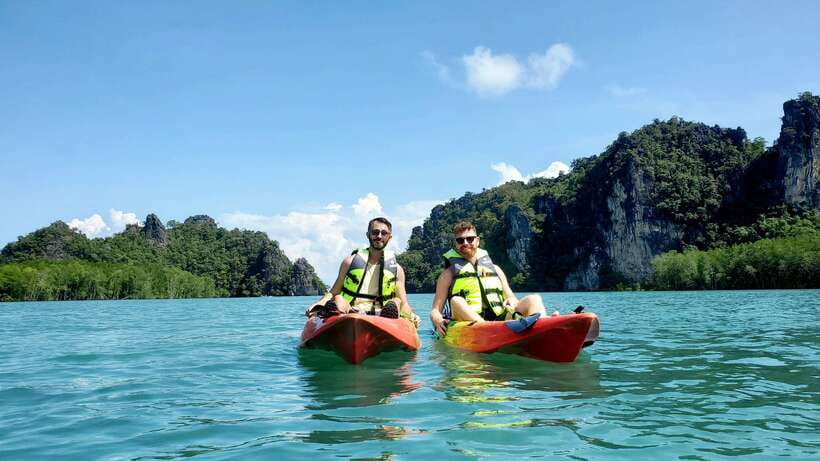
Kilim Karst Geoforest Park is best explored quietly, and this four-hour kayak tour takes you into narrow mangrove channels that larger boats cannot reach. You may spot sea eagles, monkeys, mudskippers, crabs, monitor lizards, otters, snakes, and bats, all while learning how the forest supports Langkawi’s coastal ecosystem.
I like the stable sit-on kayaks with back support, and I like the guides’ clear concern for responsible wildlife watching. Guides including Wan, Sham, Musz, and Wafiq are praised for patient instruction and sharp animal spotting. The drawback is simple: kayaking takes stamina, especially near the end, and wildlife sightings can never be promised.
Key points to know before booking
- Kayak into narrow mangrove passages: You reach quiet waterways that speedboats cannot enter.
- Expect strong local guiding: Wan, Sham, Musz, and other English-speaking guides explain animals, conservation, culture, and park history.
- Wildlife is watched without feeding: Eagles are observed naturally, unlike tours that attract them with food.
- The kayaks are beginner-friendly: Back support, stable sit-on designs, and a safety briefing make the outing approachable.
- Lunch is served over the water: The meal is simple but welcome after paddling, with chicken or vegetable fried rice and tom yam soup reported as typical dishes.
- The bat cave may be an added bonus: Some departures include a cave visit, plus possible stops at a fishing farm.
Why a kayak is better than a speedboat here
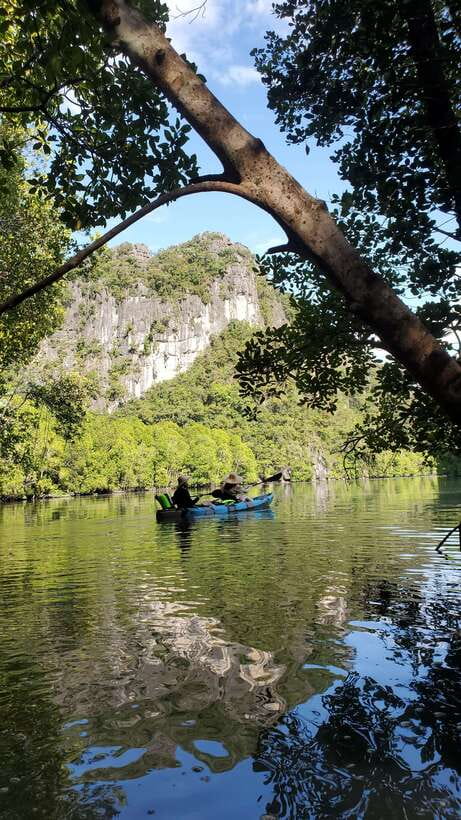
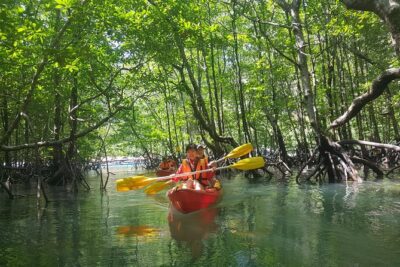
Kilim Karst Geoforest Park is famous for limestone cliffs, tidal mangroves, and winding waterways. A speedboat gives you a broad view quickly, but a kayak changes the pace completely. You move slowly, make little noise, and can turn into tight channels where motorized boats cannot go.
That quiet matters. You hear the paddle, insects, birds, and water against the kayak rather than a boat engine. Guides can stop to point out a mudskipper on the bank, a crab beneath a root, or a snake resting in a branch. The experience is less about ticking off sights and more about paying attention.
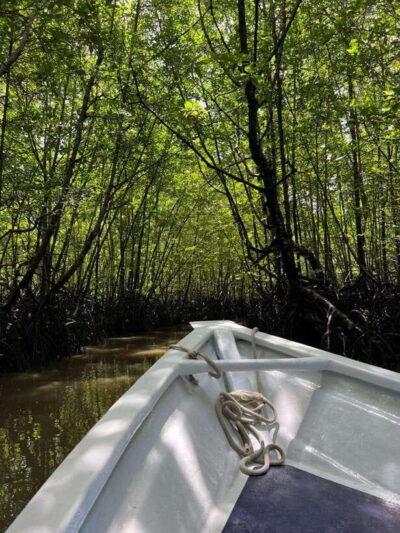
The limestone cliffs provide the dramatic backdrop, but the mangroves are the real reason to choose this trip. Their tangled roots shelter young fish and crabs, slow coastal erosion, and support birds and other wildlife. Your guide explains these links in plain English, giving the scenery a useful context rather than treating it as a backdrop for photographs.
More mangrove trips around Langkawi:
- Langkawi: Kilim Mangrove Boat Tour with Lunch and Pickup
★ 4.8 · 899 reviews - 5 Hours Sharing Basis Kilim Mangrove Safari Boat Tour in Langkawi
★ 5.0 · 504 reviews - Langkawi: Mangrove River Cruise Sharing 3 Hours
★ 4.6 · 474 reviews
Starting at Kilim Geoforest Park
You meet at Kilim Geoforest Park, Check Point 1. The meeting point is in the park car area, and finding the right guide can take a little focus because other taxi and tour staff may be nearby. If you are arriving from a cruise port, allow time to walk past the car park and toward the guardhouse area.
The operator’s WhatsApp and email support can help with meeting instructions or hotel transfer questions. A short walk of roughly 100 metres leads to the jetty, according to one detailed account of the route. From there, you take a short boat ride to the kayaking base or floating pontoon.
This transfer is practical rather than scenic theater. It gets you from the main park entrance to the quieter water where the kayaks are ready. You can leave some belongings at the kayak base, while waterproof bags or cases are also provided for items you need with you.
The safety briefing and kayak setup
Before paddling, you receive a safety briefing and a life jacket. The supplied jackets are described as shoulder-style models worn throughout the activity, not equipment you put on only for the first few minutes.
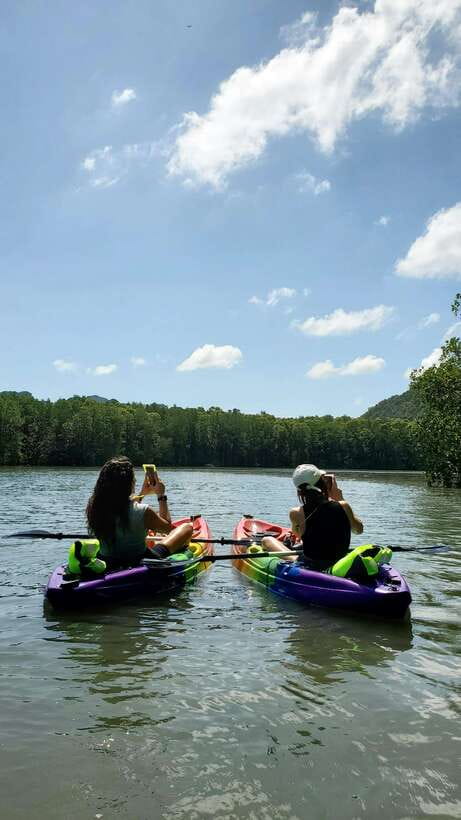
The kayaks are sit-on models with back support. That is a useful detail for beginners, couples sharing a kayak, and anyone who wants to focus on the forest instead of balancing in a cramped cockpit. They are also described as stable and maneuverable, which helps when the channel bends sharply or narrows between mangrove roots.
You do not need advanced kayaking skills. Guides explain the basic strokes and remain attentive as the group gets moving. The activity is rated easy and beginner-friendly, but that should not be confused with effortless. Paddling for several hours can tire your shoulders and arms, particularly during the final stretch.
A small group improves the outing. Groups of five to eight people are common in the supplied accounts, including four couples sharing four kayaks. Smaller numbers give the guide more time to correct technique, spot animals, and keep everyone together through twisting waterways.
Paddling through the mangrove channels
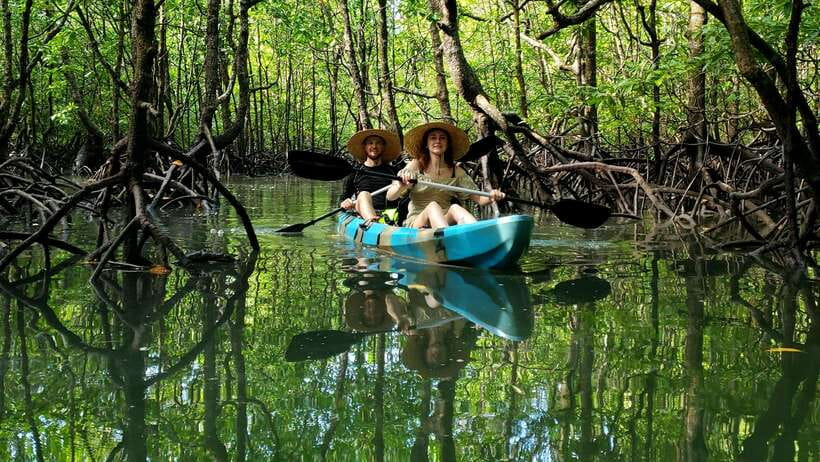
The first major section takes you under the mangrove canopy and between limestone formations. The water is generally calm, and the route is designed around a relaxed pace rather than speed.
This is where the tour earns its price. You are not simply being carried past the mangroves. You actively enter them, adjust your paddle as the channel turns, and get close enough to notice small life along the banks. The silence can be striking, especially when the group pauses and the boats cannot follow.
Your guide will likely point out mudskippers, climbing fish, crabs, and monitor lizards. These animals are easy to miss without someone trained to notice a small movement in the roots or a shape blending into the mud. Several guides are also praised for taking time to let the group look before moving on.
The route can feel more challenging in the narrowest sections. You may need to make repeated short strokes rather than broad ones, and your kayak partner needs to paddle in a reasonably shared rhythm. If you have a normal level of fitness, the activity should be manageable, but older participants or people unused to paddling may find the last part tiring.
Wear clothes that can get wet. Even in calm water, paddles drip, and the tropical heat makes wet clothing less of a problem than carrying a dry outfit for afterward. Bring sunscreen, insect repellent, a towel, and a change of clothes. Comfortable clothing is more useful than anything stylish.
A few more Langkawi trips worth a look
- 5 Hours Kilim Mangrove Kayaking Sharing Tour (With Hotel Pickup)
★ 5.0 · 314 reviews - Langkawi: Kilim River Mangrove Safari Kayaking Tour
★ 4.9 · 117 reviews - Langkawi Sunset Kayaking Adventure with nature guide
★ 5.0 · 105 reviews - Half-Day Mangrove Kayaking in Langkawi
★ 5.0 · 82 reviews
Eagle watching without animal feeding
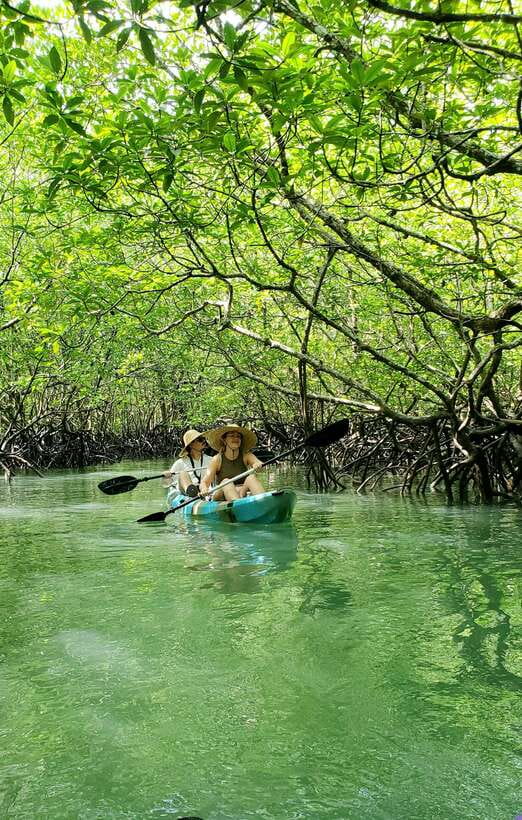
Eagle watching is one of the tour’s central moments. The kayaks move toward more open water where sea eagles and kites may be seen hunting or circling above the park.
The important difference here is the no-feeding approach. Some wildlife tours attract eagles by throwing food into the water. This operator presents the activity as eco-tourism and does not feed the animals. You may not get the same guaranteed close-up spectacle, but the encounter is less disruptive and more honest.
This also means you should set your expectations correctly. Eagles are wild animals, and their behavior depends on tide, weather, timing, and luck. The guides can locate them and explain what to watch for, but no one can promise a perfect photograph or a dramatic plunge into the water.
Bring sunglasses and keep your camera ready, but do not let the search become the whole point. Watching the birds move through their natural setting is more rewarding than treating the stop as a staged show.
Wildlife spotting from monkeys to snakes
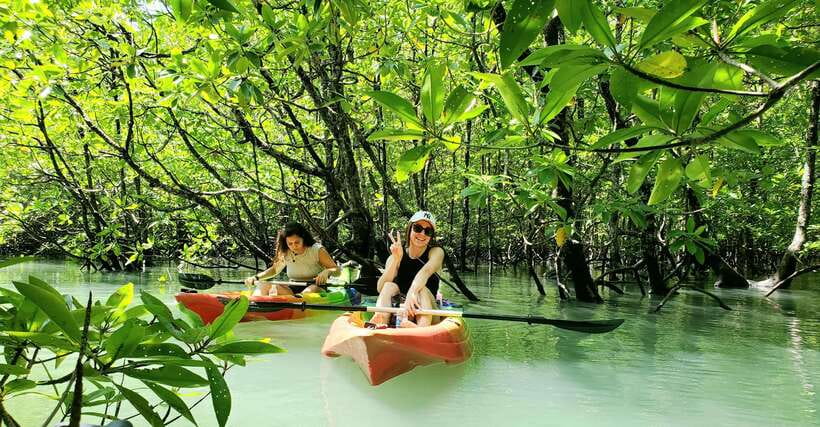
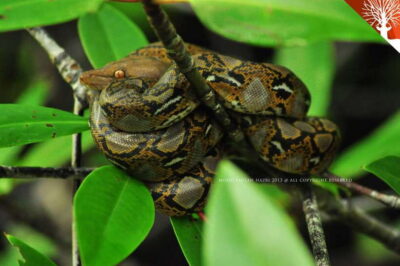
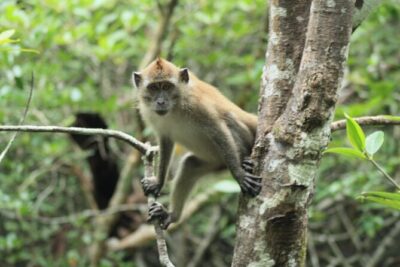
The species list can be surprisingly long for a half-day outing. Possible sightings include monkeys, sea eagles, otters, water monitor lizards, tarantulas, bats, snakes, crabs, mudskippers, and other birds.
Monkeys may appear around the mangrove edges and near the cave area. They can be entertaining, but they are still wild animals. Keep food packed away and follow the guide’s instructions. One useful feature of this tour is that the guides discourage contact rather than encouraging guests to approach animals for photographs.
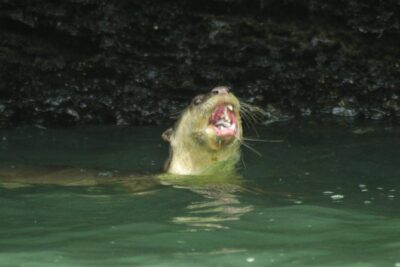
Sea otters have been spotted near the floating restaurant, though this is not something to count on. Snakes and tarantulas can be difficult to see without the guide’s help. Guides such as Wan and Sham receive repeated praise for finding small animals that most people would paddle past.
The no-contact policy is a real strength. You get to observe instead of handle, chase, or feed. That may sound less exciting than an animal interaction, but it protects the habitat and gives you a better idea of how the place actually functions.
The optional bat cave and limestone formations
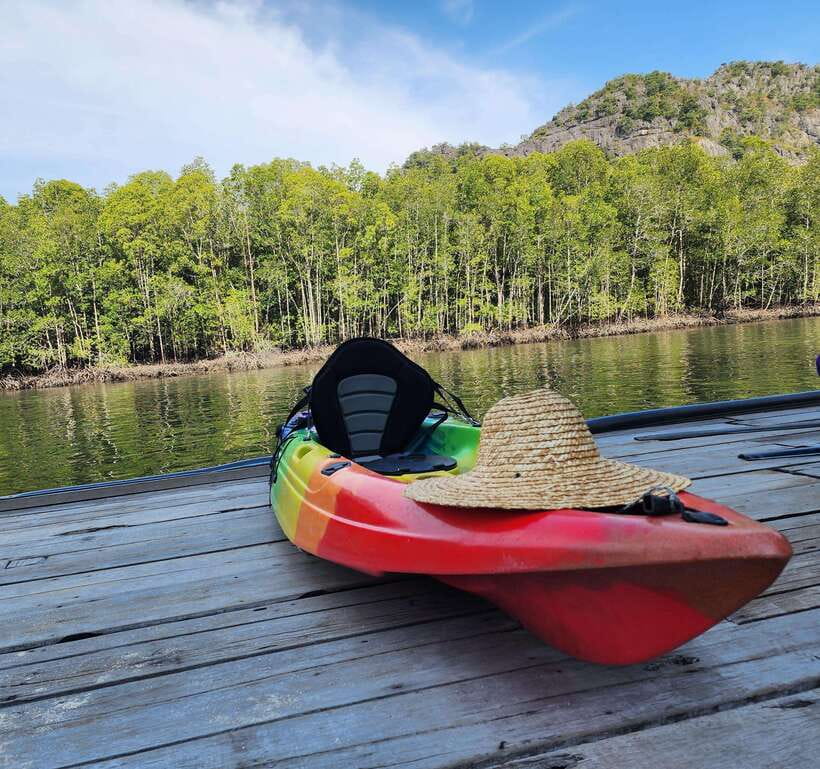
The bat cave is described as an optional bonus, and it is included on some outings. The cave adds another layer to the park, shifting your attention from tidal roots and birds to limestone geology and nocturnal animals.
The visit is usually brief, but it can be a memorable change of scene. You may see bats inside, while the surrounding area can also bring monkeys and other wildlife. One guide reportedly kept an eye on the monkeys so the group could visit more comfortably.
Do not assume the cave is guaranteed on every departure. It is presented as an optional addition, and the exact sequence can vary. If the cave is important to you, ask about it before booking.
The limestone formations themselves are worth attention. Kilim’s cliffs were shaped over a very long period, and the caves show how water has worked through the rock. A good guide connects these formations to the park’s plants and animals, so you understand why the area is protected rather than seeing only impressive stone walls.
Lunch at the floating restaurant
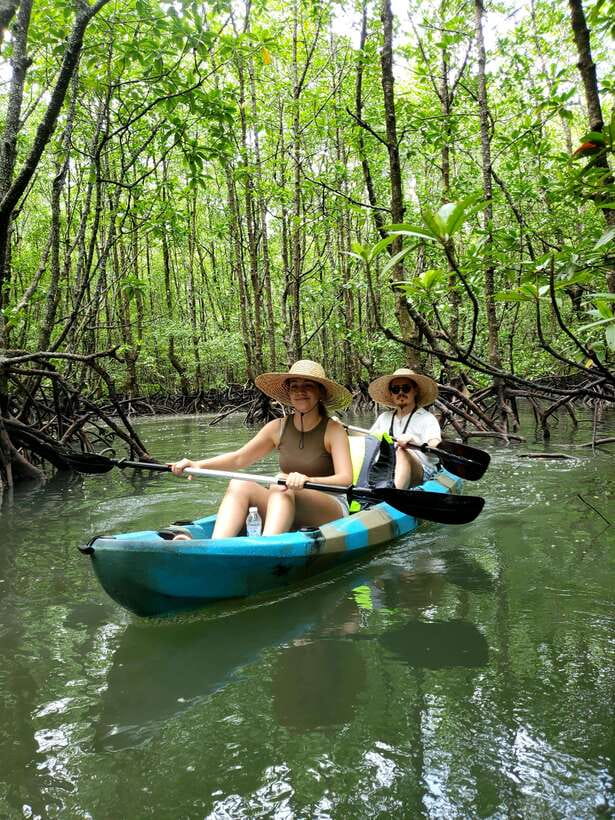
After the kayaking, you eat at a floating restaurant. This is a practical ending to the active part of the tour, since food and a cold drink are welcome after time in the sun.
The meal is generally described as simple rather than luxurious. A typical offering includes tom yam soup and chicken or vegetable fried rice, with drinking water and, in some accounts, bottomless soft drinks. Vegetarian preferences and spice levels can be accommodated, but it is sensible to mention your needs ahead of time.
I would judge the meal as part of the value, not the main reason to book. It gives you a place to sit, recover, and share the day with the group. For a $59 price, including the boat transfer, equipment, guide, water, and meal, it helps make the package fair.
The floating setting is pleasant, but there is one environmental point worth noting. A basin at the restaurant has been observed draining directly into the water, with soap that may not be eco-friendly. That does not erase the operator’s wider conservation effort, but it is a reasonable area for improvement.
What the $59 price gets you
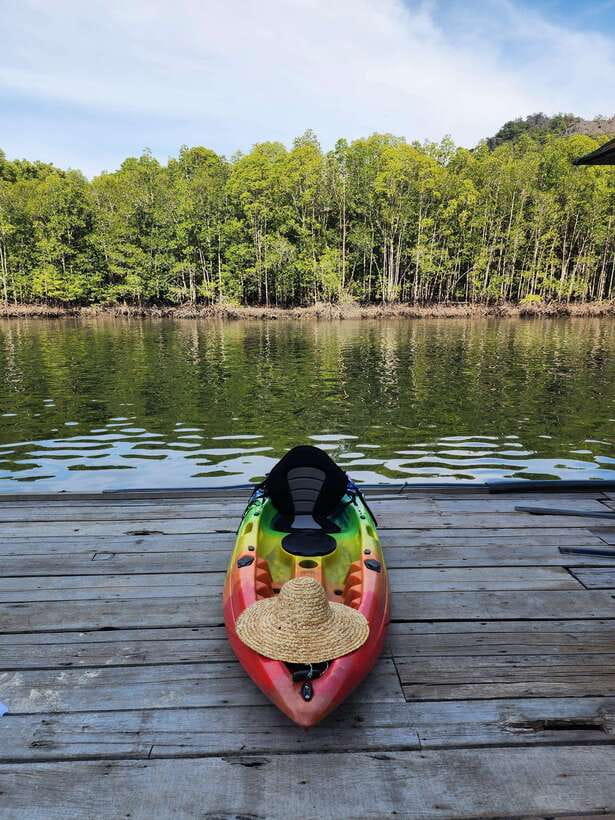
At $59 per person, this tour costs more than a basic boat ride around the mangroves. The comparison is not quite like for like. You are paying for a guide, safety equipment, a short transfer boat, a supported kayak, waterproof storage, drinking water, eagle watching, several hours on the water, and lunch or early dinner.
The strongest value comes from access. A boat can cover more distance, but a kayak gets into smaller channels and gives you a quieter view of the ecosystem. You also receive instruction and active wildlife interpretation rather than only a ride past the cliffs.
The price is less compelling if you dislike physical activity or mainly want a quick scenic cruise. In that case, a regular boat outing may suit you better. For anyone who values quiet nature, close observation, and a guide who takes conservation seriously, the extra cost makes sense.
The overall rating is 4.9 from 358 reviews, which matches the repeated praise for guides, scenery, safety, and the kayaking route. The lunch receives more mixed wording, usually described as basic but tasty. That is the fair expectation to carry with you.
Who will enjoy this four-hour outing
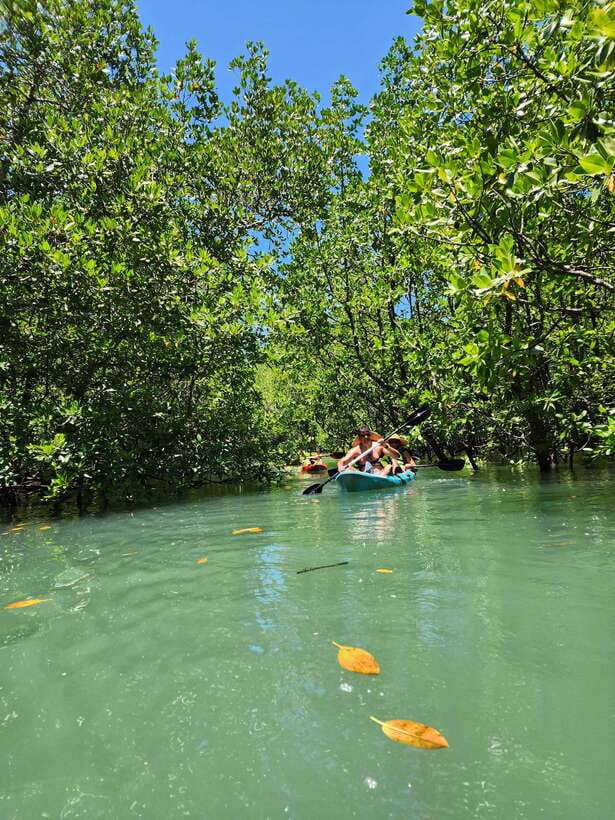
This is a strong choice for first-time kayakers, couples, small groups, and anyone who wants a slower alternative to a speedboat. The back support and stable sit-on kayaks reduce the usual beginner worries, while the guides provide basic tuition before you enter the channels.
You should have enough stamina to paddle for several hours. The route is not presented as difficult, but several accounts note that the arms can tire toward the end. The activity is suitable for people under 120 kilograms, and a life jacket for children under three is not included.
The tour is not suitable for wheelchair users, and pets, oversized luggage, large bags, alcohol, drugs, and riding animals are not allowed. These rules are straightforward, but they matter when you are planning a family day or arriving directly from a cruise ship.
For families with very young children, confirm the equipment and age arrangements before paying. For everyone else, the beginner focus and careful briefings make this easier to approach than the word kayaking may suggest.
Small details that make the day easier
Use the provided waterproof bag for phones, wallets, and other essentials, but still bring only what you need. A towel and spare clothes are worth packing because paddle water can reach you even when the weather is dry.
Put on sunscreen before leaving the meeting point. The mangroves provide shade, but the open-water eagle-watching section can be bright. Sunglasses, a hat, insect repellent, and comfortable clothes are all listed as useful items, and each has a clear purpose.
If you are meeting the tour after a cruise, read the directions carefully and allow time to reach Check Point 1. If you are arranging hotel transport, ask the operator about it directly. Transfers have been arranged on request for a fair price, but they are not included in the stated package.
Cancellation is flexible up to 24 hours before the activity for a full refund, and you can reserve now and pay later. Check the available start times because the activity lasts about four hours and may finish around lunch or early dinner, depending on the departure.
Should you book the Kilim kayak tour?
Book it if you want to experience Langkawi’s mangroves at water level, enter channels that boats miss, and learn about wildlife without feeding or touching it. The best part is the combination of quiet paddling, sharp-eyed local guides, and real access to the forest.
Skip it if you want a completely passive outing, dislike getting wet, or have no interest in paddling. Also keep the wildlife sightings in perspective: you may see eagles, monkeys, bats, or snakes, but nature does not work to a timetable.
For most active visitors, I would choose this over a standard speedboat ride. The $59 price is justified by the equipment, meal, guide, and access to narrow mangrove waterways. Bring sunscreen, a dry change of clothes, and modest expectations for lunch, then let the forest set the pace.
FAQ
Where does the Langkawi mangrove kayak tour start?
The meeting point is Kilim Geoforest Park in Langkawi, Kedah, at Check Point 1.
How long does the activity last?
The tour lasts about four hours, with availability depending on the selected starting time.
Is the tour conducted in English?
Yes. The live tour guide language is English.
Is lunch included?
Yes. Lunch or early dinner at a floating restaurant is included.
What food is served at the floating restaurant?
The meal may include tom yam soup and chicken or vegetable fried rice. Drinks and drinking water are also provided.
Are kayaks and safety equipment included?
Yes. Kayaking equipment, a kayak with back support, and a life jacket are included.
Is the tour suitable for beginners?
Yes. The activity is described as easy and beginner-friendly, with a safety briefing and basic kayak instruction. You still need enough stamina for several hours of paddling.
Will the tour include a bat cave visit?
The Bat Cave is listed as an optional bonus, so you should not assume it is guaranteed on every departure.
What wildlife might I see?
Possible sightings include eagles, monkeys, crabs, mudskippers, monitor lizards, otters, bats, snakes, tarantulas, and other birds. Wildlife sightings depend on natural conditions.
What should I bring?
Bring sunglasses, a sun hat, sunscreen, insect repellent, comfortable clothes, a towel, and a change of clothes. A waterproof bag or case is provided for belongings.
More Lunch Experiences in Langkawi
- Combo – Cable Car & Sky Bridge And Tg. Rhu Mangrove Private Boat Tour With Lunch
★ 4.5 · 61 reviews - Langkawi : Kilim Mangrove Boat & Fun Kayak Tour with Lunch
★ 5.0 · 23 reviews - Langkawi Mangrove : Sharing Boat 3Hour estimated (lunch)
★ 4.6 · 20 reviews - Sharing Half Day Mangrove Boat Tour With Lunch in Langkawi
★ 4.5 · 16 reviews
Just added around Langkawi
- Langkawi Jet Ski Tour Golden Tuba★ 5.0 · 3 reviews
- Langkawi: Jet Ski Fishing Tour with Guide★ 5.0 · 3 reviews
- Langkawi Sky Cab (Cable Car) Admission Ticket★ 4.5 · 3 reviews
- Langkawi: Jet Ski and Parasailing Tour★ 3.5 · 3 reviews
- Customize Langkawi Full Day Tour (8 hrs-Private Tour)★ 3.5 · 3 reviews
- Langkawi Highlights Day Tour – ATV, Mangrove Cruise & Cable Car★ 5.0 · 3 reviews
- Langkawi Sunset Cruise★ 3.0 · 3 reviews
- Langkawi Sunset Cruise Package★ 3.5 · 3 reviews
Langkawi Tours, compared.
Premium Jet Ski Tour Including Dayang Bunting Island
Read our review →
5 Hours Sharing Basis Kilim Mangrove Safari Boat Tour in Langkawi
Read our review →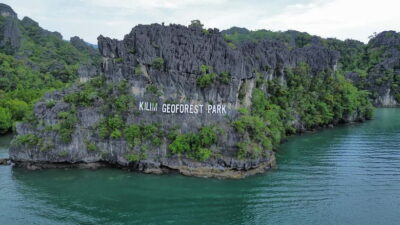
5 Hours Kilim Mangrove Kayaking Sharing Tour (With Hotel Pickup)
Read our review →Browse the lists this tour appears in