
Reviewed · KUALA LUMPUR TOURS
Kuala Lumpur City Full Day Tour with 23 Famous Landmarks
Kuala Lumpur packs Hindu shrines, colonial buildings, royal landmarks, Chinese temples, modern towers, and tropical gardens into one spread-out city. This eight-hour private tour lets you see the big picture without piecing together taxis, trains, and short walks between far-flung sights.
I like the door-to-door transport and the sheer range of stops. Batu Caves, the National Mosque, Chinatown, and the Petronas Twin Towers show you very different sides of Malaysia in one day. I also like that the route includes working craft centers, where you can watch pewter and batik being made.
The trade-off is pace. Many stops last only 10 minutes, and several are photo stops rather than full visits. The heat can make the schedule tiring, and guide quality matters: Suresh has been singled out for clear, friendly guiding, while weaker English and missed stops have caused problems for some bookings.
Key points to know before booking
- Batu Caves comes early: You have about 30 minutes and can climb 272 steps to the Hindu shrine, but the visit may feel rushed.
- This is a private tour: Only your group participates, with an English-speaking driver and optional licensed guide depending on the package.
- Most major sights are exterior visits: Istana Negara, the National Museum, and the Petronas Twin Towers are photo stops unless an upgrade says otherwise.
- The route crosses the whole city: You’ll see royal, religious, colonial, commercial, and modern Kuala Lumpur in one long circuit.
- KL Tower access is optional: The observation deck is included only when you select the KL Tower option.
- Plan for lunch and water: Lunch is not included, and one booking specifically found the heat difficult without cold water supplied.
What this Kuala Lumpur day tour is really designed to do
This is a city sampler, not a slow cultural walk. The vehicle does the hard work while you move from northern Kuala Lumpur to the Lake Gardens, old city center, Brickfields, Chinatown, craft centers, and KLCC.
The tour begins at 9:30 a.m. and lasts about eight hours. Hotel pickup and drop-off are offered at selected hotels, generally within 5 kilometers of the city center. Pickup farther out costs an extra USD 10 per person, payable on the day.
The published title refers to 23 famous landmarks, but the route also lists Harriston Chocolate as a final stop. That extra stop is a short retail visit, not a major sightseeing site. The total schedule is therefore best understood as a full circuit with many brief stops.
Your vehicle is air-conditioned, private, and intended to keep the day moving. That matters in Kuala Lumpur, where heat, traffic, and distance can quickly drain your energy. The private format also gives your own group the vehicle, rather than placing you with strangers.
The package can include an English-speaking driver. A professional licensed guide is included only with the option that specifically adds one, so check the package details before paying. The difference matters here because a driver who points out buildings is not the same as a guide who can explain Malaysia’s past and religious traditions.
A few more Kuala Lumpur trips worth a look
- Kuala Lumpur: Full-Day Private City Highlights Tour
★ 4.6 · 589 reviews - Kuala Lumpur City Tour Full Day 8 hours
★ 4.5 · 575 reviews - From Kuala Lumpur: Full-Day Taman Negara National Park
★ 4.3 · 318 reviews
Batu Caves and the royal northern route
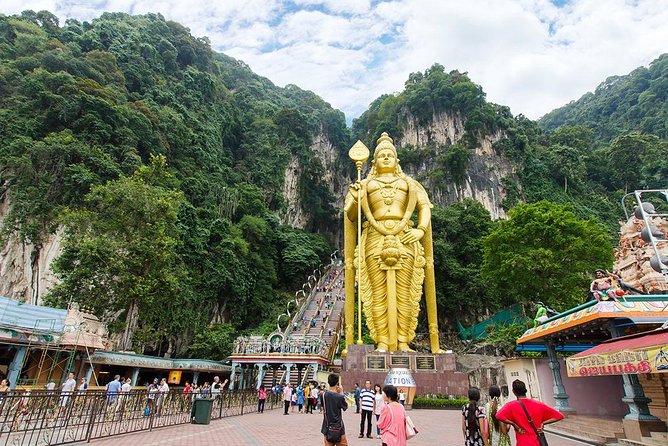
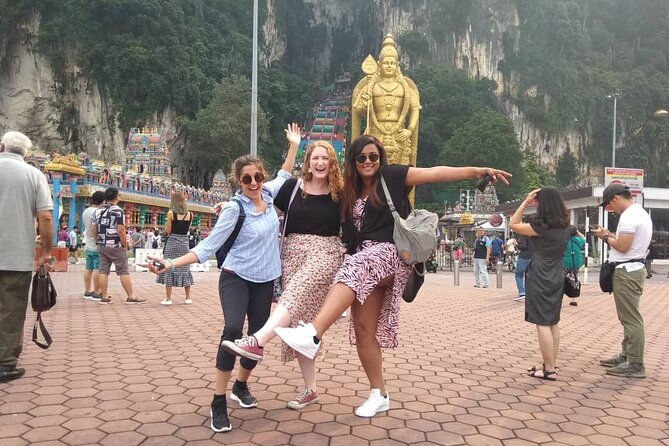
Batu Caves is the most physical stop of the day. At the entrance, a gold statue of Lord Murugan rises about 140 feet, or 42.7 meters. Behind it, 272 steps lead uphill to a Hindu shrine set inside the limestone caves.
You have roughly 30 minutes here. That is enough for photographs and a quick climb if you are fit, but it does not leave much room for a relaxed visit. If you want to reach the shrine, start climbing soon after arrival. If the heat is strong, the steps will feel harder than the number suggests.
This is also one place where the guide needs to stick to the agreed route. A booking that received poor service reported that the driver initially tried to skip Batu Caves until the passenger showed the planned schedule. Keep your itinerary visible and confirm the first stops at the start of the morning.
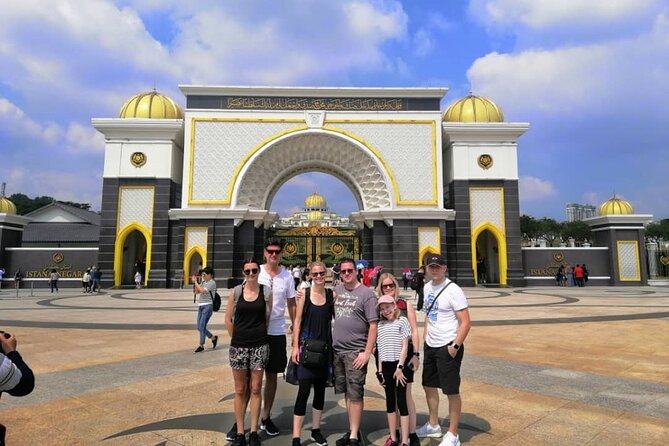
Next comes Istana Negara, the National Palace. You stop at the main entrance for about 10 minutes and cannot enter the grounds. The palace opened in 2011, replacing the former palace in central Kuala Lumpur, and its large complex includes 22 domes and separate formal, royal, and administrative areas.
The Houses of Parliament follows as another short photo stop. The complex includes a three-story main building and a 17-story tower near the Lake Gardens. You will not tour the chambers, but the stop helps place Malaysia’s government institutions within the city.
The National Monument is close by. Its bronze figures honor those who died in Malaysia’s struggle for freedom, including the Japanese occupation and the Malayan Emergency. The monument is noted as the world’s tallest bronze freestanding sculpture grouping.
These three stops work best as a connected lesson in Malaysia’s modern state: monarchy, government, and national remembrance. They are not long visits, so your guide’s explanation adds much of the value.
Green space, a modern mosque, and independence symbols
Taman Botani Perdana, also called the Perdana Botanical Garden or Lake Gardens, gives you a short break from buildings and roads. The garden occupies part of Kuala Lumpur’s Heritage Park and was developed as a tropical plant collection and public green space.
You have about 20 minutes. Treat this as a breathing space and a quick walk, not a full botanical garden visit. The appeal is seeing a patch of tropical greenery inside the capital, not checking off every garden feature.
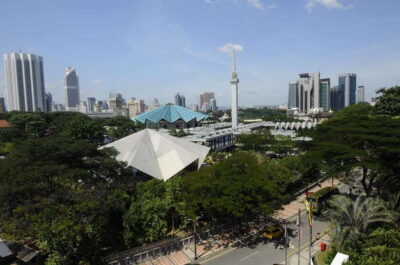
The National Mosque is one of the route’s most important architectural stops. Completed in 1965, it reflects the confidence of a newly independent Malaysia through bold reinforced concrete design. Its 73-meter minaret and 16-pointed star roof are the key features.
The roof recalls an open umbrella, an apt image in a tropical country. Reflecting pools and fountains add calm around the 13-acre grounds, while the mosque can hold up to 15,000 people.
The visit lasts about 20 minutes. Dress and conduct should be respectful at this religious site. The schedule does not promise a full interior tour, so expect a look at the complex rather than an extended visit.
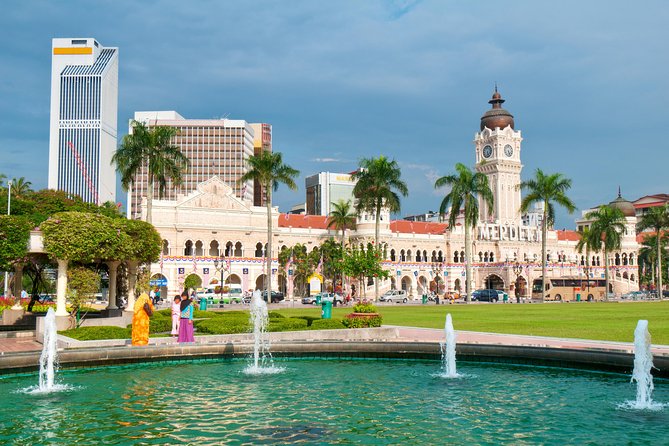
Dataran Merdeka, or Independence Square, brings the national story into focus. Malaysia’s flag was first raised here at midnight on August 31, 1957, after the Union Flag was lowered. The field later became the usual setting for the annual Independence Day parade.
The nearby Sultan Abdul Samad Building is one of Kuala Lumpur’s best-known colonial-era facades. Built for British administration in the late nineteenth century, it was later named for Sultan Abdul Samad, the Selangor ruler at the time construction began.
At the River of Life, the Klang and Gombak rivers meet near Masjid Jamek Sultan Abdul Samad, the city’s oldest mosque. The stop is brief, but it helps explain the city’s physical beginnings around two waterways.
Old Kuala Lumpur in short, sharp stops
Kuala Lumpur City Gallery is a useful orientation point. Its displays include photographs of old Kuala Lumpur, a scale model of Merdeka Square, and a larger model showing the modern city.
The building itself has had several lives. The neo-Renaissance structure dates to 1899 and once served as the main colonial printing office, later becoming a public library. You have about 20 minutes, enough to get a basic outline of Kuala Lumpur’s growth.
The Malayan Railway Administration Building and Kuala Lumpur railway station offer another look at the city’s past. The station was completed in 1917 and mixes Eastern and Western architectural ideas. It was once the city’s main rail hub before Kuala Lumpur Sentral took over much of that role in 2001.
These stops are mainly exterior views. I find them worthwhile for architecture, but if you want museum time or detailed photographs, the schedule is too tight. Ask the driver or guide which stops are flexible before the day gets away from you.
The National Museum, or Muzium Negara, is also listed as a photo stop, with admission not included. Its Malay palace-style building and two large Italian glass mosaic murals make it easy to recognize.
Inside, the upgraded galleries cover Malaysia from prehistoric times to the present, but this tour does not give you time or admission for that full visit. If Malaysian history is a main reason for your trip, plan a separate museum visit rather than expecting this stop to provide it.
Brickfields, Kuala Lumpur’s Little India, gives the day a more street-level feel. For about 30 minutes, you can see Indian clothing shops, food businesses, and provision stores around one of the city’s largest Indian communities.
This is one of the better stops for a quick snack or small purchase, though lunch is not included in the tour. Brickfields is also near KL Sentral, which helps explain why the area has become an important transport and property district.
Same country, a completely different kind of day:
- Kuala Lumpur: Batu Caves Half-Day Tour with Pick-Up Option
★ 4.5 · 4,288 reviews - Private Half-Day Batu Caves and Cutural Tour in Kuala Lumpur
★ 5.0 · 3,107 reviews - Sambal Streets Kuala Lumpur Food Tour with 15+ Tastings
★ 5.0 · 2,438 reviews - Historical Malacca Guided Day Tour (Shared Tour)
★ 5.0 · 2,172 reviews
Temples, Chinatown, and Central Market
Thean Hou Temple sits on Robson Heights overlooking Jalan Syed Putra. This six-tiered temple honors Mazu, the Chinese sea goddess, and was built by Hainanese people living in Malaysia. Completed in 1987 and opened in 1989, it is among the largest temples in Southeast Asia.
The 20-minute stop should give you time to see the elevated setting and major exterior details. It is a fine contrast to the National Mosque, with a different religious tradition, architectural language, and community story.
Chinatown receives about 30 minutes. The area centers on food, clothing, accessories, coffee shops, temples, and small galleries. Its older name, Chee Cheong Kai, means Starch Factory Street, a reference to the mills once associated with the district.
You can browse, photograph, and perhaps grab a quick bite, but do not expect a long market session. Kuala Lumpur’s Chinatown is most atmospheric after sunset, while this daytime tour gives you only a compact introduction.
Central Market is a few minutes away. Founded in 1888 as a wet market, it moved into its current Art Deco building in 1937. It is now a Malaysian culture and craft center, with shops that make it easier to buy souvenirs in one place.
Guan Di Temple, nearly opposite Sri Mahamariamman Temple, adds another religious stop. It honors the Chinese general Guan Di, also known as Guan Yu, a figure linked with Taoist worship and Chinese literature.
Sri Mahamariamman Temple dates back to 1873 and is the oldest Hindu temple in Kuala Lumpur. The current structure was completed in 1968, using Italian and Spanish tiles, precious stones, and gold details.
Its 75-foot, five-tiered Raja Gopuram forms the main entrance. You have only about 10 minutes, so the visit is mostly about seeing the ornate gateway and understanding the temple’s place at the edge of Chinatown.
Pewter, batik, and Kuala Lumpur from above
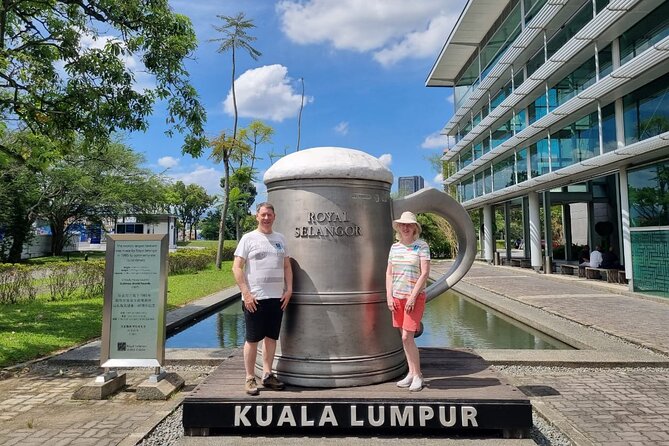
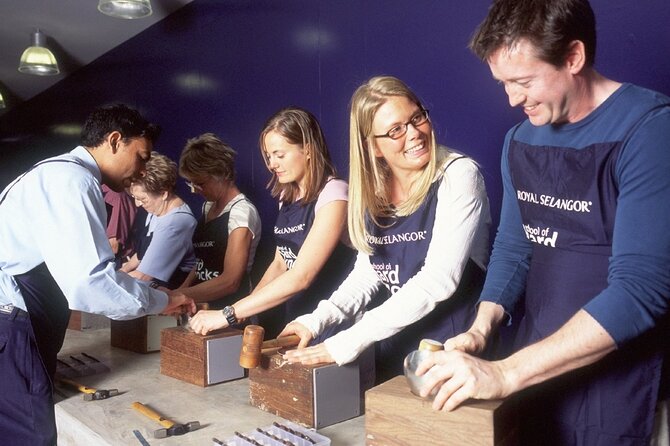
The Royal Selangor Visitor Centre is one of the most distinctive parts of the day. It traces the tin rush in colonial Malaya and the founding of Royal Selangor in 1885. Exhibits explain pewter and the work of pewtersmiths, with craft workshops available at the center.
You have around 30 minutes. This is more than a quick facade photograph, but the time remains limited. You can see how a local material became a major Malaysian craft, then browse pewterware, Selberan jewelry, and Comyns sterling silver.
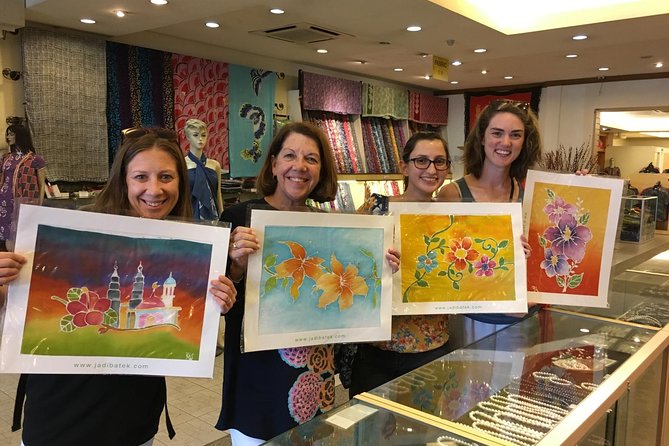
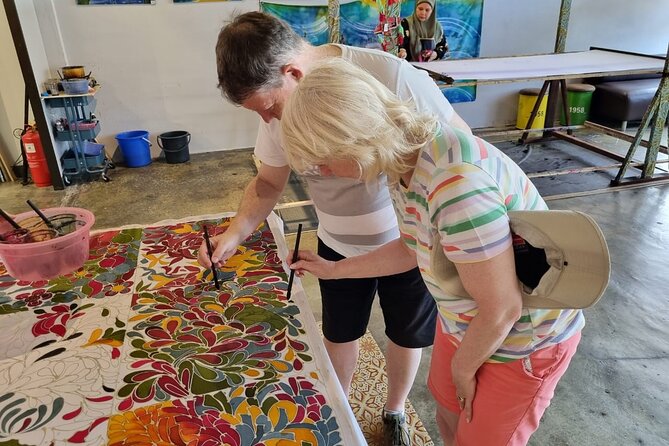
The stop at Jadi Batek Gallery comes later on the return toward the city. You learn how batik is made with wax and dye. For many people, these two craft visits give the tour more local substance than a string of monuments would.
They are also retail stops, so be prepared for the chance to shop. That is not automatically a bad thing, especially if you want Malaysian-made goods, but you should know that part of the day is built around commercial craft centers.
KL Tower is the main optional upgrade. The tower reaches 421 meters to the top of its antenna and has 22 levels, four elevators, and 2,058 stairs. It also preserves a 100-year-old Jelutong tree within the Bukit Nanas site.
If you select the KL Tower option, admission to the observation deck is included. Without it, you get a photo stop only. One of the strongest accounts of the tour praised the views from KL Tower, so this is the add-on I would consider first if you want a clear sense of the city’s size.
KLCC Park and the Petronas finale
KLCC Park provides a short pause before the final tower stop. Designed by Roberto Burle Marx, the park combines water, concrete, trees, shrubs, stones, wood, and sculpture.
You have about 10 minutes, enough for a quick look at the park and a useful photo angle toward the Petronas Towers. It is not enough time for a full walk through the grounds.
The Petronas Twin Towers are the visual climax. The 88-story pair rises 451.9 meters and was officially the world’s tallest building from 1998 to 2003. They remain the world’s tallest twin skyscrapers and one of Malaysia’s most recognizable sights.
This package provides a photo stop only, with admission not included. You will not visit the skybridge or observation levels unless you arrange tower entry separately. The short stop is still useful because the towers are hard to appreciate from a single street view, especially with KLCC Park nearby.
The route finishes with Harriston Chocolate, where you can sample or shop for chocolate with a Malaysian twist. It is a 20-minute stop and feels more like a retail finale than a sightseeing visit. If you are not interested in chocolate purchases, ask how much time you need there.
Price, guide quality, and practical value
At USD 76.94 per person, the price is reasonable when you value private transport and broad coverage. You are paying to connect 23 named sights across a large city, not for long admissions or a leisurely guided walk.
The value improves if your hotel is within the included pickup zone and your group can share the private vehicle. It drops if you add the USD 10 outlying pickup fee, buy lunch separately, and choose additional admissions beyond the optional KL Tower package.
The guide is the key variable. The strongest experience came with Suresh, described as kind and informative, while another booking found the guide’s English difficult to follow. Confirm whether your chosen package includes a licensed guide, not just an English-speaking driver.
One booking praised punctuality, a clean and sturdy car, and a professional driver. Another found the service too casual and felt that the promised route was not fully followed. I would begin by confirming Batu Caves, KL Tower access, and the final stops aloud.
Bring water, sun protection, and comfortable shoes. The schedule includes stairs, outdoor photo stops, and a great deal of time moving between sites. Cold water is not listed as an inclusion, so carry your own.
Free cancellation is available if you cancel at least 24 hours before the 9:30 a.m. start. Changes or cancellations inside that window are not refunded.
Who should book this tour?
I would choose this tour if you have one full day in Kuala Lumpur and want a broad introduction with minimal transport planning. It suits first-time visitors, families or small groups who prefer a private vehicle, and anyone who wants to combine Batu Caves, temples, colonial architecture, crafts, and modern towers.
I would not choose it if your priority is slow museum visits, extended time at religious sites, or a relaxed food-focused day. The 10-minute stops are useful for orientation, but they can feel hurried.
Book the KL Tower option if city views matter to you. Before departure, confirm the guide arrangement, hotel pickup zone, Batu Caves visit, and which sites are photo stops. With those expectations clear, this can be an efficient and worthwhile introduction to Kuala Lumpur, provided you accept the brisk pace.
FAQ
How long does the Kuala Lumpur city tour last?
The tour lasts about eight hours. It begins at 9:30 a.m. and ends back at the meeting point.
Is hotel pickup included?
Hotel pickup and drop-off are included at selected hotels. Pickup outside a 5-kilometer radius of the city center costs an additional USD 10 per person, payable on the day.
Is this a private tour?
Yes. Only your group participates in the private activity.
Is lunch included?
No. Lunch is not included in the tour price.
Can I enter the Petronas Twin Towers?
The Petronas Twin Towers are a photo stop only, and admission is not included.
Is KL Tower admission included?
Admission to the KL Tower observation deck is included only if you select the KL Tower option. Otherwise, the tour makes a photo stop.
Can I cancel for a full refund?
You can cancel for a full refund at least 24 hours before the experience’s start time. Cancellations or changes made less than 24 hours before the start are not accepted or refunded.
Just added around Kuala Lumpur
- Genting Highland Full Day Tour :Exclusive Deal★ 5.0 · 3 reviews
- Genting Highlands Day Trip from Kuala Lumpur with Skyway Cable Car Ride★ 4.0 · 3 reviews
- Full-Day Kuala Lumpur Sightseeing Tour★ 4.0 · 3 reviews
- Kuala Lumpur: City Tour, KL Tower Ticket & Putrajaya w/ Boat★ 5.0 · 3 reviews
- Private Full-Day Cameron Highlands Nature Tour from Kuala Lumpur★ 4.5 · 3 reviews
- Private Night Tour: Petronas Twin Tower And Shopping★ 5.0 · 3 reviews
- Kuala Lumpur Tour Cruise Excursion from Port Klang★ 5.0 · 3 reviews
- Kuala Lumpur International Airport to Kuala Lumpur City Transfer★ 3.0 · 3 reviews
Kuala Lumpur Tours, compared.
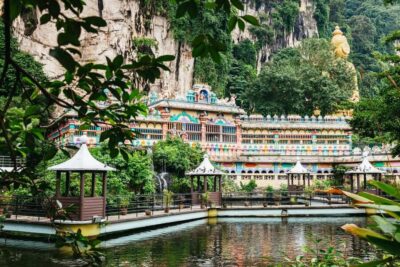
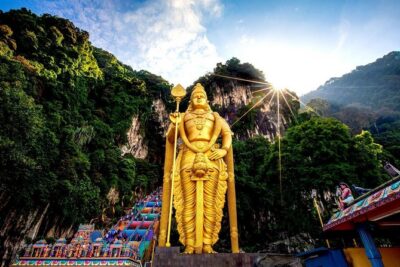
Private Half-Day Batu Caves and Cutural Tour in Kuala Lumpur
Read our review →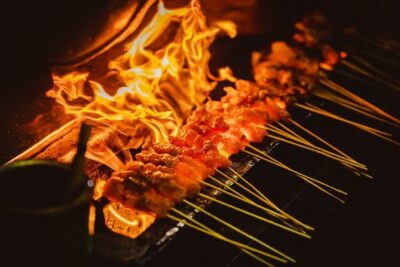
Sambal Streets Kuala Lumpur Food Tour with 15+ Tastings
Read our review →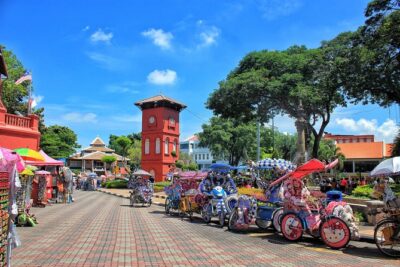
Historical Malacca Guided Day Tour (Shared Tour)
Read our review →
Genting Highland & Batu Cave Guided Day Tour (SIC/Shared Tour)
Read our review →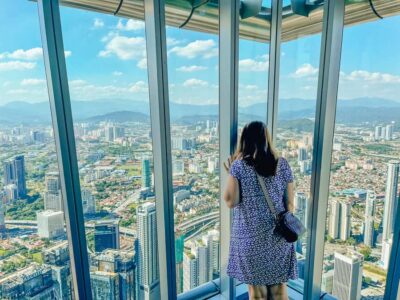
Browse the lists this tour appears in