Reviewed · KUALA LUMPUR TOURS
Malaysia Countryside and Batucaves from Kuala Lumpur
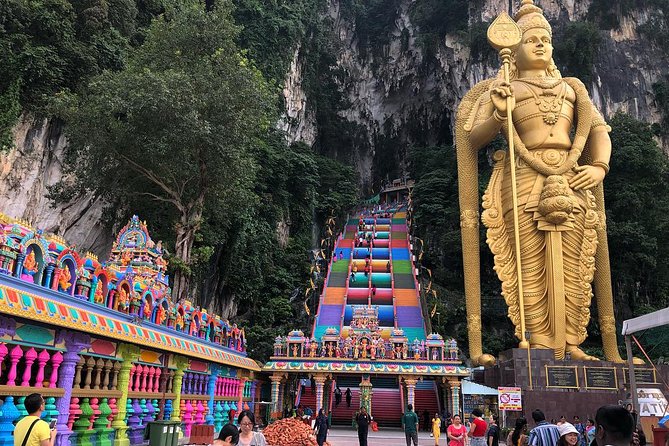
Batu Caves gives this short Kuala Lumpur outing its main jolt of color and drama: a Hindu shrine set in a limestone hill said to be about 400 million years old. You climb the famous 272 steps toward Lord Murugan’s temple, with a city panorama waiting above. The cave is both a place of worship and one of Malaysia’s best-known sights.
I like the hotel pickup and drop-off, especially if you are still finding your way around Kuala Lumpur. I also like the mix of Batu Caves with two traditional crafts, batik and pewter, since you see more of Malaysia than a single shrine. The main drawback is that the craft stops can feel shopping-oriented, and traffic may change which batik center you visit.
Key points to know
- The 272 steps are the heart of the visit: Wear sensible shoes and expect a real climb.
- You see only one batik center: The driver chooses between East Coast Batik, also called Batik Chong, and Jadi Batek Gallery.
- Royal Selangor offers a clear craft demonstration: Watch pewter being cast, polished, and assembled.
- Hotel transport saves time: Pickup and return are included, with an English-speaking driver in an air-conditioned vehicle.
- The tour takes 3 to 4 hours: Morning and afternoon departures let you fit it around other Kuala Lumpur plans.
- Take care with your belongings: Check the vehicle before leaving, since one traveler reported being charged RM50 to return a forgotten baby carrier.
Batu Caves gives this short tour its big moment
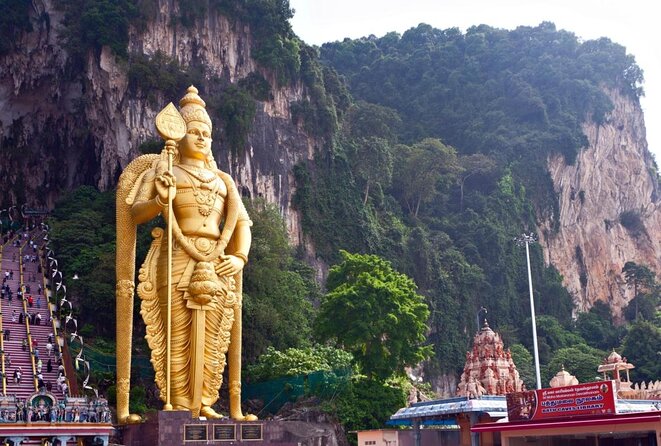
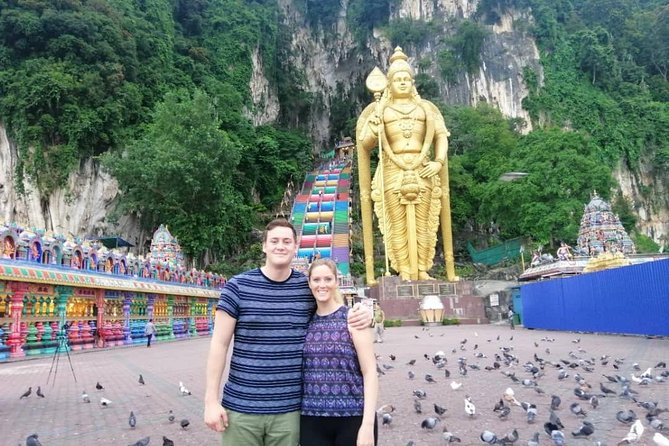
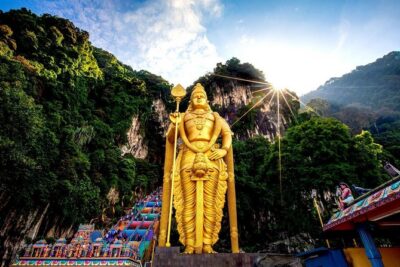
The first stop is Batu Caves, in Gombak, Selangor, just outside Kuala Lumpur. The limestone hill contains a series of caves and Hindu temples, and the site is dedicated to Lord Murugan, the Hindu deity represented by the enormous golden statue at the foot of the stairs.
The climb is the point. You have 272 steps to reach the upper temple area, so this is not a flat sightseeing stop. You can take your time, but allow for effort, heat, and the possibility of monkeys around the stairway and temple area. The tour information specifically advises you to keep your eyes open, so stay alert with food, bags, and personal items.
At the top, you enter a cavernous religious site rather than a polished museum. The scale of the limestone is impressive, and the open cave gives the shrine a strong sense of place. You also get a panorama over the surrounding area, which makes the climb worthwhile if your legs are up to it.
Batu Caves is one of the most important Hindu shrines outside India and the focal point of Malaysia’s Thaipusam festival. It is also called the 10th Cave or Hill for Lord Muruga, linked to six important shrines in India and four in Malaysia. The other three Malaysian sites named in the tour information are in Ipoh, Penang, and Malacca.
The timing matters during Thaipusam. The attraction closes for three days, the day before the festival, the festival day, and the day after. If your Kuala Lumpur visit falls near those dates, check availability before paying.
A few more Kuala Lumpur trips worth a look
- Kuala Lumpur: Batu Caves Half-Day Tour with Pick-Up Option
★ 4.5 · 4,288 reviews - Private Half-Day Batu Caves and Cutural Tour in Kuala Lumpur
★ 5.0 · 3,107 reviews - Sambal Streets Kuala Lumpur Food Tour with 15+ Tastings
★ 5.0 · 2,438 reviews
What the Batu Caves stop feels like in practice

You are given about one hour at Batu Caves. That is enough for the climb and a look around, but it is not a long, slow religious visit. If you want extended time for photography, quiet observation, and the lower temple area, you may find the schedule brisk.
Dress respectfully. The stated dress code is smart casual, and this is an active place of worship, not simply a scenic stop. Covering up appropriately is the sensible choice, and sturdy footwear will help on the stairs and uneven surfaces.
The first part of the climb can be crowded at popular times, though the tour does not promise a quiet visit. A morning departure may suit you if you prefer to tackle the stairs earlier in the day. An afternoon departure may work better if you have a late start, but the exact feel of the visit will depend on traffic and timing.
The caves also connect the religious site with the area’s older human story. Some cave entrances were used as shelters by the Temuan, an Orang Asli people. That detail adds useful context: this is not only a temple built into a rock hill, but also a place shaped by a very long geological and human past.
Batik shows Malaysia through cloth and color
The next craft stop lasts about 15 minutes. The driver takes you to one batik center, either East Coast Batik, also known as Batik Chong, or Jadi Batek Gallery. The choice depends on traffic and the driver’s route, so you should not expect to visit both.
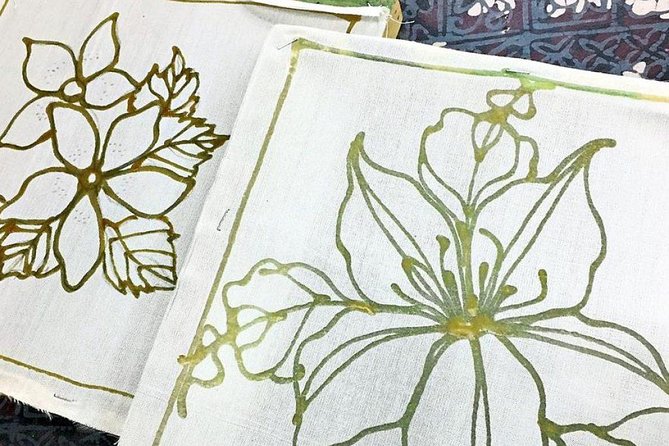
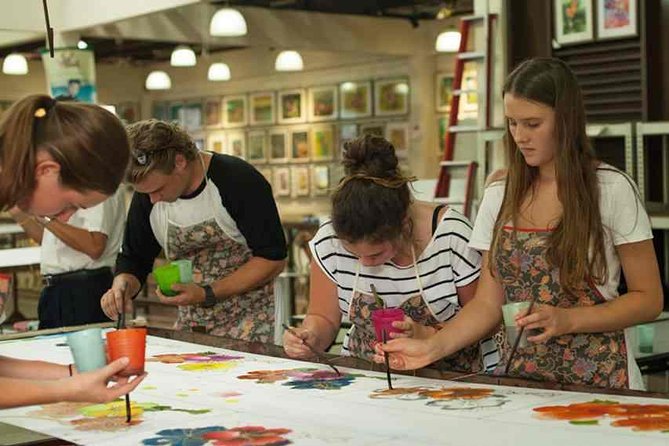
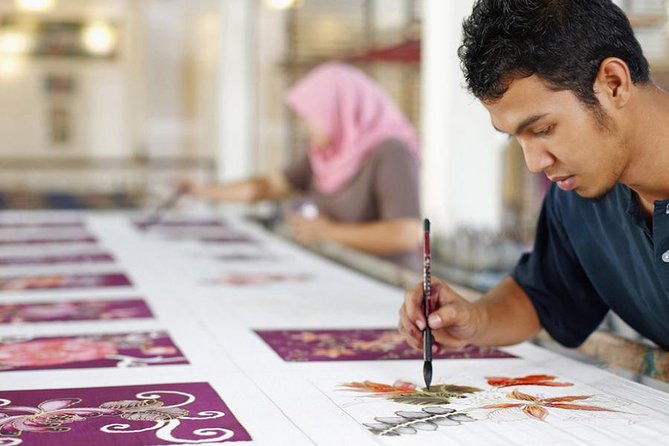
The purpose is to show how Malaysian batik is made. Batik is a textile art especially associated with Malaysia’s east coast, and common designs include leaves and flowers. At the center, you can watch or receive an explanation of the production process, then browse handmade items.
Jadi Batek Gallery is a large batik and handicraft center that has operated since 1976. Its stock can include dress fabric, ready-to-wear clothing, scarves, pareos, kaftans, men’s shirts, children’s clothes, tablecloths, coasters, wall hangings, and other batik art.
This is the most obvious shopping stop on the route. That is not automatically a bad thing. If you want a Malaysian textile souvenir, this gives you a convenient chance to see the craft and buy something directly from a specialist center. If you dislike retail visits, 15 minutes is short, but you should still know that shopping is part of the design.
I would treat the batik stop as an introduction rather than a full workshop. The information does not promise that you will make your own textile or receive a hands-on lesson. You are there to see the process and browse the finished work.
Royal Selangor explains the pewter trade
The Royal Selangor Visitor Centre is the longest craft stop, with about 45 minutes. It focuses on the history of Royal Selangor’s pewter manufacturing and combines museum exhibits with live demonstrations.
You can watch pewter being cast, polished, and assembled. That sequence helps you understand the work behind the finished object, rather than seeing only rows of souvenirs in a shop. The process is a good counterpoint to batik, since one stop focuses on cloth and the other on metalwork.
The center also has a photo opportunity beside the world’s largest pewter tankard. Another unusual display is a version of Kuala Lumpur’s Petronas Twin Towers made from more than 7,000 tankards.
This stop is likely to appeal most if you enjoy design, manufacturing, or Malaysian commercial history. It is also a useful break after the Batu Caves stairs. The visit remains structured and relatively short, so do not expect a long factory tour or an open-ended museum visit.
As with the batik center, there is a retail element. You may find pewter products available for purchase, but the supplied details do not specify prices or guarantee a particular demonstration on every departure. The value here is the chance to watch the process and see the large-scale displays without arranging a separate visit.
Same country, a completely different kind of day:
- Historical Malacca Guided Day Tour (Shared Tour)
★ 5.0 · 2,172 reviews - Kuala Lumpur: Sambal Street Food Tour with 15+ Tastings
★ 4.9 · 1,657 reviews - From Kuala Lumpur: Batu Caves Cultural Temple Tour
★ 4.7 · 1,453 reviews - Genting Highland & Batu Cave Guided Day Tour (SIC/Shared Tour)
★ 5.0 · 1,289 reviews
The drive adds a glimpse of Gombak and Setapak
Between the main stops, the vehicle passes through parts of Gombak and Setapak. These sections are route-dependent, so they are not full sightseeing stops, but they give the outing a little more local context than a direct ride from Kuala Lumpur to Batu Caves.
Gombak was home to early Minangkabau immigrants in the 1800s, and older mosques such as Masjid Lama Batu 6 Gombak still remain in the area. The district also includes villages and older settlements. You might pass a Chinese village with wooden houses in the Taman Ayer Panas area, subject to the driver’s route and traffic.
Setapak was once associated with tin mining and rubber growing. The name is explained as coming from the Malay word tapak, meaning step, with Setapak interpreted as one hundred steps. These details are brief, but they help you see the districts outside the center as places with their own past, rather than just roads leading to an attraction.
Do not book this experience expecting a dedicated neighborhood tour. The villages and suburbs are viewed from the vehicle, and the driver may adjust the route. Still, these passing views are a pleasant bonus on a half-day outing.
Hotel transport is a real part of the value
The price is listed at $25 per person, including hotel pickup and drop-off, an English-speaking driver, an air-conditioned vehicle, and all taxes, fees, and handling charges. Meals, snacks, personal expenses, and gratuities are not included.
For this price, the transport is the main value. You avoid planning a public transport route to Batu Caves, arranging a return ride, and fitting the craft centers into your own schedule. That matters in Kuala Lumpur, where traffic can make a short distance take longer than expected.
The activity is advertised as a private tour, with only your group participating, while the general tour information also gives a maximum group size of 15. Confirm the exact arrangement for your booking, especially if you are booking as a couple or family and want to know if another party will share the vehicle.
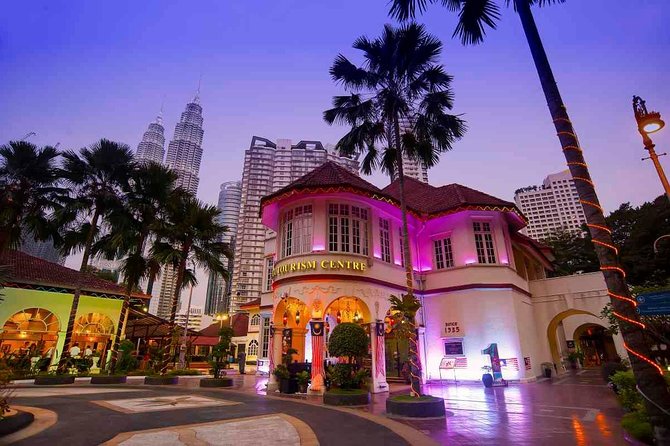
Hotel pickup is included, but the stated meeting point is MATIC109 on Jalan Ampang, and the listed end point is back at the meeting point. Confirm your pickup address and return plan when booking. This is particularly important if your hotel is outside the usual Kuala Lumpur pickup area.
The driver is English-speaking, which should make the basic logistics and explanations manageable. One guide named Rahve received especially warm praise for being helpful and making the outing enjoyable, but you should not assume Rahve will lead every departure.
Morning or afternoon, choose around your plans
You can select a morning or afternoon departure. A morning tour is a sensible choice if you want to visit Batu Caves before spending the rest of the day in central Kuala Lumpur. It also gives you more room if traffic causes delays.
An afternoon tour works if you prefer a slower start or have morning plans. Keep in mind that the tour lasts roughly 3 to 4 hours, and the exact return time can shift with road conditions. The operator may change the order of the batik stop or choose between the two batik outlets based on traffic.
The tour is booked, on average, 24 days ahead. That does not mean you must book that early, but it suggests that planning ahead is wise during busy periods or if you need a specific morning or afternoon slot.
You can cancel for a full refund up to 24 hours before the start time. Cancellations or changes made within 24 hours are not refunded or accepted. Gratuities are recommended but optional, and there is no minimum age requirement. Children must be accompanied by an adult.
Who will get the most from this outing
I would recommend this tour to you if you want Batu Caves without handling Kuala Lumpur transport yourself. It is also a good fit if you want a short introduction to Malaysian handicrafts and prefer a planned route over choosing separate attractions.
Families can use the outing as a compact half-day activity, provided everyone can manage the stairs and children remain with an adult. The no-minimum-age rule makes the tour broadly accessible in terms of booking, but the physical climb still matters.
You will probably like it if you enjoy seeing how objects are made. The batik and pewter stops give the tour more substance than a simple photo visit to Batu Caves, though neither craft center is designed as a long workshop.
This may not suit you if you want a slow religious visit, a serious hike, or a completely noncommercial experience. The stop at Batu Caves is about an hour, the craft visits are short, and at least one stop includes a substantial shopping component.
Practical tips before you leave Kuala Lumpur
Wear shoes with a good grip. The 272 stairs are the main physical challenge, and the tour does not provide a way around them in the supplied details.
Bring water, since meals and snacks are not included. Keep your belongings close and check the vehicle carefully before you leave. A baby carrier was once forgotten in a car and returning it reportedly cost RM50, so a final seat check is an easy precaution.
Allow extra flexibility around the advertised 3 to 4 hours. Traffic may affect the route, the order of the craft stops, and the time you return. If you have a flight, dinner reservation, or timed attraction afterward, leave a generous gap.
Dress smart casual and respectfully for the Hindu shrine. Carry a mobile ticket and keep your booking confirmation available, since confirmation is issued at booking.
Should you book the Batu Caves and countryside tour?
Book it if you want an affordable, transport-inclusive way to see Batu Caves and add two short craft encounters. At $25, the included vehicle, driver, transfers, and fees make it good value for a compact outing, especially for first-time visitors who do not want to negotiate Kuala Lumpur transport.
Think twice if your priority is a quiet, lengthy visit or a hands-on craft class. The stairs require effort, the schedule is fairly tight, and the batik stop may be chosen for you based on traffic.
For most people, the best reason to choose this experience is its balance: one major shrine, one textile stop, one pewter center, and a glimpse of the districts outside central Kuala Lumpur, all within half a day. Confirm the pickup details, protect your belongings, and choose the departure time that leaves you room to spare.
FAQ
How long does the Batu Caves and countryside tour last?
The tour lasts approximately 3 to 4 hours.
Is hotel pickup and drop-off included?
Yes. Hotel pickup and drop-off in Kuala Lumpur are included. The stated meeting point is MATIC109 on Jalan Ampang, so confirm the exact pickup arrangement for your hotel.
What transportation is provided?
You travel in an air-conditioned vehicle with an English-speaking driver.
How many people can join the tour?
The tour information lists a maximum of 15 participants. It is also described as a private activity for only your group, so confirm the group arrangement when booking.
How many steps are there at Batu Caves?
There are 272 steps to reach the upper temple area.
Are meals or snacks included?
No. Meals, snacks, and personal expenses are not included.
Which batik center will I visit?
You will visit one center, either East Coast Batik, also called Batik Chong, or Jadi Batek Gallery. The driver chooses the location based on traffic and the route that day.
Is there a minimum age requirement?
No minimum age requirement is stated. Children must be accompanied by an adult.
Can I cancel for a full refund?
Yes, if you cancel at least 24 hours before the experience start time. Cancellations or changes made less than 24 hours before the start time are not refunded or accepted.
Just added around Kuala Lumpur
- Private Port Klang Cruise to Kuala Lumpur City Tour★ 5.0 · 3 reviews
- Immerse Yourself in Kuala Lumpur Heritage on a Night Tour★ 4.0 · 3 reviews
- Sky Mirror Experience at Kuala Selangor from Kuala Lumpur★ 4.5 · 3 reviews
- Shore Excursion: Batu Caves And Kuala Lumpur City Tour★ 4.5 · 3 reviews
- Bird Park & Butterfly Farm Nature Tour From Kuala Lumpur★ 3.5 · 3 reviews
- Secluded Waterfall Adventure★ 5.0 · 3 reviews
- Cruise Layover Tour from Port Klang★ 4.5 · 3 reviews
- Kuala Lumpur City to Kuala Lumpur International Airport Transfer★ 5.0 · 3 reviews
Kuala Lumpur Tours, compared.

Private Half-Day Batu Caves and Cutural Tour in Kuala Lumpur
Read our review →
Sambal Streets Kuala Lumpur Food Tour with 15+ Tastings
Read our review →
Historical Malacca Guided Day Tour (Shared Tour)
Read our review →

Genting Highland & Batu Cave Guided Day Tour (SIC/Shared Tour)
Read our review →