
Reviewed · KOTA KINABALU TOURS
Mari-Mari Cultural Village Half Day Tour
Mari-Mari Cultural Village gives you a quick, well-organized introduction to five Indigenous cultures of Sabah. In a few hours, you move from traditional houses and cooking demonstrations to local snacks, rice wine, music, dance, and lunch in a quiet forest setting.
I like the way the guide adds context on the drive, rather than waiting until you reach the village to start explaining Sabah. I also like the mix of seeing, tasting, and watching, especially the chance to sample local foods and drinks instead of simply walking past reconstructed houses.
The main drawback is the tight schedule. You have only a short time at each house, and the village is about 30 minutes from Kota Kinabalu, so the half-day format works best as an introduction, not a slow, detailed study of Sabah’s cultures.
Key points to know before you book
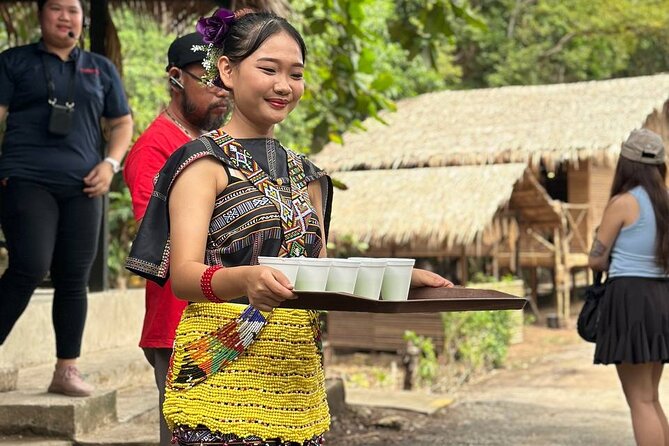
- Five cultures in one visit: See representations of Kadazan-Dusun, Rungus, Lundayeh, Bajau, and Murut traditions.
- Two daily sessions: Choose a morning departure at about 9am or an afternoon departure at about 1pm.
- Food is part of the lesson: Sample traditional light foods, desserts, and house-brewed rice wine before the buffet lunch.
- A guide sets the scene early: The drive can include useful background on Sabah’s politics and culture.
- A compact group size: The tour is limited to a maximum of 15 participants.
- City pickup is included: Pickup and drop-off are provided at Kota Kinabalu city hotels, while outlying hotels cost an additional MYR30.
Why Mari-Mari works as a first look at Sabah
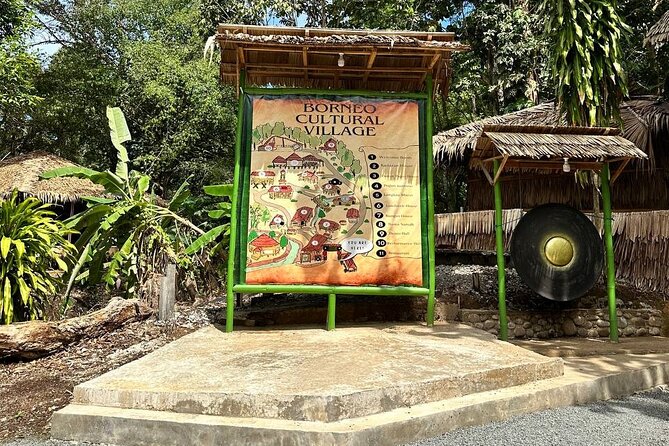
Kota Kinabalu is a convenient base, but it can be easy to leave Sabah knowing little about the people who have shaped its culture. Mari-Mari Cultural Village fills that gap in a single half-day. It is located in Kionsom, Inanam, about 30 minutes from the city, in a forested setting that feels removed from traffic and hotel districts.
The focus is on five major Indigenous groups: Kadazan-Dusun, Rungus, Lundayeh, Bajau, and Murut. You visit separate traditional houses and see demonstrations linked to daily life, food, drink, and craft. That format gives you a basic framework for understanding Sabah without requiring a full-day trip far outside Kota Kinabalu.
I would treat the village as an introduction rather than a complete account of every community in Sabah. The tour presents several traditions in a short period, so some explanations will be broad. Still, the combination of demonstrations, tastings, and performance makes the material easier to remember than a standard museum visit.
The experience is especially useful early in your stay. Once you have seen the different houses and heard the guide explain some of Sabah’s cultural and political background, later visits around the region can make more sense.
A few more Kota Kinabalu trips worth a look
- 2D1N Mount Kinabalu Climbing
★ 5.0 · 494 reviews - Bongawan River Cruise: Proboscis Monkey & Fireflies Mangrove
★ 4.8 · 437 reviews - Guided Snorkeling Day Trip, Kota Kinabalu, Sabah, Malaysia
★ 5.0 · 282 reviews
The drive from Kota Kinabalu sets the tone
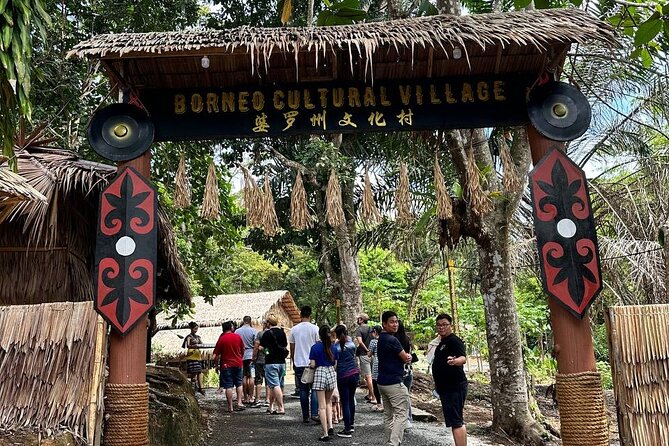
Morning pickup begins at about 9am, with the cultural program starting at 10am. Afternoon pickup begins at about 1pm, with the village program starting at 2pm. Exact pickup time depends on your hotel, so you should be ready before the stated departure time.
The air-conditioned vehicle is a practical part of the tour. Kota Kinabalu can be hot, and the short drive gives you a break before the walking and demonstrations begin. City hotel pickup and drop-off are included. If your hotel is outside the usual city area, an additional MYR30 charge applies for pickup and return.
A useful feature is the guide’s introduction during the drive. One guide used the journey to explain Sabah’s politics and culture before the group reached the village. That is a smart use of transfer time, since it gives you a few reference points before you encounter the houses and demonstrations.
The group limit is 15 people. That is small enough to keep the presentation manageable, though the exact feel will depend on how many places are filled on your date. A smaller group usually makes it easier to hear demonstrations and stay close to the guide.
A welcome ceremony before the house visits
The formal program begins with a welcome ceremony at about 10am for the morning session or 2pm for the afternoon session. This marks the transition from the city excursion to the cultural presentation.
The ceremony is brief, but it matters. It gives the visit a clear beginning and signals that the houses are being presented as more than photo backdrops. You are entering a guided program built around customs, food, architecture, and performance.
You should expect the tone to be educational and staged for public access. Mari-Mari is a cultural attraction, not a working village where you happen to meet residents going about their day. That distinction is worth keeping in mind. The value comes from having several traditions explained in one place, with demonstrations that help you understand how particular objects, foods, and spaces were used.
Traditional houses from Dusun to Murut
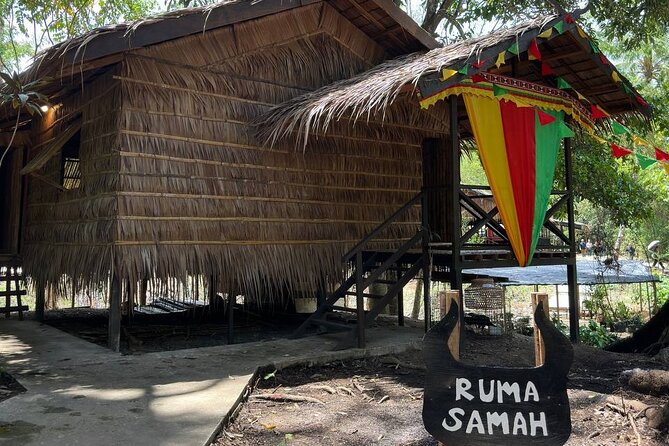
The central part of the visit runs from about 10:15am to 11:30am in the morning, or 2:15pm to 3:30pm in the afternoon. You move through different Indigenous house displays, including Dusun, Lundayeh, and Rungus houses, with the wider program representing Bajau and Murut traditions as well.
This is where the tour earns its place on a Kota Kinabalu schedule. Architecture becomes a practical way to compare cultures. Instead of hearing five names in a lecture, you can see differences in house design, domestic spaces, tools, and demonstrations.
The houses also provide a setting for explanations about daily life. Cooking and drink-making demonstrations connect the buildings to ordinary routines, while craft activities show how practical skills became part of cultural identity. The supplied details do not specify every demonstration at every house, so the exact order may vary, but you should expect a guided house tour with demonstrations.
I like this section because it gives children and adults different ways to pay attention. Younger participants can focus on the objects, food, and activity. Adults can listen for the distinctions between the groups and ask the guide for more context.
The limitation is time. You cannot expect a long discussion of each community during a three-hour village program. If one house interests you particularly, take note of the name and ask your guide a follow-up question while the group moves along.
Same country, a completely different kind of day:
- Kota Kinabalu: Mari Mari Cultural Village Tour with Lunch
★ 5.0 · 152 reviews - Bongawan Wetland: Proboscis Monkey and Fireflies Shared Tour
★ 4.2 · 137 reviews - Borneo (Klias) River Cruise & Fireflies Tour
★ 4.5 · 126 reviews - Sky-Mirror Photographing and Proboscis Monkey & Fireflies Watching River-Cruise
★ 4.0 · 109 reviews
Food tastings make the cultural lessons more memorable
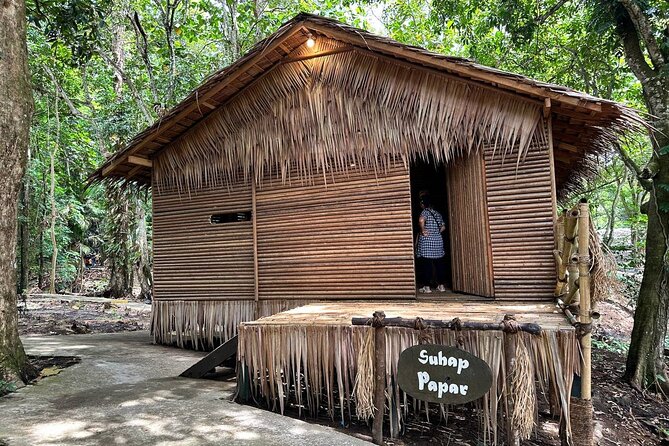
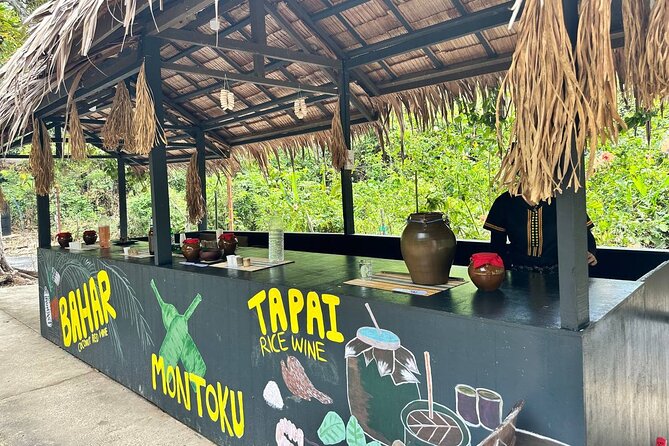
During the house visits, you can sample traditional light foods and drinks. These include desserts and house-brewed rice wine. You will also see food-related demonstrations, including cooking and alcohol-making activities.
This is one of the strongest parts of the experience because food gives the visit a direct, sensory link to local life. A short explanation about a drink can feel abstract. Sampling it, then seeing how it fits into the demonstration, gives you something concrete to remember.
The rice wine tasting may not suit everyone. If you do not drink alcohol, you can still take part in the wider food program, but the supplied information does not specify alternative drinks or how each tasting is handled. Keep that in mind if dietary needs are important to your booking decision.
The food section is also one reason the tour appeals to families. It breaks up the walking and house explanations, and it gives children a reason to stay engaged. The program includes small tastings rather than presenting lunch immediately, so you get a series of food moments throughout the visit.
The Sabah dance performance brings the visit together
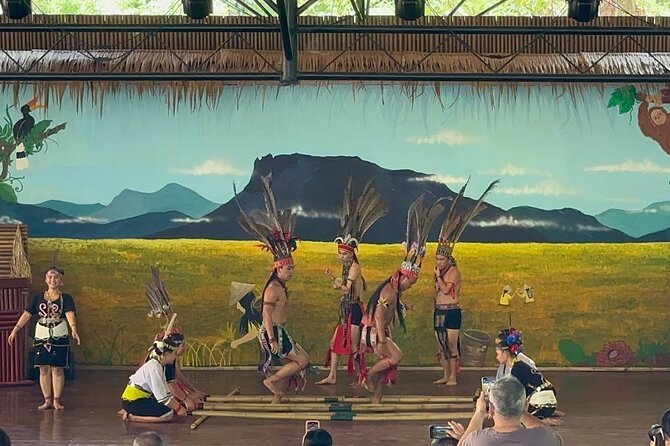
At about 11:45am to 12:30pm during the morning session, or 3:45pm to 4:30pm in the afternoon, you watch a traditional Sabah dance performance. The village also prepares additional cultural entertainment as part of the show.
This is the most theatrical part of the program. After seeing house displays and demonstrations, the performance gives you music, movement, and costume in one place. It also helps close the gap between the quieter house visits and the final meal.
I would not book this tour solely for the show, but it is an effective part of the half-day structure. The performance provides a clear highlight for children and gives adults another way to see cultural traditions presented beyond architecture and food.
The schedule suggests about 45 minutes for the show. That is enough time for a substantial performance, though the exact content can vary. You should also expect the performance to be arranged for an audience, so it is best understood as a cultural presentation rather than an unplanned village event.
Lunch in a forest setting
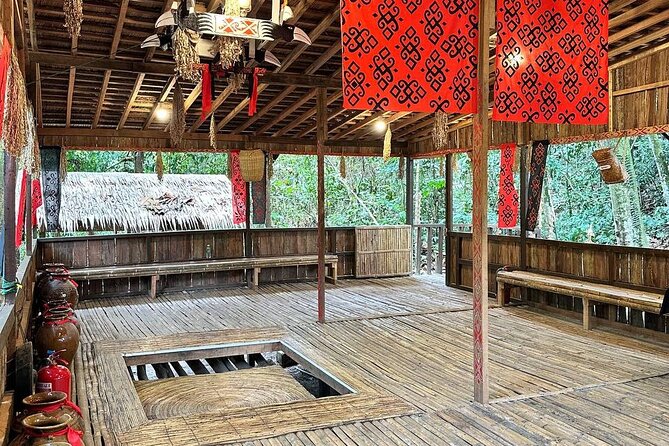
Lunch follows the performance. The morning schedule places the local Malaysian buffet-style meal at about 12:45pm, with the tour ending around 1:30pm. For the afternoon session, lunch is listed at about 4:45pm, followed by the end of the tour at about 5:30pm.
The meal is included in the price and is served in the surrounding natural setting. That makes the end of the visit feel less rushed than simply returning straight to the vehicle after the show.
A buffet is useful for mixed groups because you can choose from the available dishes rather than committing to one set plate. The meal is described as local Malaysian food, but no fixed menu is provided, so I would not book this as a way to sample a specific dish.
The afternoon session does finish with an early evening meal rather than a conventional lunch hour. That is not a problem if you plan around it, but you may want a light breakfast before the morning departure or a snack before the afternoon pickup.
Is the $85.79 price good value?
At $85.79 per person, the cost is not simply an admission ticket. It includes an air-conditioned vehicle, Kota Kinabalu city hotel pickup and return, entry, a guided house tour, demonstrations, cultural activities, the dance performance, tastings, and a local buffet meal.
I see the value in the package if you want several elements handled at once. Booking separate transport, admission, food, and a cultural presentation could be less convenient, particularly for a first visit to Kota Kinabalu. The included vehicle also removes the need to arrange your own route to Kionsom, Inanam.
The price is less attractive if you only want to see traditional houses or if you prefer independent visits with no fixed schedule. This is a packaged presentation, and you pay for the guide, transfers, organized demonstrations, and meal as much as for the village entrance.
The maximum group size of 15 helps support the price. You are not being placed in a large coach group of dozens of people, at least according to the stated limit. Still, you should confirm the final price and pickup arrangement at booking, especially if your hotel is outside the city and the MYR30 surcharge applies.
Morning or afternoon session?
The morning option starts with pickup at about 9am, reaches the village for a 10am beginning, and returns around 1:30pm. It gives you the rest of the day for Kota Kinabalu, but you need to be ready early.
The afternoon option begins with pickup at about 1pm, starts at 2pm, and ends around 5:30pm. This works well if you want a slower morning or have another activity planned before lunch. The included meal comes late in the afternoon, so plan your food accordingly.
The two sessions appear to cover the same core program. Your choice is mainly about how you want to arrange the rest of the day. I would choose morning if you want maximum flexibility afterward, and afternoon if an early start is a poor fit.
Weather matters. The experience requires good weather, and a cancellation caused by poor conditions results in either another date or a full refund. Since the program takes place in a forest setting and includes movement between areas, check the forecast and keep your plans flexible.
Who will get the most from this cultural visit?
I recommend Mari-Mari Cultural Village for a first-time visit to Sabah, especially if you have only a few days in Kota Kinabalu. It gives you a broad introduction to five Indigenous cultures without requiring a long trip into the interior.
Families are a good match. The short demonstrations, tastings, houses, dance performance, and buffet meal create enough variety to hold attention. The air-conditioned vehicle and included hotel transfer also simplify the day.
It suits you if you like guided cultural experiences and want clear explanations. The guide’s early discussion of Sabah’s politics and culture can add useful context, and the compact group size should make it easier to follow the program.
You may want to skip it if you dislike staged cultural attractions, prefer long independent visits, or want a detailed study of one particular community. The schedule moves at a steady pace, and the five-group format favors breadth over extended conversation.
Booking, cancellations, and practical details
Confirmation is sent within 48 hours of booking, subject to availability. The activity is limited to a maximum of 15 participants, and most people can take part according to the supplied booking information.
Free cancellation is available if you cancel at least 24 hours before the start time. Cancellations or changes made less than 24 hours before the start are not refunded or accepted. If the minimum number of participants is not met, you will be offered another date or experience, or a full refund.
Personal travel insurance is not included. Hotel pickup and drop-off cover Kota Kinabalu city hotels, while outlying properties incur the MYR30 additional charge.
Should you book Mari-Mari Cultural Village?
I would book this tour if you want a convenient, friendly introduction to Sabah’s Indigenous cultures, with food and performance included. The strongest reasons are the five house traditions in one visit, the guide’s useful introduction during the drive, and the balance of demonstrations, tastings, dance, and lunch.
I would hesitate only if you want an unstructured or deeply specialized cultural visit. Mari-Mari offers a carefully timed presentation, so you gain variety and convenience but give up some independence.
For most first visits to Kota Kinabalu, the package makes sense. Pick the morning session for a freer afternoon, or the afternoon session if you prefer a later start. Check your hotel’s pickup status, allow for the outlying-hotel charge if needed, and keep the weather in mind before confirming.
FAQ
Where is Mari-Mari Cultural Village located?
It is in Kionsom, Inanam, about 30 minutes from Kota Kinabalu.
How long does the tour last?
The overall experience takes approximately 4 hours and 30 minutes, including pickup and drop-off. The cultural village program itself is listed as about three hours.
What time does the morning session start?
Pickup for the morning session begins at about 9am, depending on your hotel. The cultural program starts at about 10am and ends around 1:30pm.
What time does the afternoon session start?
Pickup for the afternoon session begins at about 1pm, depending on your hotel. The program starts at about 2pm and ends around 5:30pm.
What cultures are represented at the village?
The village presents traditions from the Kadazan-Dusun, Rungus, Lundayeh, Bajau, and Murut peoples of Sabah.
Is hotel pickup included?
Pickup and drop-off are included for Kota Kinabalu city hotels. Outlying hotel pickup and drop-off require an additional MYR30 charge.
Is lunch included?
Yes. A local Malaysian buffet-style lunch is included, along with traditional light foods, desserts, and drinks during the house visits.
Can I cancel for a full refund?
Yes, if you cancel at least 24 hours before the experience start time. Cancellations made less than 24 hours before the start are not refunded. If poor weather or insufficient participation causes the operator to cancel, you will be offered another date or experience, or a full refund.
Just added around Kota Kinabalu
- Day Trip to Kinabalu Park and Poring Hot Spring Guided Tour★ 4.5 · 4 reviews
- Kota Kinabalu: Kiulu White Water Rafting with Lunch★ 5.0 · 4 reviews
- Tunku Abdul Rahman Park 2 Islands Hopping Tour from Kota Kinabalu★ 3.5 · 4 reviews
- Full Day JomTour! Memorable Experience in Kota Kinabalu, Sabah★ 3.0 · 4 reviews
- Kinabalu National Park Tour★ 4.0 · 4 reviews
- Sabah: Dreamer Island Snorkeling Day Tour Ticket★ 4.2 · 4 reviews
- Monsopiad Cultural Village Visit with Private Transfer from Kota Kinabalu★ 4.5 · 5 reviews
- Tambunan: Rafflesia Flower Trekking with Rustic Lunch★ 4.4 · 5 reviews
Kota Kinabalu Tours, compared.
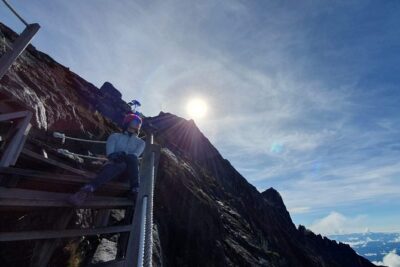

Bongawan River Cruise: Proboscis Monkey & Fireflies Mangrove
Read our review →
Guided Snorkeling Day Trip, Kota Kinabalu, Sabah, Malaysia
Read our review →
Bongawan Wetland: Proboscis Monkey and Fireflies Shared Tour
Read our review →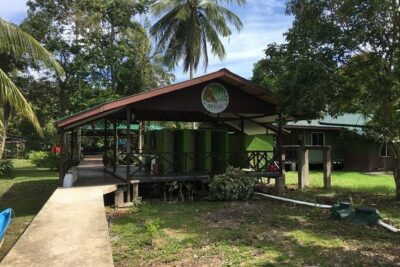

Sky-Mirror Photographing and Proboscis Monkey & Fireflies Watching River-Cruise
Read our review →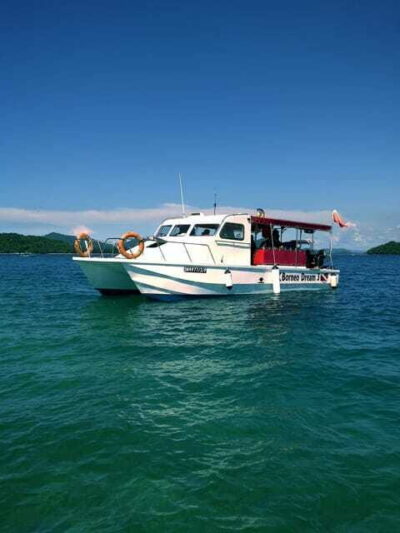
Full-Day Guided Snorkeling Tour from Kota Kinabalu
Read our review →Browse the lists this tour appears in