
Reviewed · KUALA LUMPUR TOURS
Kuala Lumpur Colonial History Walk – Private Guided Tour
Kuala Lumpur’s colonial center is compact, but it packs in an unusual mix of railway domes, Islamic architecture, Anglican churches, old banks, civic offices, and a market founded by Yap Ah Loy. This private walk makes those buildings easier to read, rather than treating them as a quick parade of photo stops. I like the personal guide format, and I like that the route links architecture to the city’s rivers, railways, and trading past.
The tour also earns points for its storytelling. Guides named Priam and Pritam are singled out in the tour material, and the experience is built around local anecdotes rather than a standard script. The main drawback is simple: you’ll be on foot for three to four hours, with no bottled water or meal included, so come prepared for Kuala Lumpur’s heat and humidity.
Key points to know before booking

- Colonial Kuala Lumpur in one compact walk: The route covers the railway station, civic square, old banks, churches, mosques, and Central Market.
- A private experience for up to four people: Your group has the guide to itself, with a more flexible feel than a large coach tour.
- Architecture is only half the story: The guide connects buildings to the Klang and Gombak rivers, rail development, trade, religion, and colonial government.
- A strong finish at Central Market: The walk ends near public transport, shops, and a useful place to continue exploring.
- Plan for a long urban walk: Moderate physical fitness is recommended, and water and meals are your responsibility.
- Good value for history-minded visitors: At $45 per person, the price buys several hours of private guiding rather than a short photo stop circuit.
Why this small area tells Kuala Lumpur’s bigger story
Kuala Lumpur can feel like a city of towers, shopping malls, and traffic. Yet its older center is surprisingly manageable on foot. Within a short distance, you can trace the city’s growth from a river settlement and mining outpost to a British administrative capital and, later, an independent Malaysian city.
That is the strength of this tour. You are not simply shown attractive façades. The route gives each building a place in the city’s development. Railways explain how tin and people moved. The river confluence explains the city’s name and early location. Government offices show how colonial power was organized. Central Market brings the story back to trade and daily life.
I also like the scale. A private group of up to four people can ask questions without holding up a large party. If one building catches your attention, you have a better chance of pausing for an extra explanation. The tour includes printed material, which is useful when you want to remember names and dates later.
The pace is not built for rushing. Most stops last 10 to 15 minutes, while Central Market gets about 30 minutes. That tells you what kind of experience this is: a guided architectural and historical walk, not a fast checklist of Kuala Lumpur attractions.
More History Tours in Kuala Lumpur
- Historical Malacca Guided Day Tour (Shared Tour)
★ 5.0 · 2,172 reviews - Kuala Lumpur: Batu Caves & Historic Buildings Tour
★ 4.7 · 539 reviews - Historical Malacca Day Tour from Kuala Lumpur (Private Tour)
★ 5.0 · 515 reviews
Kuala Lumpur Railway Station: an ornate beginning
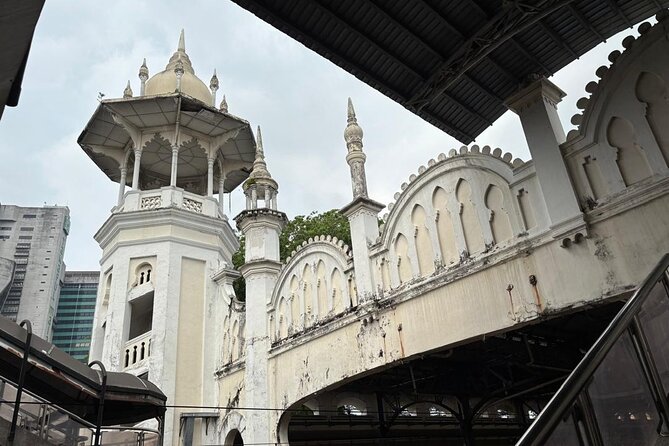
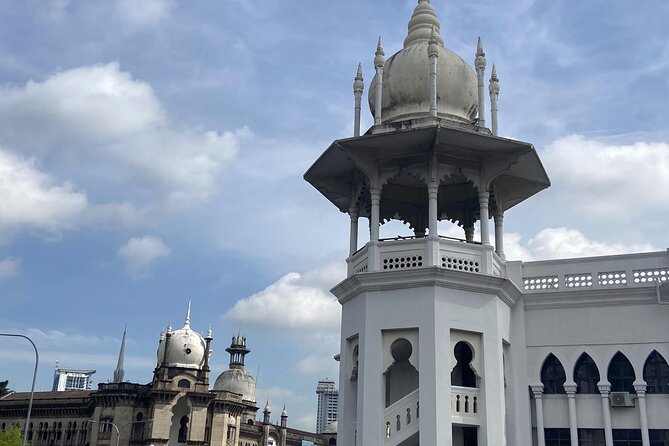
The walk starts at Kuala Lumpur Railway Station, one of the city’s most memorable old buildings. Its white exterior, domes, arches, and minaret-like details make it look almost too decorative for a railway terminal. It is an ideal opening stop because the building immediately raises a question: what did colonial Kuala Lumpur want to look like?
You get about 15 minutes here, enough to take in the façade and hear why the station matters. The design reflects the period’s fondness for combining European planning with architectural forms associated with the region. The result is not a plain transport building. It is a statement about order, empire, technology, and place.
The station is also a good reminder that Kuala Lumpur’s early growth depended on connections beyond the city itself. Railways helped tie the interior to ports and commercial centers. If you enjoy architecture, this may be one of the strongest photo stops of the day.
The Malayan Railway Administration Building and old rail offices
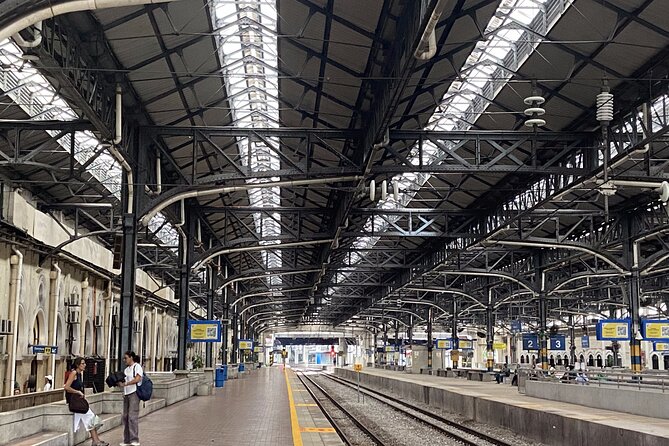
Across from the station is the former Federated Malay States Railway Administration Building, designed by government architect Arthur Benison Hubback. Construction began in 1914, and its position opposite the station makes the relationship easy to understand: one building served the public railway, while the other helped manage the system behind it.
You get around 10 minutes here. That may sound brief, but the buildings are close together and the guide can explain how railway administration supported the wider colonial economy. The walk later returns to railway history at the Old FMS Railway Office, giving the subject more depth than a single stop would.
The first headquarters of the Federated Malay States Railways marked a shift from separate state systems to a unified network. Malaya’s first railway line opened in 1885 between Taiping and Port Weld. That detail gives the handsome offices a practical meaning. They were not built only for show. They belonged to a system that changed how goods, officials, workers, and towns connected.
The Klang River and the city’s original crossroads
The route includes a look at the Klang River, Selangor’s longest river, which runs for about 120 kilometers through Kuala Lumpur before reaching the Straits of Malacca. You may not spend a long formal stop here, but the river is essential to understanding why the city developed where it did.
Kuala Lumpur’s name is linked to the muddy meeting point of the Klang and Gombak rivers. The confluence near Jamek Mosque is one of the most useful geographical facts on the walk. It explains that the city was not placed at random. Waterways helped shape early settlement, trade, and movement.
This part of the route adds welcome balance to the grand buildings. You see that the city began with geography and commerce before it gained grand offices and ceremonial squares. It also helps connect the old center to the modern city, where the rivers remain part of Kuala Lumpur’s identity.
More Walking Tours in Kuala Lumpur
- Kuala Lumpur Local Street Food Private Walking Tour by Night
★ 4.5 · 224 reviews - Kuala Lumpur: Nightlife Walking Tour with Local Guide
★ 5.0 · 33 reviews - Kuala Lumpur: Private Walking Tour with a Local
★ 4.5 · 28 reviews - Half Day Cultural And Heritage Walking Tour in Kuala Lumpur
★ 5.0 · 28 reviews
Old Market Square Clock Tower and Merdeka Square area
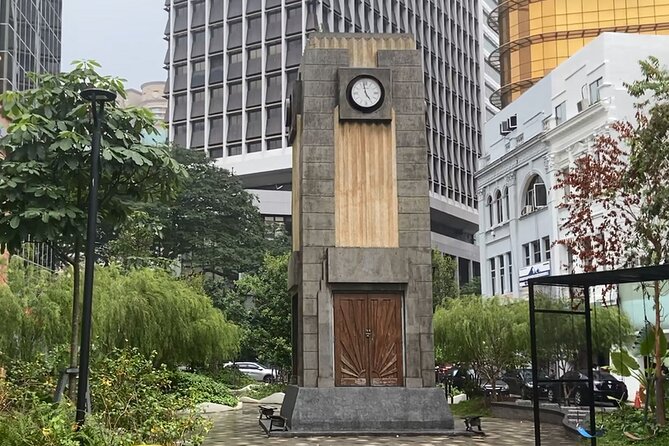
The Old Market Square Clock Tower was erected in 1937 to mark the coronation of King George VI. Designed by Arthur Oakley Coltman, it reflects the formal public style of the late colonial period. You get about 10 minutes here, likely enough for the guide to explain the clock tower’s setting and its connection to British rule.
The square is a useful place to think about public space. A clock tower may seem decorative, but civic monuments often marked who controlled a city and which events were considered important. This one carries a clear imperial message, even if its appearance now feels like part of Kuala Lumpur’s shared heritage.
The nearby open spaces also make this section easier on the legs. After several close looks at buildings, you get room to step back and understand how the old administrative center was arranged.
Jamek Mosque at the Gombak and Klang confluence
Jamek Mosque sits at the meeting point of the Klang and Gombak rivers, widely regarded as the birthplace of Kuala Lumpur. The mosque’s location gives the stop unusual weight. It is not only a religious building or a striking architectural subject. It marks the geographic heart from which the city took its name and grew outward.
The visit lasts about 15 minutes. The guide can help you read the mosque as part of a wider story that includes Malay society, Islam, colonial planning, and the city’s early settlement. The stop also breaks up the sequence of government buildings with a place tied more directly to local religious and cultural life.
Remember that this is an exterior-oriented walking tour based on the listed landmarks. The supplied information does not promise interior admission, so dress and behave respectfully around religious sites, and follow any instructions in effect when you arrive.
Sultan Abdul Samad Building and the machinery of colonial rule
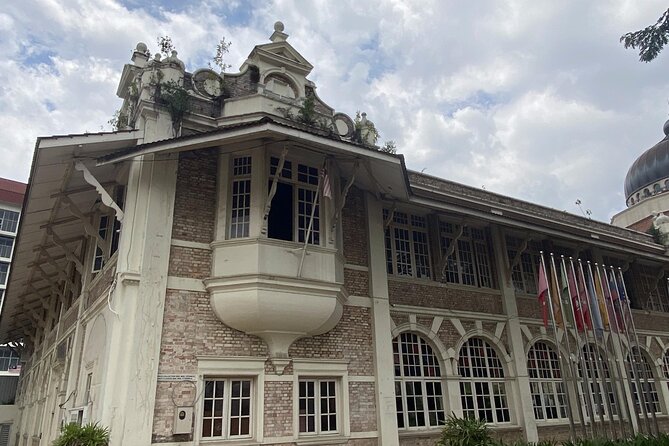
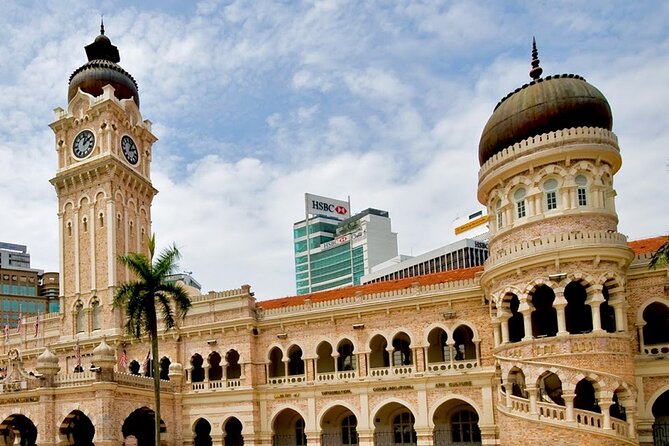
The Sultan Abdul Samad Building is likely to be one of the tour’s visual highlights. Built in 1894 for the British colonial administration, it was part of a government complex that included the former General Post Office, Magistrate Courts, and Kuala Lumpur Council Building.
You get about 15 minutes here. That is enough time to study the building’s clock tower, domes, arches, and long façade while the guide explains what happened inside. The point is not merely that the building is attractive. It housed the offices that helped run the colonial state.
This stop works especially well after Jamek Mosque. Together, the two sites show different forms of authority in the same small area: religious life at the river confluence and administrative power facing the public square. I appreciate that contrast because it keeps the walk from becoming a parade of similar colonial façades.
St. Mary’s Cathedral and the Selangor Club
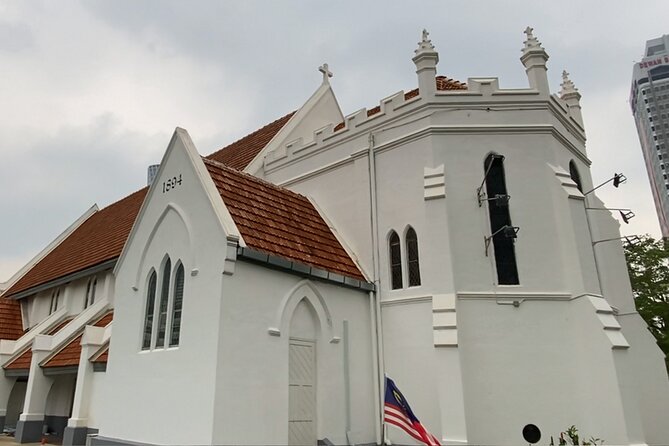
St. Mary’s Cathedral began as a modest timber church in 1887 and was replaced by the present brick structure in 1895. The 15-minute stop offers a look at the Anglican community that formed part of British colonial society.
The building’s story also shows that colonial Kuala Lumpur was not fixed in one moment. Institutions began with modest structures and gained more permanent form as the city grew. That kind of change is often easier to understand through one building’s history than through a list of dates.
Nearby, the Selangor Club was founded in 1884 as a meeting place for educated and high-ranking members of British colonial society. Early membership was mostly British, though admission was tied more to education and social position than nationality alone. This is an important detail because it shows how colonial public life operated through clubs, institutions, and social networks, not only through official offices.
The tour does not present colonial society as a romantic old-world scene. The club also prompts useful questions about who had access to influence and comfort, and who did not. That balance is one reason a good guide matters here.
Kuala Lumpur Library and the former Government Printing Office
The Kuala Lumpur Library sits on the grounds of the former Government Printing Office, completed in 1899. This was where government reports, official books, notices, and other documents were produced.
You get about 10 minutes at the site. It is a quieter stop, but it adds a layer often missed on a sightseeing circuit. Administration depends on paperwork. Printed laws, reports, notices, and forms helped make colonial rule visible and enforceable across the territory.
The former printing office also gives you a chance to look past the grandest landmarks. The city’s heritage is not only domes and clock towers. It includes the working buildings that produced the records and messages of government.
The old Chartered Bank at 2, Jalan Ampang
The building at 2, Jalan Ampang was completed in 1909 for the main branch of the Chartered Bank of India, Australia and China, later Standard Chartered. The bank was founded in London in 1853, and its Kuala Lumpur branch points to the city’s role in regional finance and trade.
This 10-minute stop helps explain how commercial power sat alongside government power. Banks supported the movement of money connected with trade, plantations, mining, railways, and administration. Even if banking architecture is not your usual interest, the building gives you a clearer sense of how international business reached colonial Malaya.
The stop is also a useful counterweight to the religious and civic sites. Kuala Lumpur’s old center was not simply a government quarter. It was a working commercial district tied to a much larger network.
Queen Victoria Fountain and the old FMS Railway Office
The Queen Victoria Fountain sits near the Selangor Club Padang. It was shipped from Britain to commemorate Queen Victoria’s diamond jubilee in 1897, but it was not assembled until later. You get about 10 minutes to consider the symbolism of a British monument placed in the center of colonial Kuala Lumpur.
The fountain is a small object compared with the Sultan Abdul Samad Building, yet it carries a sharp message about imperial identity. Its imported materials and commemorative purpose show how public spaces were decorated to reflect distant royal events.
The Old FMS Railway Office adds another 10-minute stop tied to transport and government. Returning to the railway theme makes sense because rail was one of the forces that helped the Federated Malay States function as a more unified system. This second railway stop should be especially useful if you want to understand how infrastructure shaped the city rather than simply admire its architecture.
Central Market: a practical and lively finish
The tour ends at Central Market, with about 30 minutes allocated here. Its story reaches back to 1888, when it was first conceived by Kapitan Yap Ah Loy as a humble wet market. It later became a larger hall of commerce.
That origin matters. After a morning or afternoon of colonial offices, banks, churches, and monuments, Central Market brings you back to buying and selling. It helps show that Kuala Lumpur’s story was shaped by local enterprise as well as imperial administration.
The market is also a useful end point. You can continue exploring from here, browse on your own, or use public transport to return to your hotel. Because the starting point is also close by, the route is convenient for a half-day plan in the old center.
The 30-minute allocation is enough for an introduction, but not for an exhaustive market visit. If you want to shop, eat, and explore every corner, plan to stay after the guide finishes.
What $45 per person buys you
At $45 per person, this is not the cheapest way to see Kuala Lumpur’s old center. Many of the buildings are visible from public streets, and you could photograph them without paying an admission fee.
The value comes from interpretation. You are paying for three to four hours of private guiding, printed material, a route that connects the sites, and the chance to ask questions as you go. For a group of up to four people, the private setup can make more sense than paying for several separate short activities.
Group discounts may improve the price for larger eligible bookings, though the experience remains private only for your own group. Admission fees are included, but the stops listed are free, so the main purchase is time, research, and personal explanation rather than entry tickets.
I would book it if you care about why Kuala Lumpur looks the way it does. If you only want quick photographs of the most famous buildings, you can cover the area on your own for less.
Timing, comfort, and how to prepare
The walk lasts approximately three to four hours. You need a moderate level of physical fitness, and the route requires sustained city walking rather than short transfers between attractions.
Bring your own bottled water. Meals are not included, so eat beforehand or plan to continue at Central Market afterward. Comfortable footwear matters more here than dressy clothes, and a hat or sun protection may be useful, although the tour information does not specify the amount of shade.
The tour begins at Kuala Lumpur Railway Station, at 110 Jalan Sultan Hishamuddin, and ends at Central Market in Kuala Lumpur City Centre. Both points are near public transportation, and the end point is a short walk from the start, making this an easy addition to a day based in central Kuala Lumpur.
Confirmation is provided when you book. Free cancellation is available if you cancel at least 24 hours before the local start time. Changes or cancellations made inside that window are not accepted for a refund.
Who will get the most from this walk
I would choose this tour for first-time visitors who want a framework for Kuala Lumpur’s old center. It is also a good fit if you have already seen the modern towers and shopping districts and now want to understand the city’s earlier chapters.
History and architecture fans should find plenty to hold their attention, especially in the railway buildings, Sultan Abdul Samad Building, Government Printing Office, and Chartered Bank. The route also suits couples, families, or small friend groups who prefer direct conversation to a large scheduled tour.
It is less suited to anyone who dislikes walking in city heat, needs frequent meal breaks, or wants extensive interior visits. The experience focuses on outdoor landmarks and storytelling. You should also avoid booking it if your schedule allows only a very short sightseeing window.
Should you book the Kuala Lumpur Colonial History Walk?
Book it if you want more than a list of buildings. The route explains how rivers, railways, religion, banking, government, and trade shaped Kuala Lumpur, while the private format gives you room to ask questions and set the pace within reason.
The strongest reason to choose it is the compact route. In three to four hours, you can see a surprising number of important sites without spending the day in traffic. The main caution is comfort: bring water, wear sensible shoes, and accept that the listed $45 price pays for guiding rather than paid admissions.
For a small group that values local stories and old architecture, this is a focused and good-value introduction to Kuala Lumpur’s colonial core. For casual sightseeing, the same area is easy to visit independently.
FAQ
How long does the Kuala Lumpur Colonial History Walk last?
The tour lasts approximately three to four hours.
Where does the tour begin?
It begins at Kuala Lumpur Railway Station, 110 Jalan Sultan Hishamuddin, Kampung Attap, Kuala Lumpur.
Where does the tour end?
The walk ends at Central Market in Kuala Lumpur City Centre. From there, public transport back to your hotel is convenient.
Is this a private tour?
Yes. Only your own group participates, with a personalised experience for up to four guests.
What is included in the price?
The price includes admission fees, printed material, and the three to four-hour private walking tour of Kuala Lumpur’s colonial landmarks.
Are food and bottled water included?
No. Bottled water and meals are not included.
Can I cancel for a full refund?
Yes, if you cancel at least 24 hours before the experience start time. Cancellations or changes made less than 24 hours before the start time are not accepted for a refund.
Just added around Kuala Lumpur
- Cameron Highlands Amazing Day Trip Tour with Local Lunch★ 4.5 · 8 reviews
- Malaysia: KL Tower Admission E-Ticket with Options★ 3.5 · 8 reviews
- Fraser’s Hill Bird-Watching & Nature Sightseeing Tour from Kuala Lumpur★ 4.0 · 8 reviews
- Genting Highland Day Tour★ 5.0 · 8 reviews
- Private Half-Day Cultural Tour in Kuala Lumpur★ 5.0 · 8 reviews
- Private Kuala Lumpur City Tour With Petronas Tower & Local Dinner★ 4.5 · 8 reviews
- Elevate Your Senses: A Day of Wonders in Cameron Highlands!★ 5.0 · 8 reviews
- KidZania Entry Ticket★ 3.2 · 8 reviews
Kuala Lumpur Tours, compared.
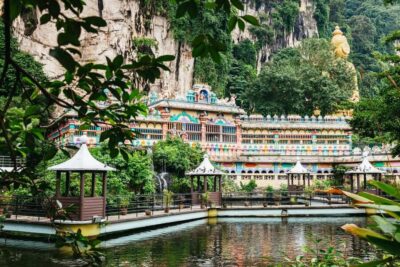
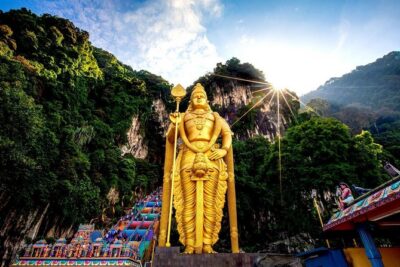
Private Half-Day Batu Caves and Cutural Tour in Kuala Lumpur
Read our review →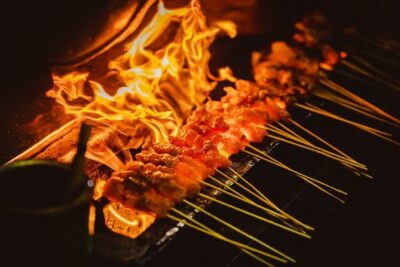
Sambal Streets Kuala Lumpur Food Tour with 15+ Tastings
Read our review →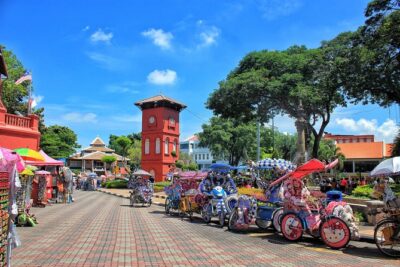
Historical Malacca Guided Day Tour (Shared Tour)
Read our review →
Genting Highland & Batu Cave Guided Day Tour (SIC/Shared Tour)
Read our review →
Browse the lists this tour appears in