
Reviewed · KUALA LUMPUR TOURS
From Kuala Lumpur: Private Batu Caves Cultural Tour
Batu Caves is the star here: a Hindu shrine set inside 400-million-year-old limestone, reached by 272 steps beneath a huge golden statue of Lord Murugan. I like that you get more than a quick photo stop. The driver-guide explains Hindu practice in Malaysia, points out what you are seeing, and leaves you time to explore.
I also like the private vehicle and hotel pickup, especially in Kuala Lumpur’s heat. Guides such as Nithia, Yati, Rajan, and Tharma have been praised for punctuality, local tips, and helping with photos or mobility needs. The catch is timing: the advertised three hours is tight if you take the full route, and factory stops can feel more commercial than cultural.
Key points to know before booking
- 272 steps lead to the main cave shrine, so wear sensible shoes and allow time for a steady climb.
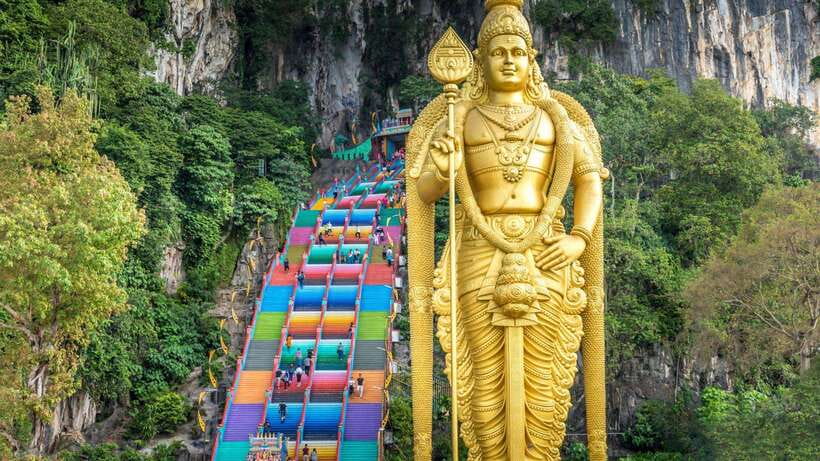
- Lord Murugan’s golden statue is one of the world’s tallest Hindu deity statues and the first sight that grabs your attention.
- Macaques live around the steps and cliffs, so keep food out of sight and watch your belongings.
- Ramayana Caves adds a different kind of stop, with illuminated figures of Rama, Sita, Hanuman, and Ravana.
- The private format gives you a flexible guide, but the visit may take longer than three hours if you linger or add stops.
- Batik is the shopping-oriented finish, useful for seeing wax-resist cloth work and buying a Malaysian-made gift.
What this Batu Caves outing is really like
This is a short cultural trip north of Kuala Lumpur, designed for you to see one of Malaysia’s best-known Hindu sites without arranging trains, taxis, or separate admissions. The quoted price is $34 per person, and the booking is for a private group rather than a shared bus.
Your English-speaking driver-guide collects you from a hotel or residence within 5 kilometres of the Petronas Twin Towers. Be in the lobby 10 minutes early. Driver details are sent through WhatsApp by 9:00 PM the night before, which makes the morning handoff easier.
The drive to Batu Caves takes about 30 minutes. That time is useful because your guide can explain the role of Hinduism in Malaysia, the importance of the temple, and the basic rules for entering a place of worship. Past guides have included Nithia, Yati, Rajan, Kevin, Tharma, Ganesh, and others, so the exact personality and depth of commentary will depend on who is assigned.
The vehicle is air-conditioned, an important detail in Kuala Lumpur’s warm climate. You are not spending hours on the road, but the cool ride gives you a welcome break between the outdoor steps and the cave interiors.
More History Tours in Kuala Lumpur
- Historical Malacca Guided Day Tour (Shared Tour)
★ 5.0 · 2,172 reviews - Kuala Lumpur: Batu Caves & Historic Buildings Tour
★ 4.7 · 539 reviews - Historical Malacca Day Tour from Kuala Lumpur (Private Tour)
★ 5.0 · 515 reviews
Batu Caves, 272 steps and a living place of worship
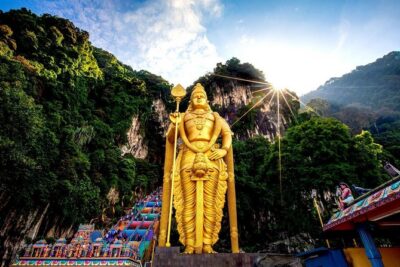
The approach to Batu Caves gives you an immediate visual jolt. The golden Lord Murugan statue rises in front of the limestone hill, with the long staircase climbing behind it. The statue is described as the second tallest statue of a Hindu deity in the world, and it is hard to miss from the entrance area.
The steps are numbered in spirit if not in comfort: there are 272 of them. You do not need to race. Take your time, pause for the view, and keep your hands free. One person with a recent injury was helped by the guide, so the private setup can work well if you need a slower pace, though the climb itself remains the main physical demand.
Dress for the temple before you leave Kuala Lumpur. Shoulders and legs must be covered, so no tank tops, shorts, or mini skirts. This is not a minor suggestion. You are entering an active religious site, and respectful clothing matters. If you arrive dressed for the heat, you may need to arrange a cover-up before entering.
Macaques occupy the cliff area and steps. They are entertaining from a distance, especially when they pose against the limestone, but do not feed them or carry food openly. Keep phones, bags, and loose items secure. The practical rule is simple: look, photograph, and keep moving.
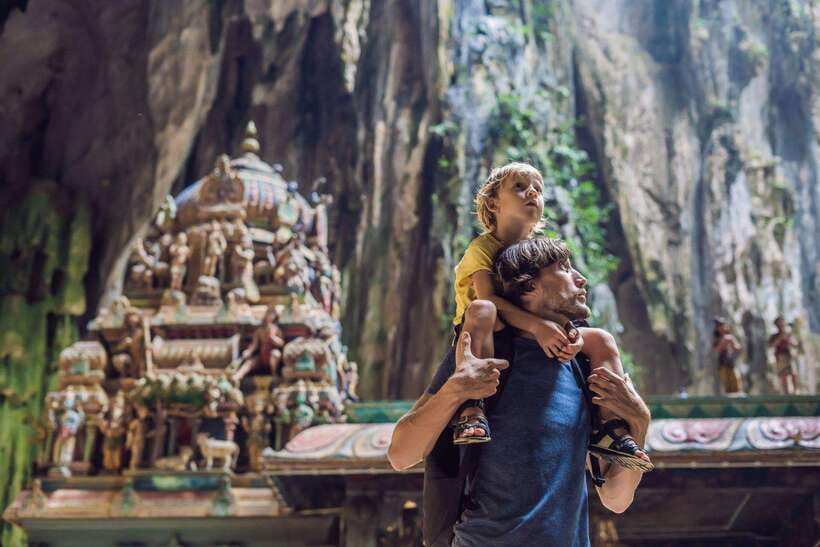
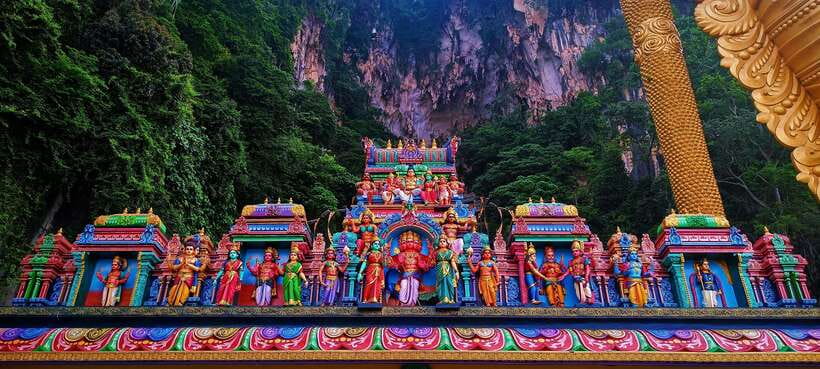
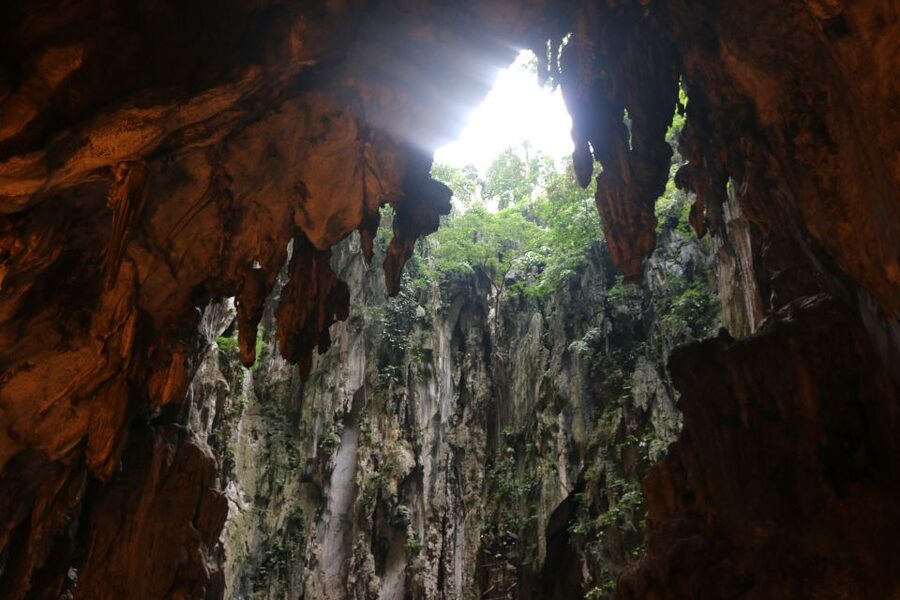
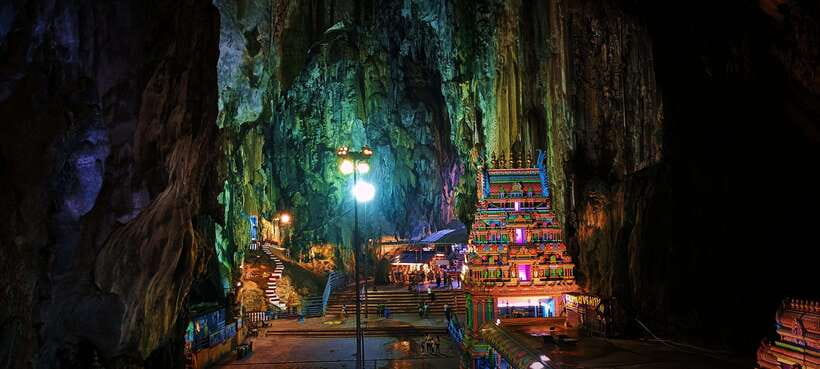
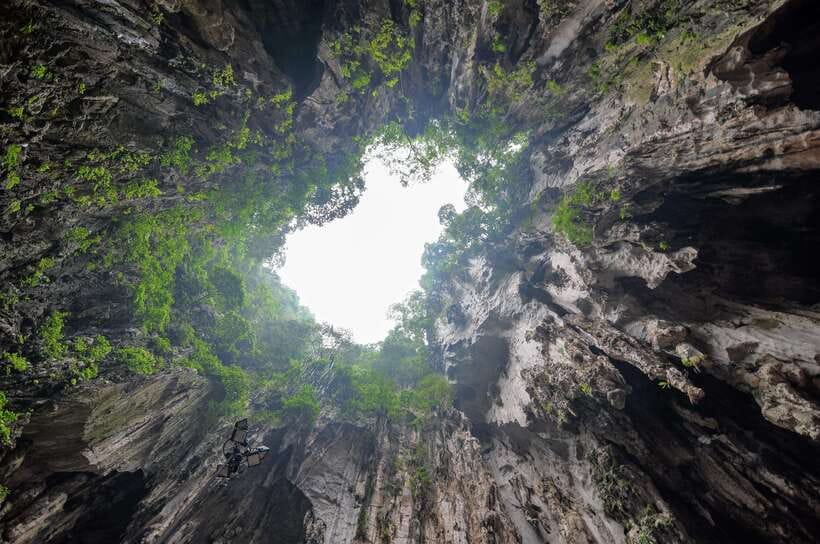
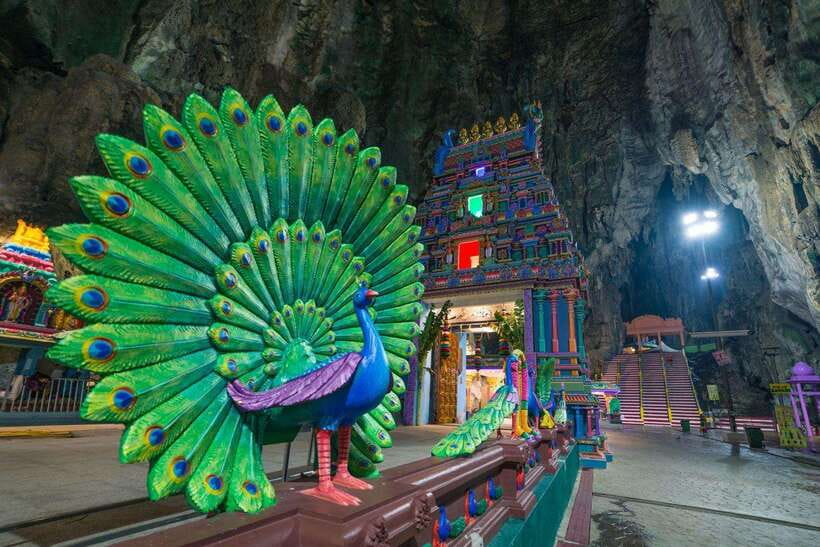
At the top, you enter a large cavern with Hindu shrines, painted scenes, chanting, incense, and openings to the sky. The effect is not polished or museum-like. It is a functioning temple with a strong spiritual mood, and that is exactly why the stop matters.
You receive roughly an hour to 75 minutes at Batu Caves, depending on the day’s schedule. That gives you time to climb, look at the murals, take photographs, and absorb the setting. It may not give you unlimited time for a slow religious visit, shopping, and every corner of the complex.
Why the cave matters beyond the famous staircase
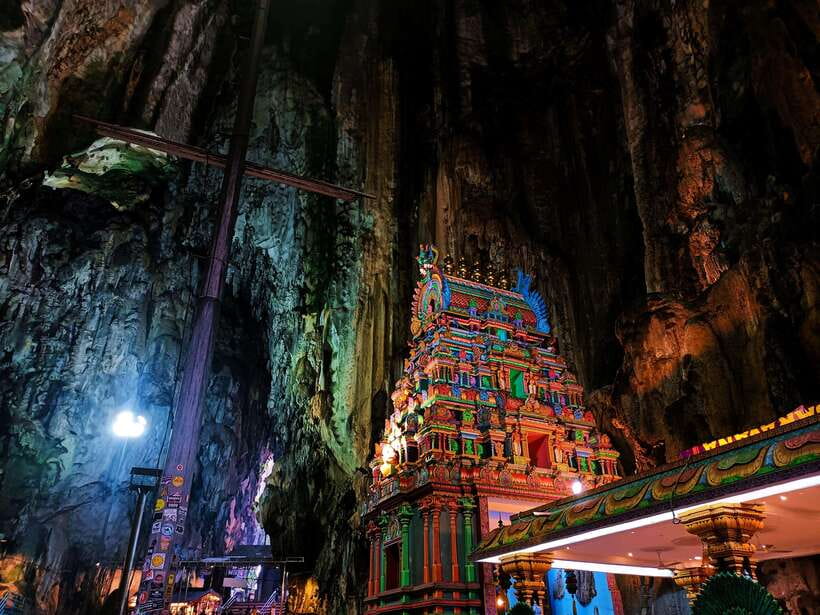
The most famous image is the staircase and statue, but the deeper value is the meeting of geology and faith. The limestone formations are hundreds of millions of years old, while the shrines and painted religious scenes give the cavern a more recent human meaning.
Your guide can help you understand why the site draws Hindu pilgrims and why its rules are taken seriously. That context prevents the visit from becoming just a hunt for the perfect staircase photograph.
Inside, expect uneven surfaces, incense, religious activity, and the sound of chanting. The cave is atmospheric, but it is not a quiet natural attraction. You are sharing it with worshippers, other people on the steps, and the resident monkeys outside.
A few practical choices make the stop better:
- Bring water, but keep it secured around the macaques.
- Wear shoes suitable for 272 steps and potentially uneven ground.
- Use the restroom before the climb if needed, since your time at the main site is limited.
- Take photographs respectfully and avoid blocking people who are praying.
- Ask your guide where to meet afterward. The driver usually waits while you explore, but a clear meeting point saves time.
Ramayana Caves and the story in sculpture
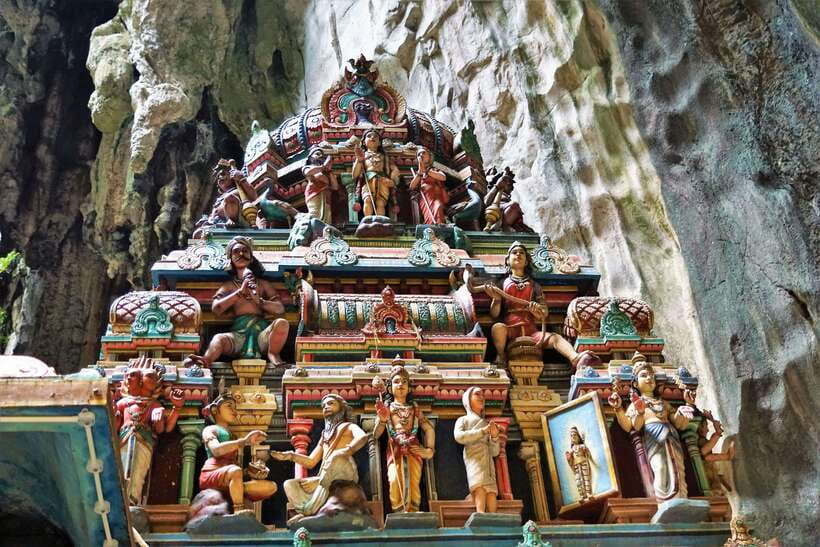
After Batu Caves, the vehicle continues to Ramayana Caves, also identified with Suyambu Lingam. This stop changes the mood. Instead of a huge open cave reached by a staircase, you find a more controlled display of Hindu storytelling.
Inside are crafted figures and wall scenes showing the journey of Lord Rama, Sita, Hanuman, and Ravana from the Ramayana epic. Lighting draws attention to the sculptures and carvings, giving you plenty to photograph. Outside, a giant Hanuman statue provides another memorable image.
This is a good addition if you want the religious background to continue beyond Batu Caves. The sculptures give you a visual introduction to characters and episodes that may be difficult to understand from names alone.
The drawback is that the stop is more arranged and display-focused. It does not have the same raw scale or active temple atmosphere as the main cave. I would treat it as a useful second chapter, not as a replacement for Batu Caves.
The stated schedule allows about an hour here. That is a generous portion of a short tour, so ask your guide how long you need if you would rather spend more time at Batu Caves or return to Kuala Lumpur sooner. The overall route can stretch beyond the nominal three hours, especially if you explore slowly.
More ways to see Batu Caves:
- Kuala Lumpur: Batu Caves Half-Day Tour with Pick-Up Option
★ 4.5 · 4,288 reviews - Private Half-Day Batu Caves and Cutural Tour in Kuala Lumpur
★ 5.0 · 3,107 reviews - From Kuala Lumpur: Batu Caves Cultural Temple Tour
★ 4.7 · 1,453 reviews - Genting Highland & Batu Cave Guided Day Tour (SIC/Shared Tour)
★ 5.0 · 1,289 reviews
Batik making, wax, dye, and the shopping question
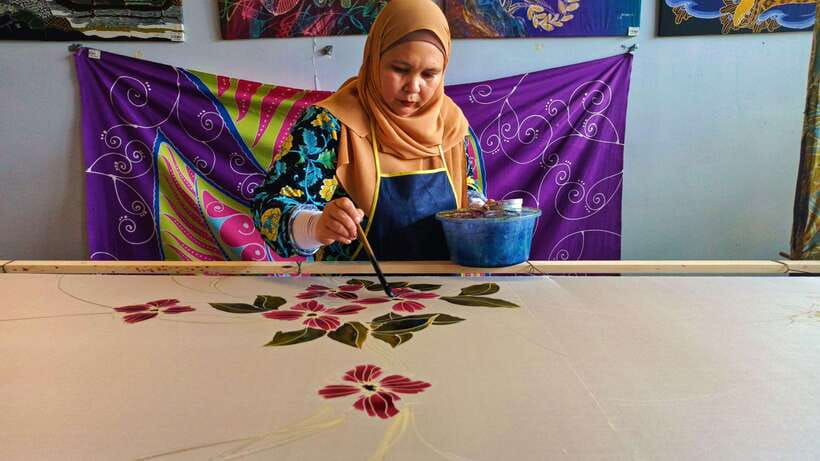
The final planned stop is East Coast Batik, also known as Batik CHONG. You see artists work through the traditional batik process, starting with wax application and continuing through dyeing and painted pattern work.
Batik is an important part of Malaysian culture, and watching the handwork helps you understand why finished pieces cost more than factory-printed cloth. The appeal is in the line work, the repeated patterns, and the way wax controls where the dye can spread.
This stop lasts about 25 minutes. It is short, and the emphasis can lean toward buying cloth and finished artworks. That is not automatically a problem. If you want a scarf, wall hanging, or other souvenir, this is a convenient place to shop for something tied to local craft.
If shopping is not your interest, the factory may feel less rewarding than the caves. Some versions of the route have also included coffee, chocolate, or the Royal Selangor pewter factory, but those stops are not part of the stated current schedule, so do not count on them. Confirm the exact route with your operator if a particular factory matters to you.
The batik visit is described as optional, but it is also included in the listed itinerary. That wording suggests the stop may depend on your preference or the day’s timing. Ask at pickup if you want to skip it or spend longer at the religious sites.
Private transport and the value of $34
At $34 per person, this makes the most sense for a couple, family, or small group that values door-to-door transport and a private guide. You are paying for a vehicle, hotel pickup and return, an English-speaking driver-guide, and the convenience of linking three sites in one outing.
It is not the cheapest way to see Batu Caves. You can find less expensive transport options if you are comfortable arranging your own route and handling the timing. The private format earns its keep when you want a calm pickup, air conditioning, local explanations, and the ability to ask for help or adjust the pace.
Several guides have been praised for being on time and sending a message before pickup. Yati, for example, has been singled out for route advice and extra care, while Rajan and Nithia were noted for professional service and clear explanations. A guide may also help with photographs, as Tharma did, or offer practical suggestions for your next stop in Kuala Lumpur.
That personal service is the main reason to choose this trip over a basic taxi ride. You are not locked into a large group’s walking speed. If you need extra assistance, tell the operator ahead of time. A private car can make the experience far easier for families and people who cannot climb quickly.
The timing needs honest attention. The listed legs are about 30 minutes to Batu Caves, 75 minutes there, one hour at Ramayana Caves, 25 minutes at batik, and 20 minutes back to Kuala Lumpur. Added together, that is longer than three hours, even before pickup delays or traffic.
Past bookings have sometimes taken an extra hour when more stops were included or when the guide had not been given the full plan. The driver was then asked to seek additional payment, which is exactly the kind of confusion you want to avoid. Confirm the stops, total duration, and any possible extra cost before setting out.
Who will get the most from this tour
I would choose this for a first visit to Kuala Lumpur when you want a compact introduction to Malaysian Hindu culture. It works especially well if Batu Caves is high on your list but you do not want to figure out transport from the city center.
Families can benefit from the private vehicle and flexible pace. Children may enjoy the statues and monkeys, though adults need to keep an eye on food and belongings. Teenagers may appreciate the photo opportunities, while the batik workshop gives older children a look at a real handcraft process.
It can also suit solo visitors who want a guide without joining a large group. The driver can explain customs on the way and leave you room to explore at your own speed.
I would think twice if you dislike stairs, have little spare time, or want a purely religious and historical tour with no shopping component. The 272-step climb is not optional if you want the main cave shrine, and the batik stop may feel like a sales visit if you are not interested in buying.
Simple preparation for a better morning or afternoon
Cover your shoulders and knees before pickup. This is easier than trying to solve the dress code at the temple entrance.
Bring water, sun protection, and a secure day bag. The limestone site and staircase expose you to heat, while the caves provide shade but not necessarily cool air.
Keep your schedule flexible after the tour. The stated return drive is about 20 minutes, but Kuala Lumpur traffic and an extended cave visit can change the finish time.
Use the free cancellation window and reserve-now, pay-later option if your plans are still moving. You can cancel up to 24 hours before departure for a full refund, according to the booking terms.
Pickup is limited to hotels and residences within 5 kilometres of the Petronas Twin Towers. If you are outside that area, confirm the meeting arrangement before paying.
FAQ
How long is the Batu Caves cultural tour?
The advertised duration is three hours. The listed schedule includes about 30 minutes to Batu Caves, 75 minutes at Batu Caves, one hour at Ramayana Caves, 25 minutes at the batik stop, and 20 minutes back to Kuala Lumpur, so the full route may take longer depending on traffic and how long you spend at each stop.
Where does pickup take place?
Pickup is available from hotels or residences in Kuala Lumpur within a 5 kilometre radius of the Petronas Twin Towers. You should wait in the hotel lobby 10 minutes before pickup.
Is hotel drop-off included?
Yes. Transportation back to your hotel lobby in Kuala Lumpur City Centre is included.
Is this a private group tour?
Yes. The experience is arranged for a private group rather than a shared group.
What language does the driver-guide speak?
The host or greeter language is English.
What should I wear to Batu Caves?
You must cover your shoulders and legs. Tank tops, shorts, and mini skirts are not allowed because Batu Caves is a place of worship.
How many steps are there to the main cave shrine?
There are 272 steps to the cave entrance and shrine area.
Is the Ramayana Caves entry fee included?
Yes. Admission to Ramayana Caves is included in the tour price.
Is batik making part of the tour?
The itinerary includes a visit of about 25 minutes to East Coast Batik, also called Batik CHONG. The activity description identifies the batik visit as optional, so confirm with your driver if you want to skip it or spend more time at the other sites.
Should you book this Batu Caves tour?
Book it if you want private transport, a personal English-speaking guide, and three cultural stops in a short outing. The strongest part is Batu Caves, where the ancient limestone, Hindu shrines, golden statue, chanting, incense, and macaques create an experience you will not get from a quick city tour.
The Ramayana Caves add useful religious context, and the batik workshop gives you a practical look at Malaysian craft. At $34 per person, the package is fair for a small group that values convenience, though independent visitors may spend less by arranging their own transport.
Before booking, confirm the exact duration and whether the batik stop is wanted. If you can manage the 272 steps and keep your schedule flexible, this is a sensible, well-rounded way to reach Batu Caves from Kuala Lumpur.
Just added around Kuala Lumpur
- Genting Highland Full Day Tour :Exclusive Deal★ 5.0 · 3 reviews
- Genting Highlands Day Trip from Kuala Lumpur with Skyway Cable Car Ride★ 4.0 · 3 reviews
- Full-Day Kuala Lumpur Sightseeing Tour★ 4.0 · 3 reviews
- Kuala Lumpur: City Tour, KL Tower Ticket & Putrajaya w/ Boat★ 5.0 · 3 reviews
- Private Night Tour: Petronas Twin Tower And Shopping★ 5.0 · 3 reviews
- Private Full-Day Cameron Highlands Nature Tour from Kuala Lumpur★ 4.5 · 3 reviews
- Kuala Lumpur Tour Cruise Excursion from Port Klang★ 5.0 · 3 reviews
- Kuala Lumpur International Airport to Kuala Lumpur City Transfer★ 3.0 · 3 reviews
Kuala Lumpur Tours, compared.
Private Half-Day Batu Caves and Cutural Tour in Kuala Lumpur
Read our review →
Sambal Streets Kuala Lumpur Food Tour with 15+ Tastings
Read our review →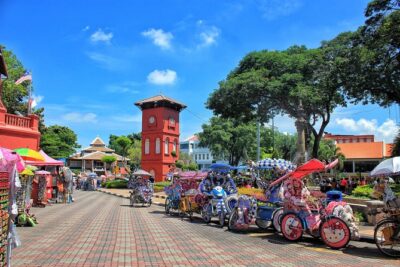
Historical Malacca Guided Day Tour (Shared Tour)
Read our review →
Genting Highland & Batu Cave Guided Day Tour (SIC/Shared Tour)
Read our review →
Browse the lists this tour appears in