
Reviewed · KUALA LUMPUR TOURS
Kuala Lumpur Cultural & Heritage Most Iconic Locations
Kuala Lumpur’s modern skyline makes the city look young, but this tour quickly shows you the older KL beneath the towers. In three and a half hours, you move from a Chinese clan house and pre-war Chinatown buildings to a Hindu temple, a Buddhist temple, an Islamic mosque, and the grand colonial buildings around Merdeka Square.
I like the private format, which gives you more room to ask questions and adjust the pace than a large sightseeing bus. I also like the compact route: the stops are short, but together they explain how Chinese, Indian, Malay, and colonial influences shaped the city. The main caution is value. At $119.73 per person, this is not a cheap introduction to Kuala Lumpur, especially when many stops are viewed from outside or visited briefly.
Key points to know before booking
- Seven central heritage stops in 3.5 hours: The route covers Chinatown, Central Market, Jamek Mosque, and Merdeka Square without asking you to spend a full day sightseeing.
- Private transportation and hotel service: Pickup and drop-off are included at selected hotels, with an air-conditioned vehicle and private transport.
- Three major religious traditions: You visit Hindu, Buddhist, and Islamic sites, making the tour useful for understanding Malaysia’s mixed cultural roots.
- Guides can shape the experience: Raja is praised for explaining Malaysian culture and helping with wider trip planning. Dhevan is also noted for clear explanations of Kuala Lumpur’s cultural buildings.
- Jamek Mosque needs careful planning: It is closed on Fridays, and the mosque may be viewed only from the outside at certain times.
- Short visits favor orientation over depth: Each listed stop lasts about 20 minutes, so you will see a lot, but you should not expect long museum visits or extended time inside every building.
Why this short Kuala Lumpur route works
This experience is built around contrast. Kuala Lumpur is not a city where one single quarter explains everything. Chinese temples sit close to Indian religious sites, markets, old shopfronts, Islamic architecture, and British-era civic buildings.
That makes the route a good first introduction. You can spend the morning learning how the city’s communities developed side by side, then use the rest of your trip to return to the places that catch your interest.
The private vehicle also matters. Kuala Lumpur can be hot, and the route includes several short walks between old-city sights. Having an air-conditioned car between stops keeps the half-day manageable, particularly if you are visiting during a warm part of the day or traveling with older family members.
Your guide is an important part of the value. Raja is specifically praised for explaining Malaysian history and culture, while Dhevan is singled out for strong explanations of the city’s cultural buildings. Guide assignments are not guaranteed, so book this for the private format and route rather than for one named person. Still, those names suggest the operator has guides who can make the short stops more meaningful.
More History Tours in Kuala Lumpur
- Historical Malacca Guided Day Tour (Shared Tour)
★ 5.0 · 2,172 reviews - Kuala Lumpur: Batu Caves & Historic Buildings Tour
★ 4.7 · 539 reviews - Historical Malacca Day Tour from Kuala Lumpur (Private Tour)
★ 5.0 · 515 reviews
Chan See Shu Yuen Clan House: a quiet start in old Chinatown
The first stop is Chan See Shu Yuen Clan House, also called Chan See Shu Yuen Temple. This is a useful opening because it introduces the role of Chinese clan organizations in early Malaysian communities.
You get about 20 minutes here, with no admission charge. The focus is not simply on decoration. A clan house can help you understand how people from similar family or regional backgrounds supported one another after settling in a growing city.
This stop may appeal most to you if you enjoy architecture and social history. It is less useful if you expect a major attraction with a long indoor visit. The tour gives you an introduction, then moves on quickly.
Ask your guide about the clan house’s purpose and the Chinese communities connected to Kuala Lumpur. Since the tour is private, you have a better chance of getting an answer tailored to your interests rather than hearing only a fixed speech.
Chinatown and its pre-war buildings
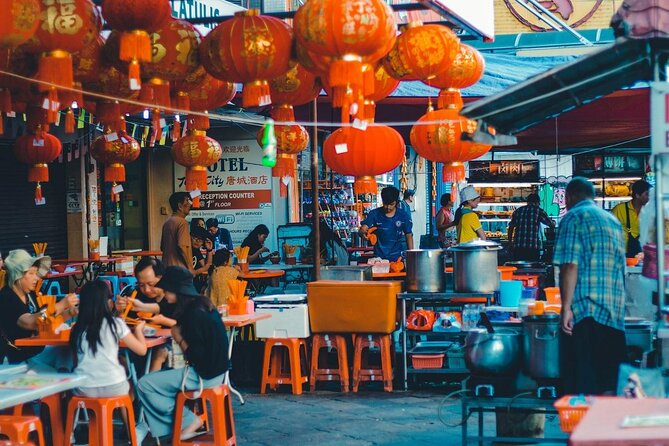
The Chinatown stop focuses on old, pre-war buildings. You have around 20 minutes to look at the street setting and the older shopfronts that show how commercial districts developed before Kuala Lumpur’s modern towers took over the skyline.
This is one of the places where the tour’s short duration is both useful and limiting. You will get your bearings and see the historic character of the district, but you will not have much time for shopping, eating, or wandering down side streets.
I would treat this as a visual history lesson rather than a full Chinatown visit. If you want to browse the area properly, return on your own later. The tour gives you context and transport, while a separate visit lets you set your own pace.
Because food and drinks are not included, Chinatown could also be a natural place to eat after the tour. That is not part of the formal experience, but it is worth planning if you want lunch nearby.
Sri Maha Mariamman Temple and Kuala Lumpur’s Hindu heritage
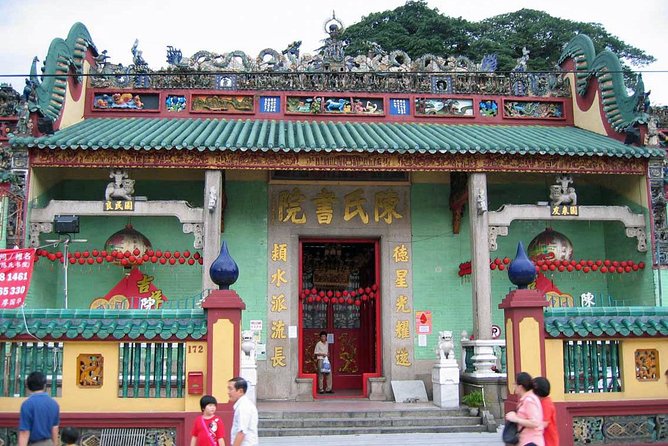
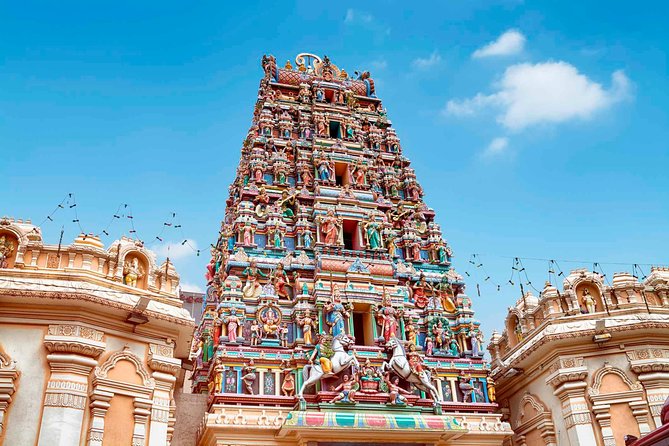
Sri Maha Mariamman Temple is described as Kuala Lumpur’s oldest Hindu temple, founded in 1873. It sits at the edge of Chinatown on Jalan Bandar, which makes it one of the clearest examples of the city’s close cultural mix.
The temple adds an important Indian dimension to the route. After the Chinese clan house and Chinatown buildings, you see how Hindu religious life formed part of the same old urban center.
Your visit lasts about 20 minutes and admission is free. Wear suitable clothing and follow any instructions from your guide or temple staff. The provided advice calls for comfortable walking shoes and a hat or cap, sensible choices for a route with several outdoor stops.
The drawback is time. Twenty minutes allows you to look around and hear the basic story, but not to study every detail. If this temple is a priority for you, ask the guide to focus on its history and religious role rather than spending the whole stop taking quick photographs.
Same country, a completely different kind of day:
- Kuala Lumpur: Batu Caves Half-Day Tour with Pick-Up Option
★ 4.5 · 4,288 reviews - Private Half-Day Batu Caves and Cutural Tour in Kuala Lumpur
★ 5.0 · 3,107 reviews - Sambal Streets Kuala Lumpur Food Tour with 15+ Tastings
★ 5.0 · 2,438 reviews - Kuala Lumpur: Sambal Street Food Tour with 15+ Tastings
★ 4.9 · 1,657 reviews
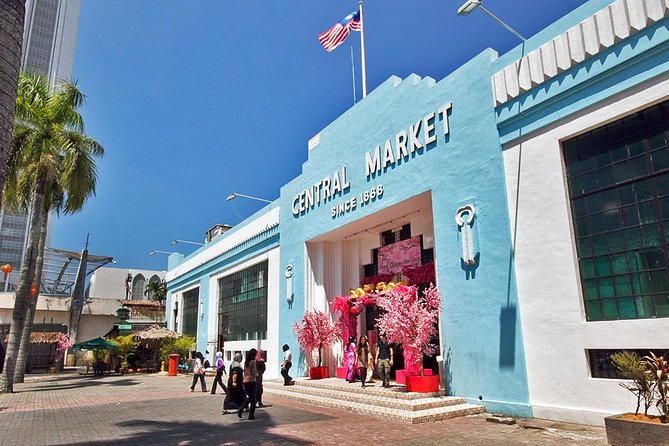
Central Market: from 1930s market to cultural stop
Central Market, built in 1930, shifts the route from worship to trade and daily life. It helps show how Kuala Lumpur’s old commercial center has been presented as part of the city’s cultural identity.
The stop is scheduled for about 20 minutes, with no admission charge. That is enough for a quick look, but it is not enough for a relaxed shopping session. Central Market can be more rewarding when you have time to browse stalls and compare crafts, so you may want to return later if you enjoy shopping.
I like having this stop in the route because it breaks up the religious and architectural visits. It also gives you a chance to think about culture as something people sell, use, and pass on, not only something preserved in temples and civic buildings.
Do not count on buying lunch here as part of the tour. Food and drinks are excluded, and the schedule is too tight for a proper meal unless you arrange it separately.
Sin Sze Si Ya Temple and the Chinese religious story
The next religious site is Sin Sze Si Ya Temple, identified as having been built in 1880. It gives you another look at Chinese religious traditions, this time after the clan-house and Chinatown sections.
The value here is the comparison. You have already seen one Chinese institution, but a temple serves a different purpose. A good guide can connect the sites and explain how community, worship, and city life overlap without treating every Chinese landmark as the same.
Again, the visit is about 20 minutes and admission is free. You should expect a concise stop rather than a long guided study. The route works best when you are curious about the relationships among the sites, not when you want a deep visit to one building.
This is also where a private guide can help. You can ask why two Chinese sites appear on the same route, what makes them different, and how they fit into the development of old Kuala Lumpur.
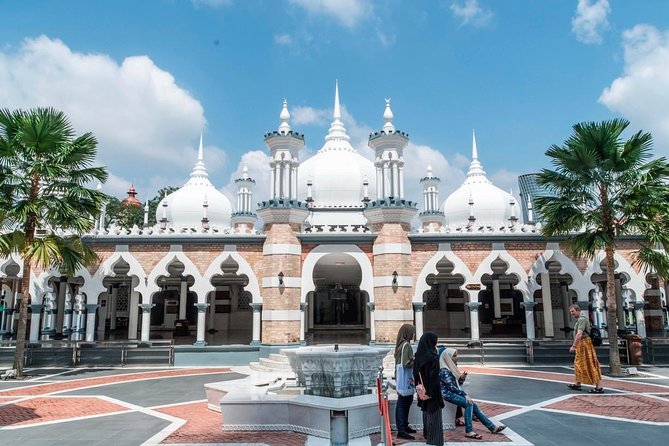
Jamek Mosque: the stop that requires the most care
Jamek Mosque is one of the most important stops for the tour’s Islamic architecture theme. The mosque is associated with North Indian Islamic architecture, and it sits near the civic center of old Kuala Lumpur.
The schedule allows about 20 minutes, but access is not guaranteed. The mosque is closed on Fridays, and the tour notes that you may look from outside only on that day. Prayer times can also affect what you can see.
This is the biggest practical caution in the whole experience. If your main reason for booking is to enter a mosque, confirm the timing before you pay and keep your expectations flexible. One booking account describes a disappointing mosque visit caused by a change in the planned stop, so you should not treat interior access as certain.
That does not make the stop pointless. The exterior and surrounding area still connect Kuala Lumpur’s religious life with its old administrative center. But if you want a guaranteed interior visit, this half-day route may not be the right choice.
Dress respectfully and follow instructions from the guide. The supplied practical advice recommends comfortable shoes and a hat or cap, but modest clothing is also sensible when visiting religious sites.
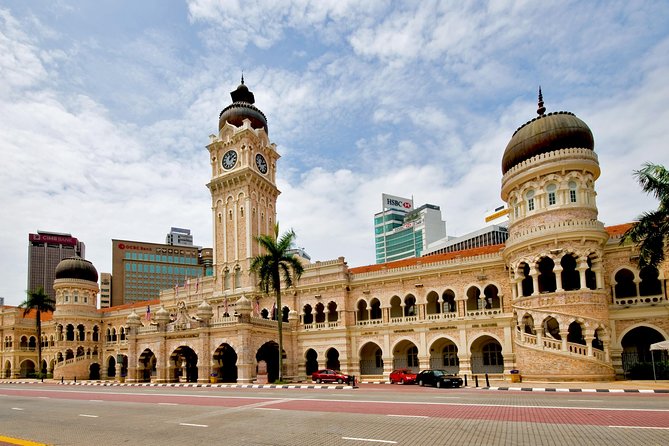
Sultan Abdul Samad Building and Merdeka Square
The final major stop is the Sultan Abdul Samad Building at Merdeka Square. This is the route’s grandest architectural setting, bringing together colonial-era civic architecture and the political story of Malaysia.
After the compact temples and market streets, the broad square gives you a different sense of scale. You can look back at the route and see how Kuala Lumpur grew from separate cultural and commercial communities into a modern capital.
The visit lasts about 20 minutes. That is enough for photographs, an exterior explanation, and a short look around the square. It is not a full architectural tour, so ask your guide to explain the building’s original role and why Merdeka Square matters.
This final stop also makes the route easy to remember. The tour begins with community institutions and religious buildings, then ends at a major civic landmark. You leave with a basic framework for understanding old KL rather than a random list of attractions.
What the private format adds
A private tour means only your group participates. That is a real advantage if your interests do not match a standard sightseeing script.
You can ask for more explanation at the temple that interests you most, request photo time, or tell the guide if you want to move faster. The tour still has a fixed route and roughly 20 minutes per stop, but the experience should feel less rigid than a large group outing.
The included English-speaking driver, professional licensed tour guide, private transport, and air-conditioned vehicle make the logistics simple. Hotel pickup and drop-off are included at selected hotels, so check that your accommodation qualifies before booking.
This setup suits first-time visitors who want to cover several central areas without sorting out each transfer. It is also useful if you have only half a day before another activity. If you already know central Kuala Lumpur well, the price may be harder to justify because the visits are brief and most attractions do not charge admission.
Is $119.73 per person fair?
The price depends heavily on your group size and what you value. For a private group, you are paying for a guide, driver, vehicle, hotel service, and the convenience of visiting seven places in one organized route.
You are not paying for entrance tickets, meals, or long visits inside major attractions. Since each stop is free and lasts about 20 minutes, the price is mainly about interpretation and transport.
I see stronger value for a small group that wants a private guide and has limited time. If you are traveling alone or as a pair, the per-person cost may feel high compared with a shared city walk or self-guided visit. The tour operator does offer group discounts, which could improve the calculation for larger private parties.
The simplest test is this: if you want cultural context, hotel service, and a comfortable vehicle, the price can make sense. If you mainly want to photograph the buildings and are happy using public transport, you can probably cover some of the same ground for less.
Timing, comfort, and practical planning
The tour lasts approximately three hours and 30 minutes. The pace is brisk, with about 20 minutes assigned to each stop, so wear comfortable walking shoes and bring a hat or cap.
An air-conditioned vehicle helps between locations, but you will still spend time outside at temples, market streets, the mosque, and Merdeka Square. Keep water with you, even though food and drinks are not included.
The route is near public transportation, which is helpful if you want to return to Chinatown, Central Market, or Merdeka Square after the organized portion ends. Pickup and drop-off are offered at selected hotels, not automatically every address in Kuala Lumpur.
Most people can take part, but the short stops and walking sections require enough mobility to get in and out of the vehicle and move around city streets. If you have specific mobility needs, confirm them with the operator before booking.
Free cancellation is available if you cancel at least 24 hours before the local start time. Within 24 hours, the payment is not refunded, and changes are not accepted.
Who should book this Kuala Lumpur tour?
I would choose this experience if you are visiting Kuala Lumpur for the first time and want a clear introduction to the city’s main cultural traditions. It is also a good fit for couples, families, or small groups who prefer a private guide and do not want to piece together several central stops themselves.
You will get the most from it if you ask questions. The route is short, so the guide’s explanations are what turn seven quick visits into a connected story about Malaysia.
I would hesitate if you want long time inside each religious building, a serious food tour, or guaranteed access to Jamek Mosque. I would also compare the price with shared tours if you are traveling alone or with one other person.
Should you book it?
Book this tour if convenience and cultural context matter more to you than extended visits. The private vehicle, hotel service, compact route, and English-speaking guide make it an efficient first look at Kuala Lumpur’s old center.
Skip it if you prefer slow exploration or want to spend an hour inside one major attraction. Before booking, confirm pickup from your hotel and ask about the Jamek Mosque schedule, especially if your date is Friday. For the best experience, request a guide who can explain the connections among the Chinese, Hindu, Islamic, and colonial sites rather than simply naming each building.
FAQ
How long does the Kuala Lumpur cultural tour last?
The tour lasts approximately 3 hours and 30 minutes.
Is hotel pickup and drop-off included?
Yes, hotel pickup and drop-off are included at selected hotels only. Confirm that your hotel is covered before booking.
Is this a private tour?
Yes. Only your group participates in the activity.
Is Jamek Mosque open every day during the tour?
No. Jamek Mosque is closed on Friday, when it will be viewed from the outside only. Access can also depend on the timing of prayer services.
Are meals and drinks included?
No. Food and drinks, including lunch, are not included.
What is the cancellation policy?
You can cancel at least 24 hours before the local start time for a full refund. Cancellations or changes made within 24 hours are not accepted and are not refunded.
Just added around Kuala Lumpur
- Genting Highland Full Day Tour :Exclusive Deal★ 5.0 · 3 reviews
- Genting Highlands Day Trip from Kuala Lumpur with Skyway Cable Car Ride★ 4.0 · 3 reviews
- Full-Day Kuala Lumpur Sightseeing Tour★ 4.0 · 3 reviews
- Kuala Lumpur: City Tour, KL Tower Ticket & Putrajaya w/ Boat★ 5.0 · 3 reviews
- Private Night Tour: Petronas Twin Tower And Shopping★ 5.0 · 3 reviews
- Private Full-Day Cameron Highlands Nature Tour from Kuala Lumpur★ 4.5 · 3 reviews
- Kuala Lumpur Tour Cruise Excursion from Port Klang★ 5.0 · 3 reviews
- Kuala Lumpur International Airport to Kuala Lumpur City Transfer★ 3.0 · 3 reviews
Kuala Lumpur Tours, compared.
Private Half-Day Batu Caves and Cutural Tour in Kuala Lumpur
Read our review →
Sambal Streets Kuala Lumpur Food Tour with 15+ Tastings
Read our review →
Historical Malacca Guided Day Tour (Shared Tour)
Read our review →
Genting Highland & Batu Cave Guided Day Tour (SIC/Shared Tour)
Read our review →
Browse the lists this tour appears in